Things I was completely wrong about when I started Rare Minerals Earth
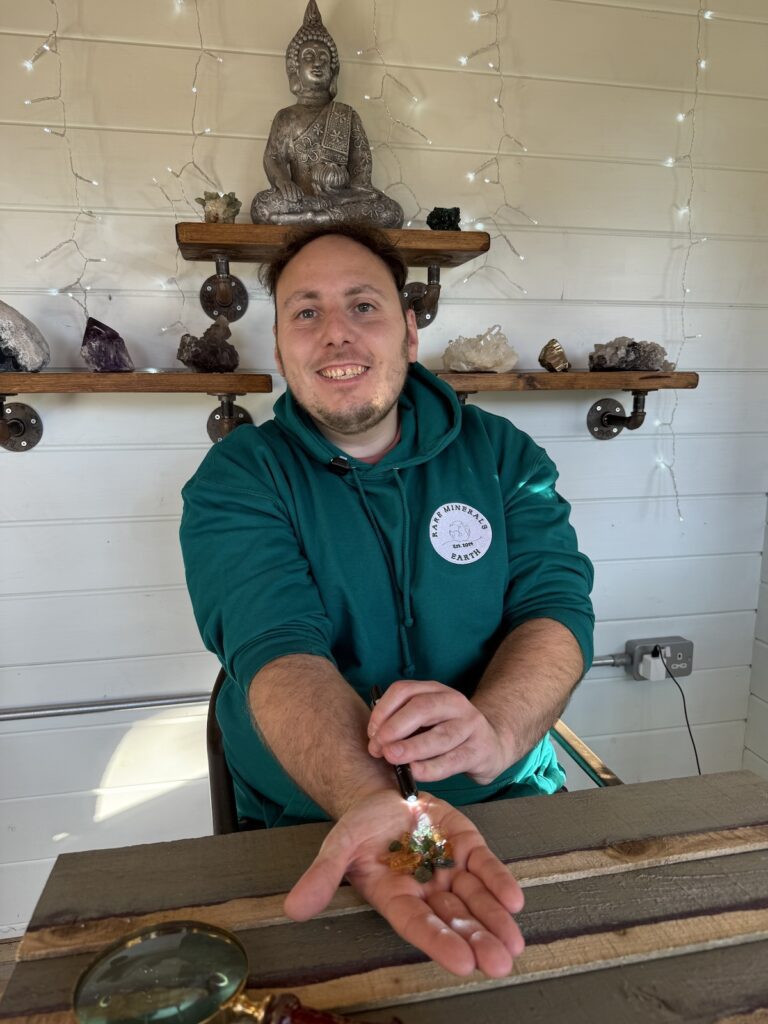
When I started Rare Minerals Earth, I thought I knew exactly what I was getting into.
Looking back, I was wrong about almost everything.
I imagined myself buying unusual minerals, photographing them, writing listings and sending them to collectors who appreciated natural specimens as much as I did. It sounded fairly straightforward.
The Earth had other plans.
Almost every assumption I made quietly unravelled over time. Not in a bad way. In fact, every misconception made this journey far more interesting than I could ever have imagined.
The first surprise arrived through a message on Instagram. I had always assumed my customers would almost all be collectors. That seemed obvious. I was selling mineral specimens, not jewellery.
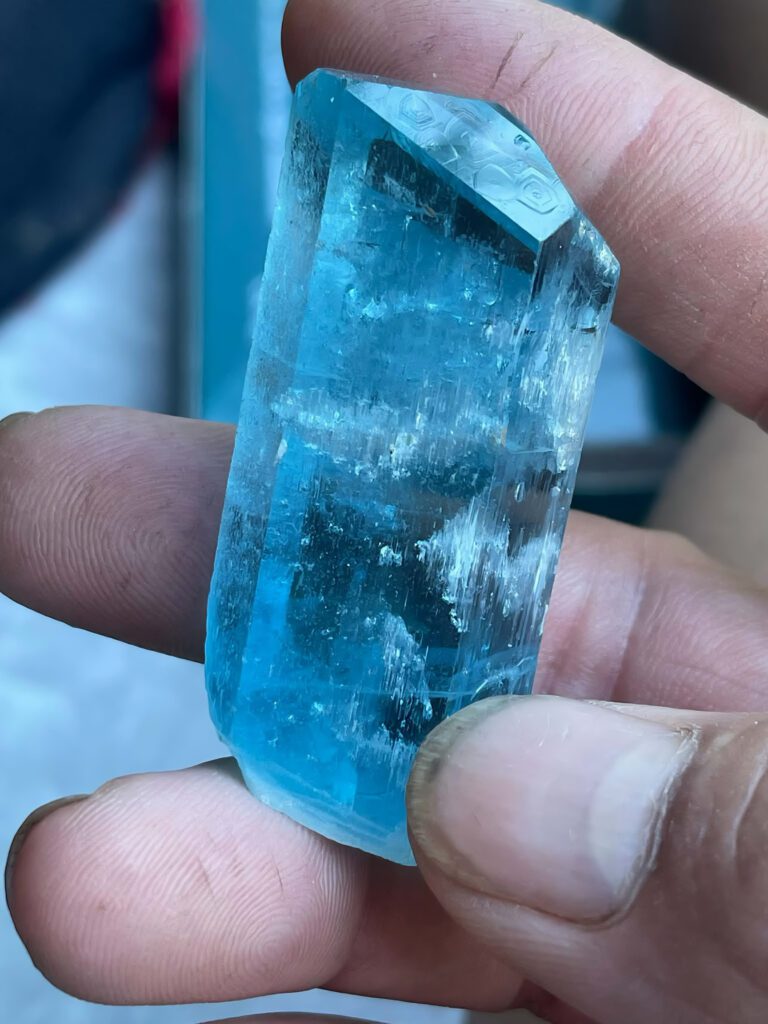
Then a jewellery maker asked whether I had any rough aquamarine. A few days later, somebody else wanted emerald crystals. Then imperial topaz, ametrine and black opal. Before long, I realised that around a third of my customers were not collectors at all.
They were jewellery makers.
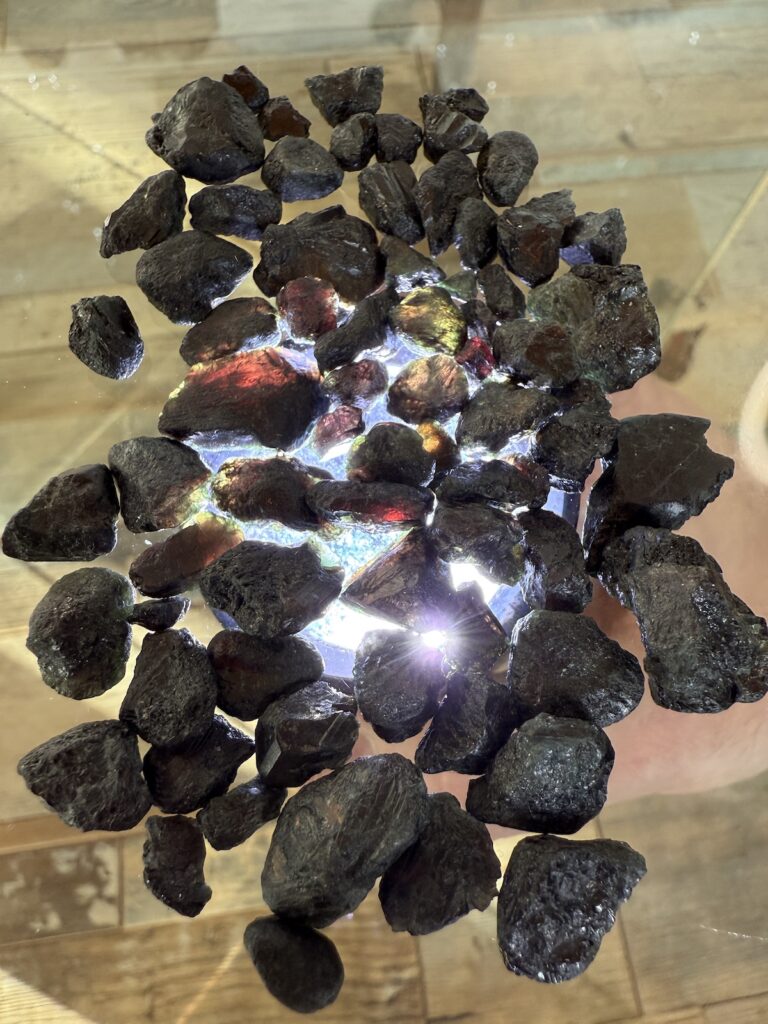
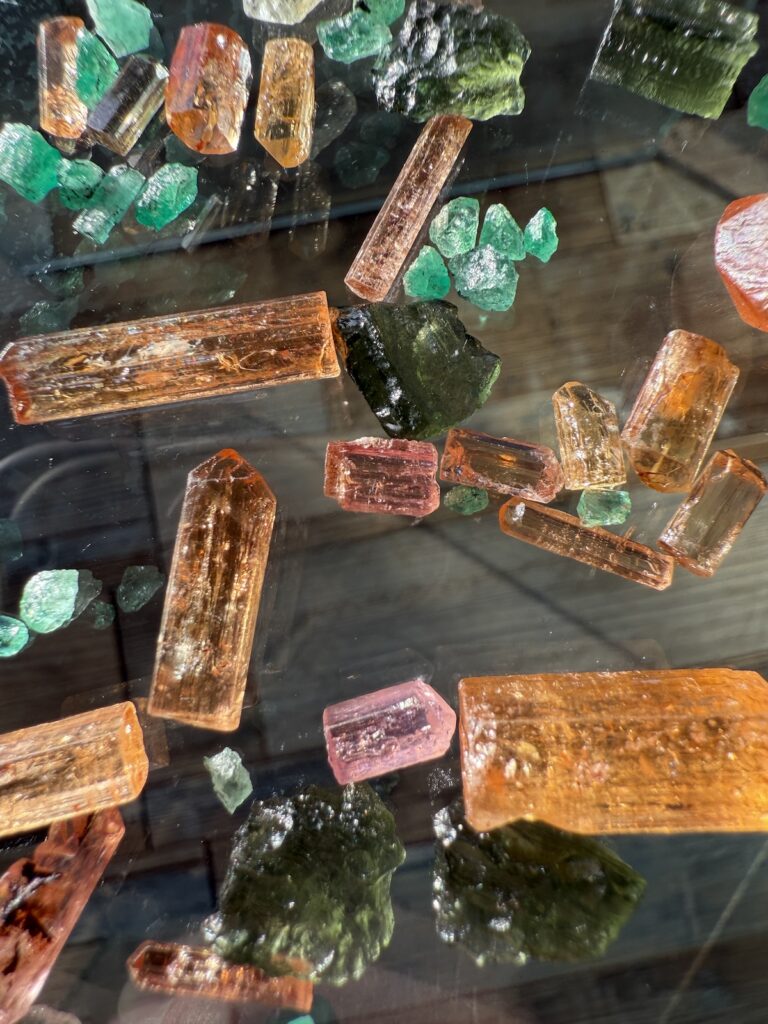
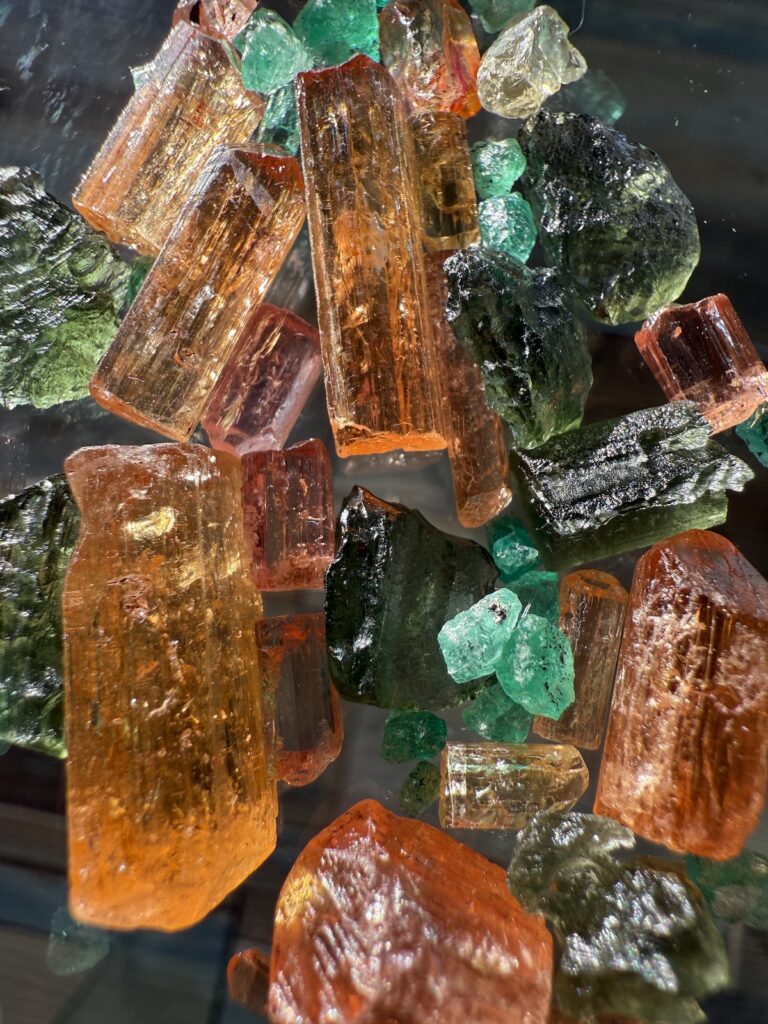
What fascinated me wasn’t simply that they bought minerals. It was which minerals they bought.
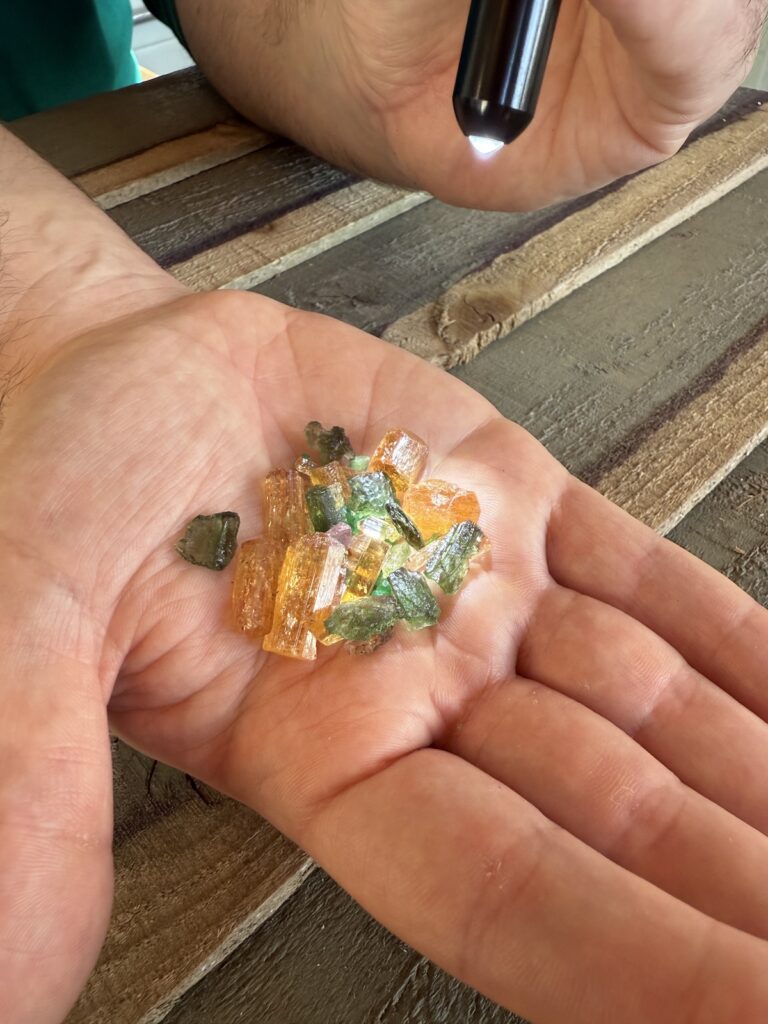
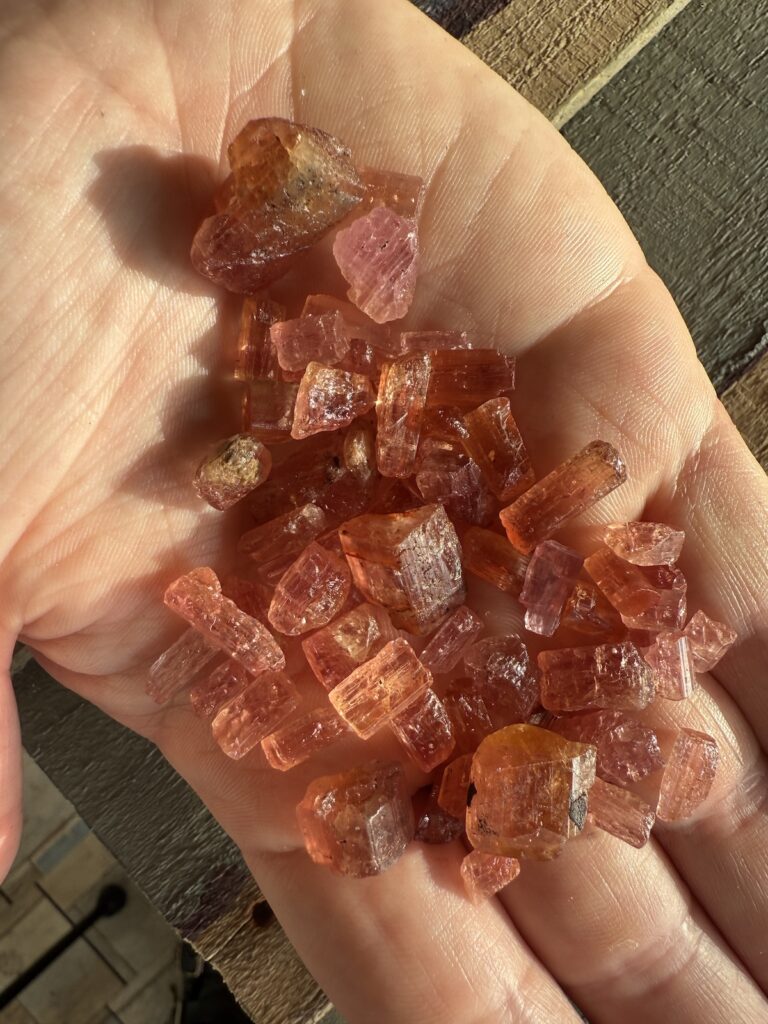
Many weren’t looking for perfectly polished gemstones ready to place into a ring. They wanted the crystal before any of that happened. They wanted natural growth lines, contact points where another crystal had once grown beside it and the tiny imperfections that proved it hadn’t come from a factory.
It had come from the Earth.
That changed the way I looked at the people buying from me. Collectors and jewellery makers may eventually use their minerals in completely different ways, but they’re often captivated by exactly the same thing: something natural, individual and impossible to reproduce.
Another assumption didn’t survive for very long either.
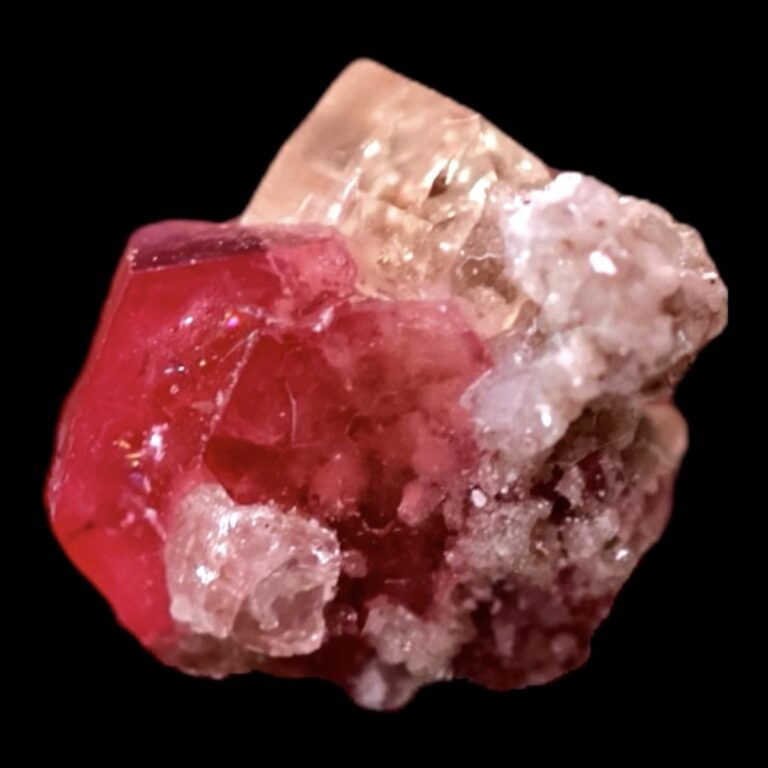
When I started, I thought rarity was everything. If someone had asked what interested me most, I would probably have listed the rarest minerals I knew: painite, jeremejevite, red beryl and anything else most people had never encountered.
I genuinely believed that was what collecting was about.
Then my collection began to grow, and so did the reasons I found myself fascinated by it.
I remember opening a parcel of tanzanite crystals from Tanzania. They weren’t the flawless gemstone material you’d expect to see in the window of a luxury jeweller. Material of that quality can cost thousands of pounds. These were natural crystals exactly as they had been found, complete with fractures, contact points and the marks left behind by the environment in which they had formed.
I found myself turning them over again and again beneath the light. From one angle they showed deep blue, then a hint of violet appeared as the crystal moved. Their imperfections didn’t disappoint me. They made the crystals feel more honest. I wasn’t holding a product. I was holding something that had grown naturally millions of years ago and somehow found its way into my hand.
Heliodor surprised me for a completely different reason. I’d seen photographs before, but photographs had never prepared me for what happened when I carried one over to the window. At first it seemed quite understated. Then sunlight passed through it and a warm golden glow gathered inside the crystal.
It wasn’t actually glowing, of course.
My eyes simply refused to believe it wasn’t.
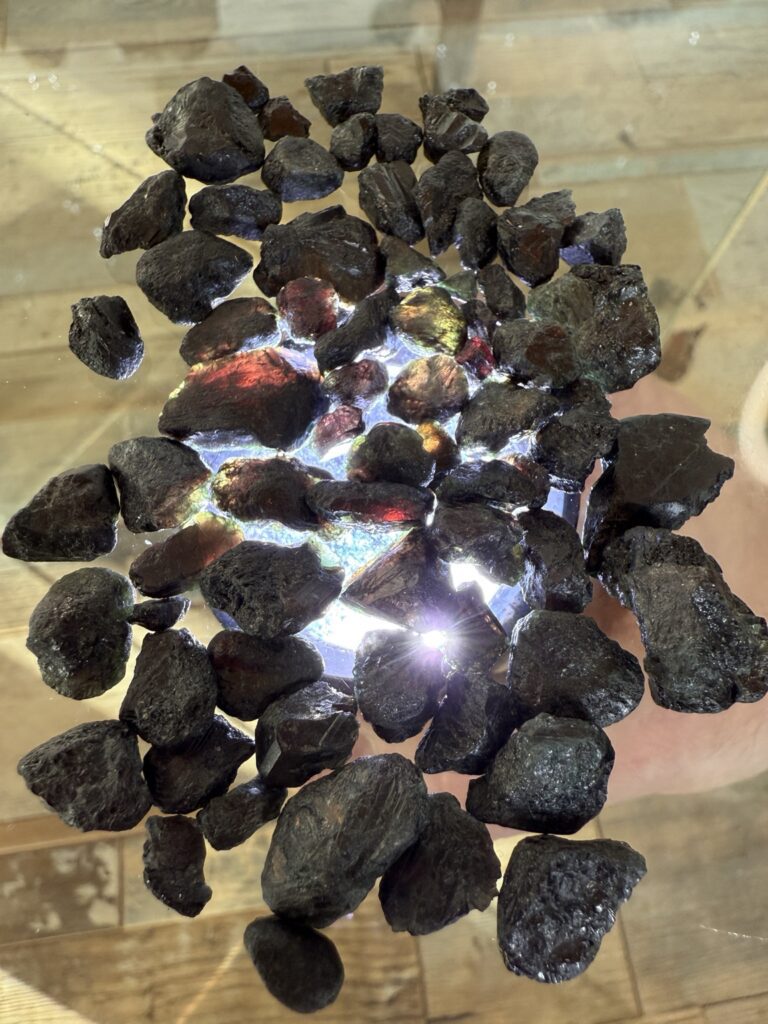
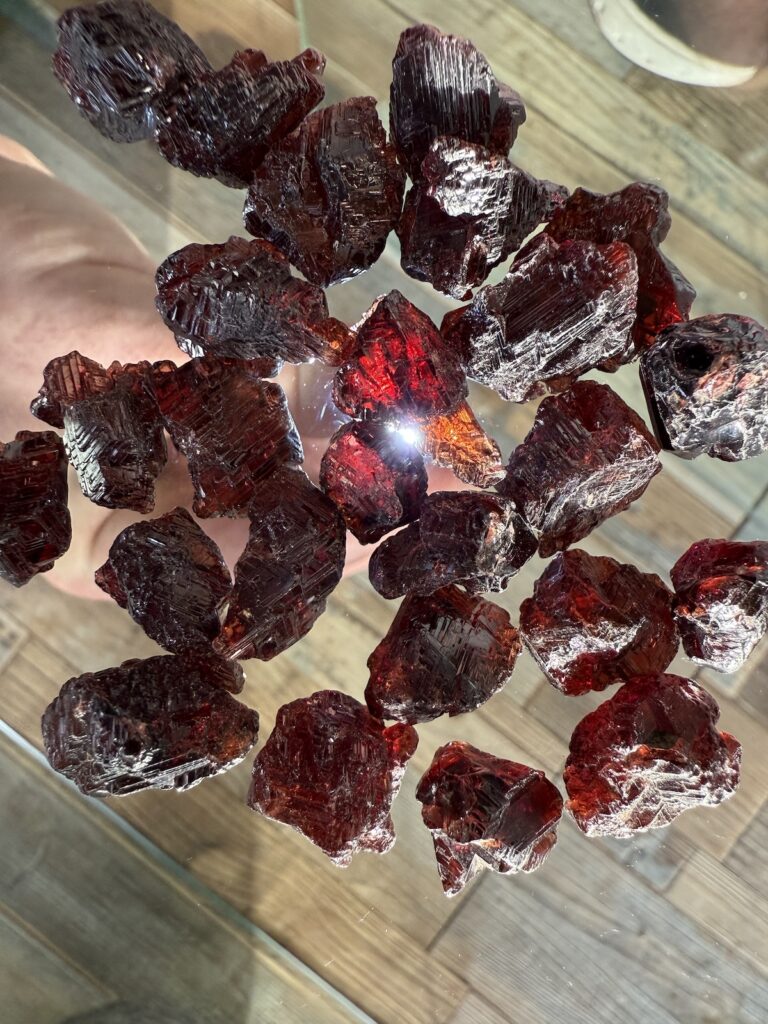
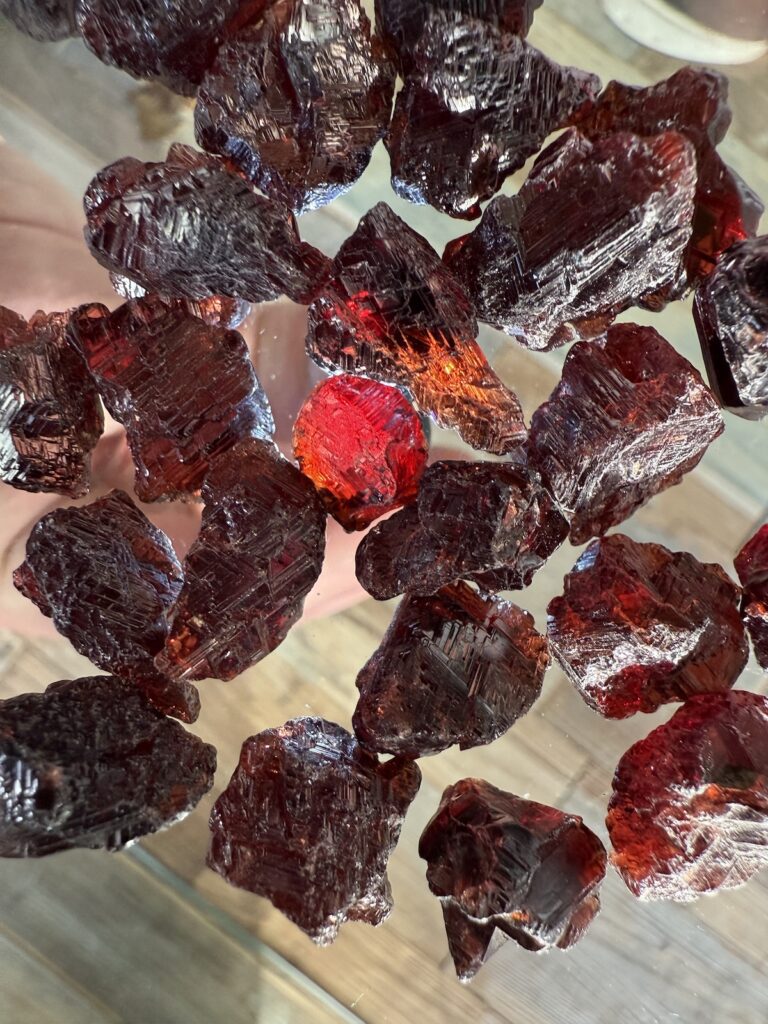
Spessartine garnet had its own personality. Some crystals looked like tiny drops of molten orange glass resting on pale matrix, while others were darker, rougher and covered in naturally etched surfaces. The colours shifted from bright mandarin orange to deep reddish brown, sometimes within the same specimen.
Nobody had carved them or coloured them; the Earth simply made them.
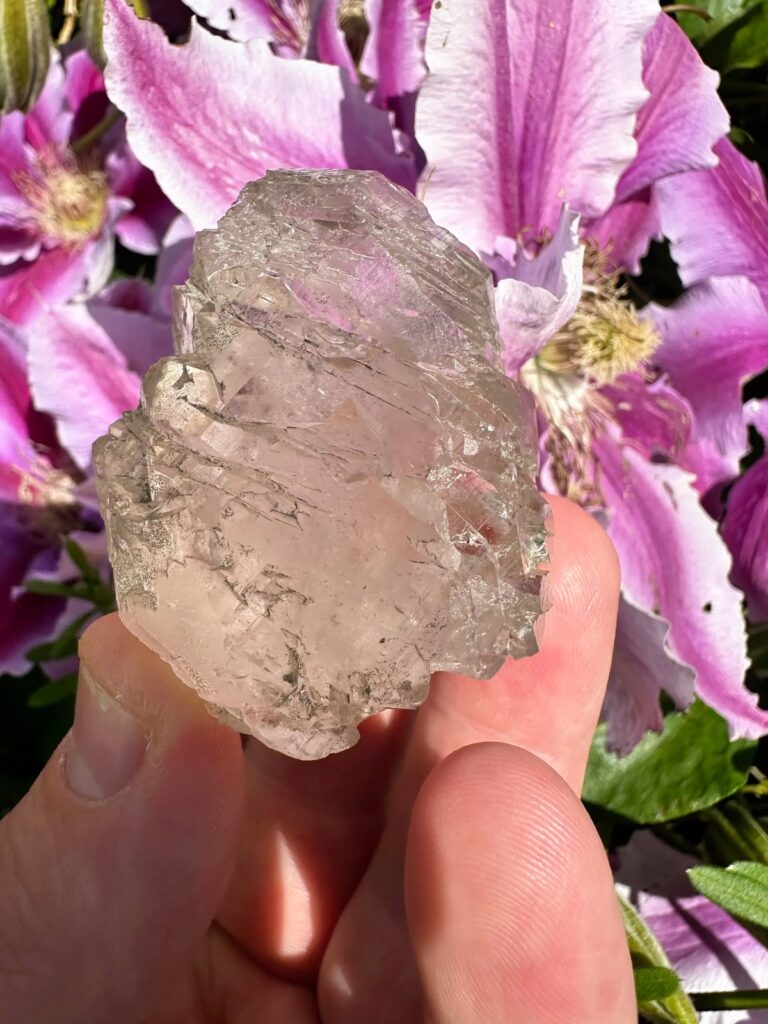
Then there was Swiss quartz. I still remember turning one crystal slowly beneath a lamp. At one angle it looked almost invisible. At another, tiny rainbows appeared deep inside it and the naturally etched faces suddenly caught the light in ways I hadn’t noticed a moment earlier.
The crystal had formed hundreds of millions of years before I would ever hold it. Long before people. Long before mammoths. Long before the dinosaurs.
Yet there it was, almost perfectly transparent, quietly revealing details that only appeared if I slowed down and really looked.
That was the moment something changed.
I realised I wasn’t simply collecting minerals anymore. I was collecting moments where the Earth made me stop and stare.
Somewhere along the way, I realised I’d been asking entirely the wrong question. I kept asking whether a mineral was rare, when what I should have been asking was whether it made me stop. Did I instinctively turn it over for another look? Did it reveal something I’d missed the first time? Did it make me quietly wonder how the Earth had managed to create it?
That has become a far better measure.
I was also completely wrong about mineral photography. I assumed it would be one of the easier parts of running the business.
That now seems almost laughably optimistic.
Minerals have an annoying habit of refusing to behave in front of a camera. A fluorite phantom can be perfectly visible to the eye and then disappear through the lens. Rainbow inclusions vanish when the specimen moves by a fraction of an inch. Rutile needles catch the light beautifully until the exact moment the camera is ready.
Sometimes I spend twenty minutes trying to photograph a specimen that looks extraordinary in my hand. The camera records the colour but loses the depth, or captures the shape while making the crystal look flatter and somehow less alive.
Then, occasionally, everything lines up. The light catches the internal structure, the colours finally appear and, for a brief moment, the photograph tells the truth.
Those moments are strangely satisfying.
Perhaps the biggest misconception of all was what Rare Minerals Earth was ever going to become.
I thought I was starting a small business selling minerals.
Instead, I accidentally found a new way of looking at the natural world.
I’m not a geologist, nor am I a crystal healer. There are people with far more knowledge than me in both fields. I’m simply someone who became curious, and minerals have an incredible habit of rewarding curiosity.
One question leads to another. One locality leads to another country, and one specimen leads to a paper about meteorite impacts, mountain building, vanished oceans or hydrothermal fluids. Before long, I find myself reading about geological processes I’d never previously heard of, simply because I wanted to understand the crystal sitting in front of me.
That is the part I never expected.
The more I’ve learned, the more I’ve realised how little I know. I mean that in the best possible way. There is always another mineral, another locality and another completely improbable story waiting to be discovered.
I still catch myself picking up certain specimens and simply looking at them. Not because they’re the rarest or the most expensive, but because they evoke something much deeper in me. They remind me that every crystal is a tiny piece of Earth’s history, shaped over immense spans of time that are almost impossible to comprehend.
Perhaps “natural art” is the closest phrase I’ve found.
A tanzanite crystal changing colour as it turns. Golden light passing through heliodor. Orange spessartine growing directly from pale matrix. An ancient Swiss quartz crystal carrying etched surfaces and tiny rainbows inside it.
Nobody planned any of them.
The Earth simply made them.
Looking back, I thought Rare Minerals Earth would change the way I spent my evenings.
Instead, it quietly changed the way I see the world.
I was completely wrong, and I’m very glad I was.