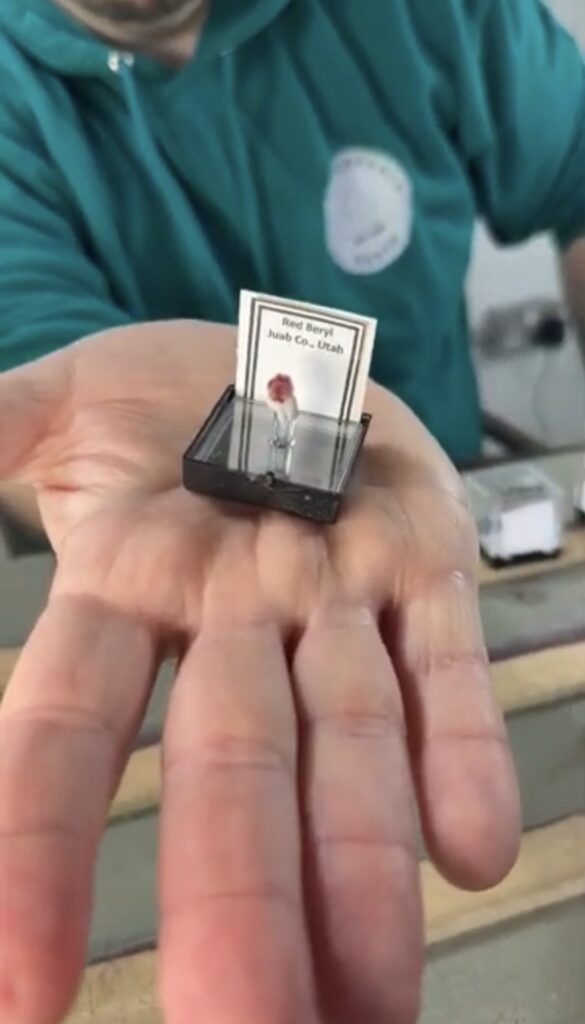
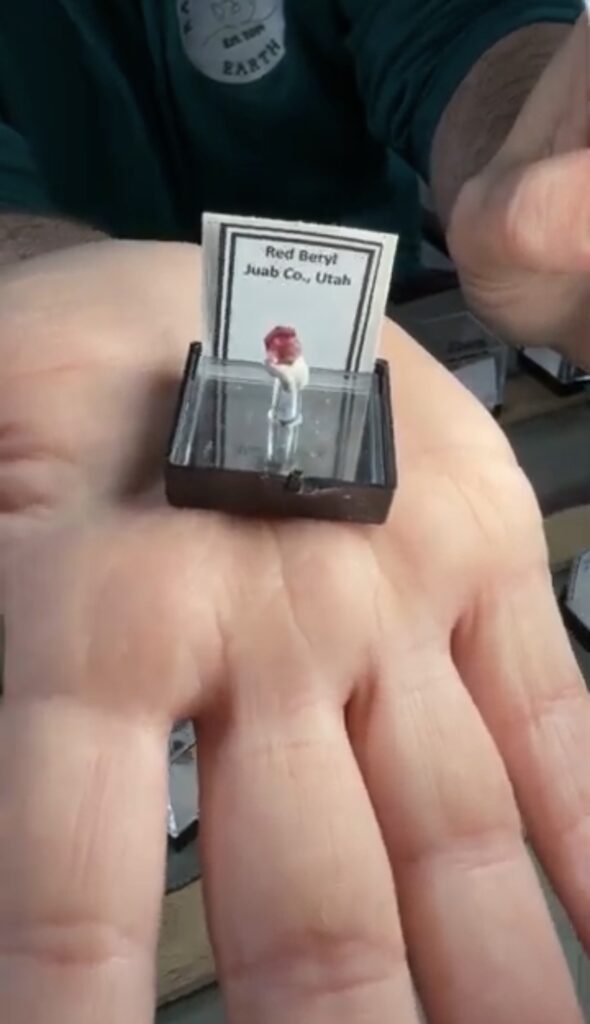
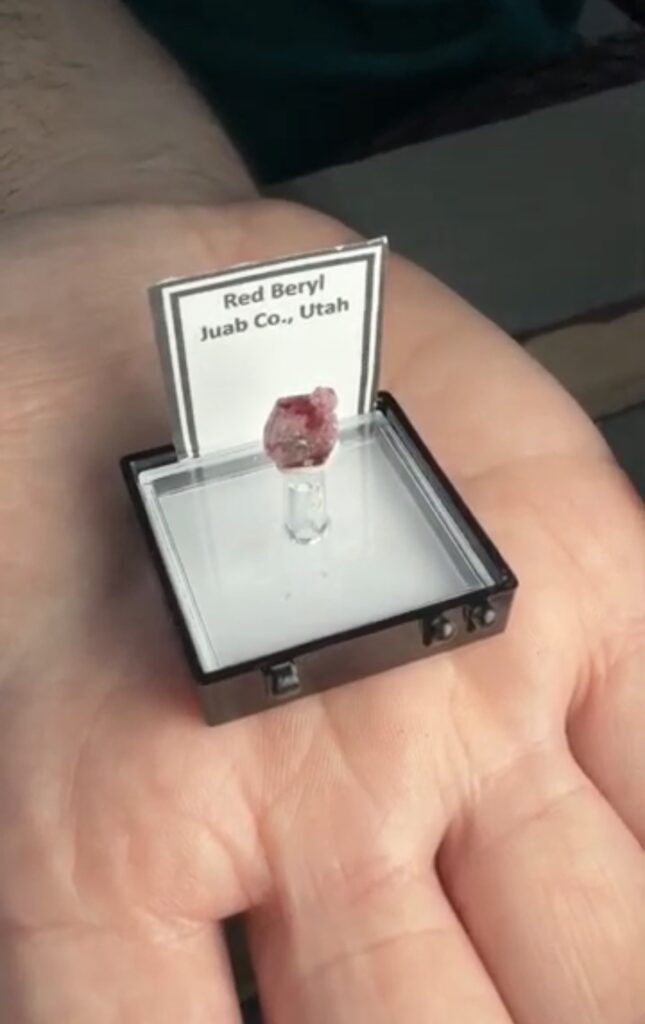
I knew red beryl was rare, but I wasn’t expecting it to be this small
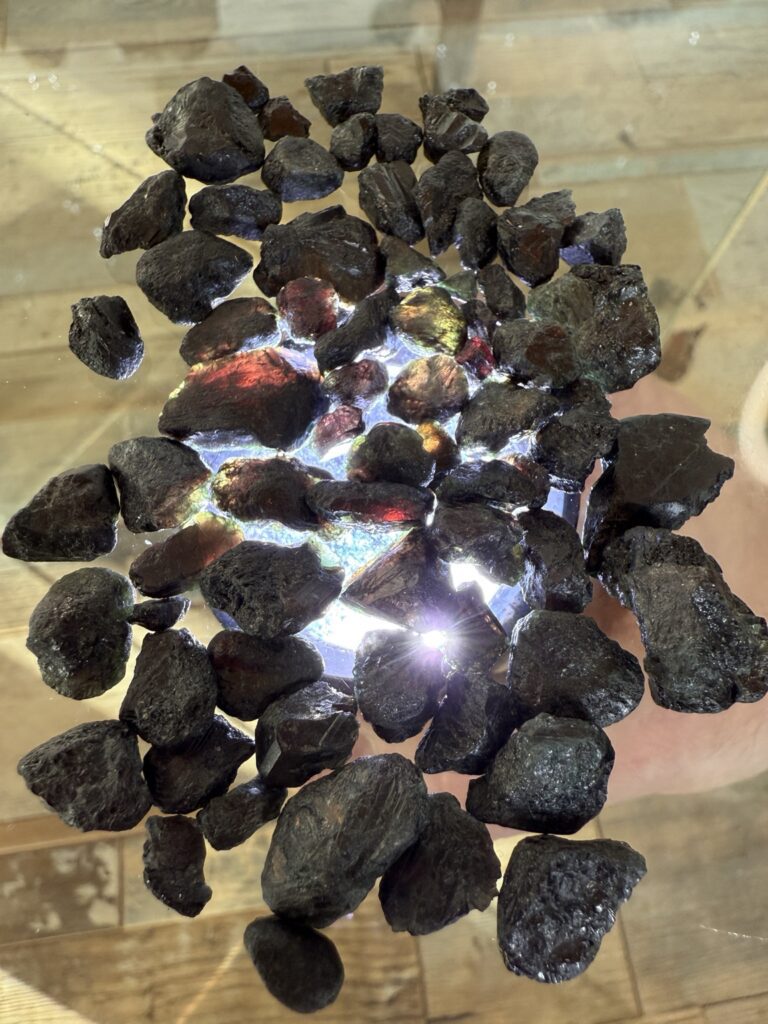
When I first started buying red beryl, I knew the crystals were going to be small. I had seen the measurements, looked at the photographs and understood exactly what I was paying for, but opening the parcel still felt slightly strange. Some of the crystals were barely bigger than the tip of my finger, yet they belonged to one of the rarest gem varieties on Earth.
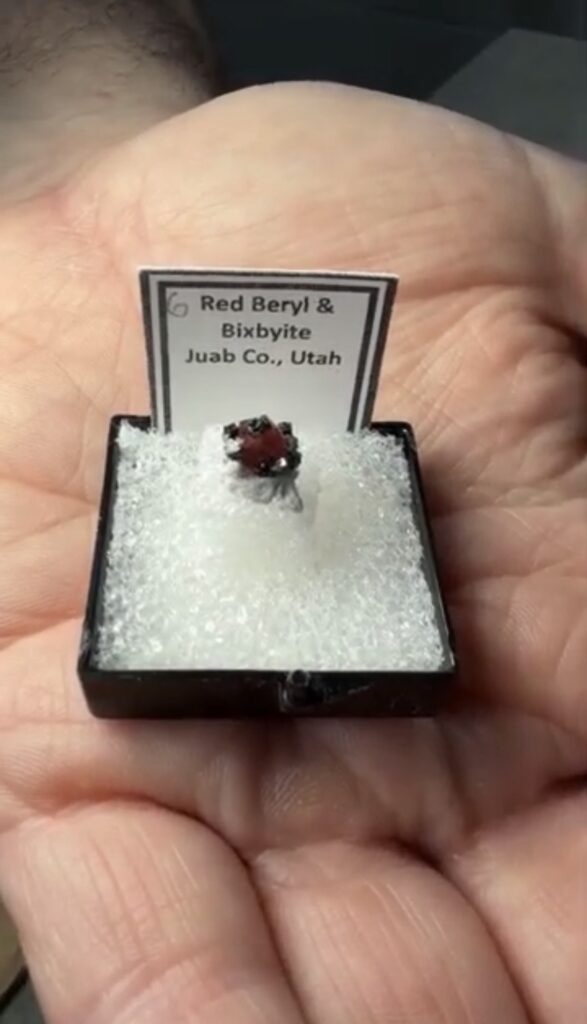
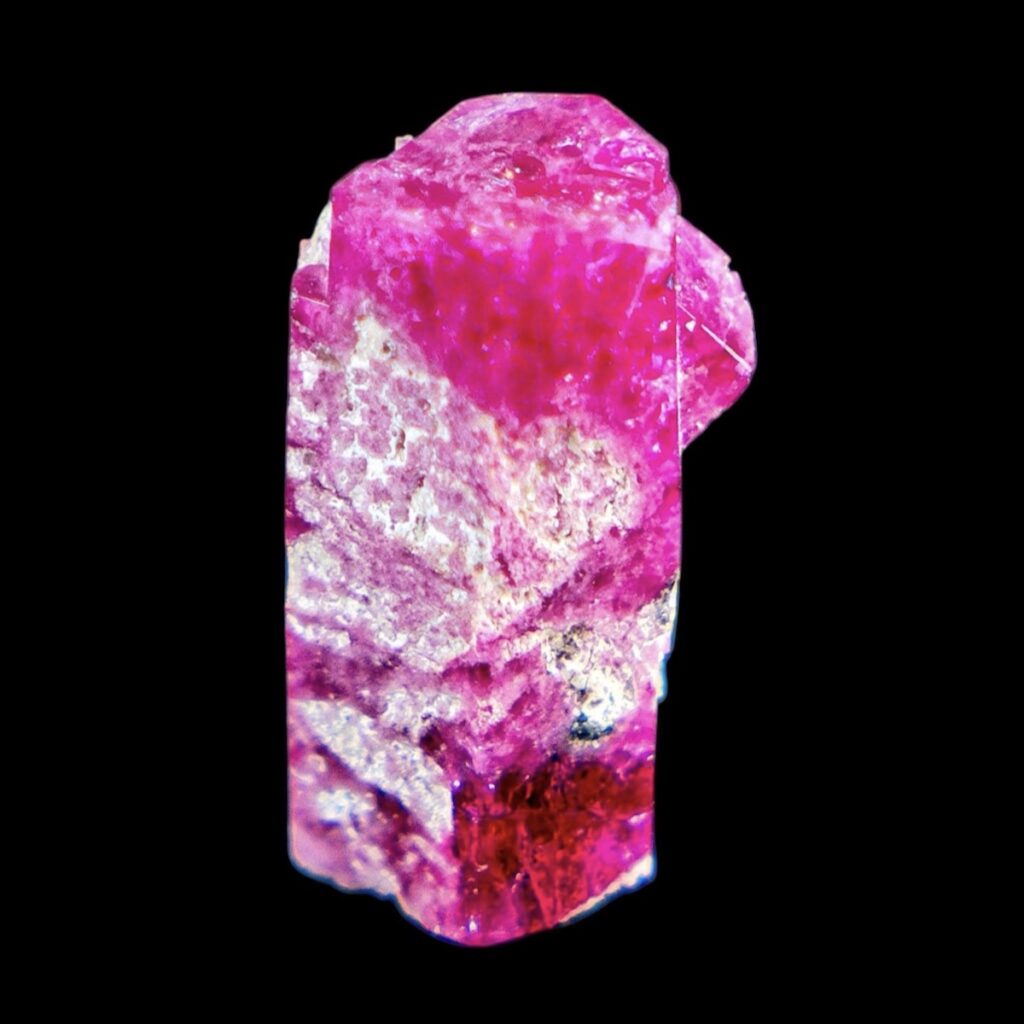
Once I started comparing them, the size became much less important. The colour moved from raspberry pink into a much deeper red, and the better formed crystals still showed the familiar hexagonal shape of beryl. Some of my Searle Canyon specimens are single crystals, others are intergrown, and one sits beside black bixbyite on the same piece of volcanic rock. A few are gemmy enough for the colour to look almost concentrated inside them.
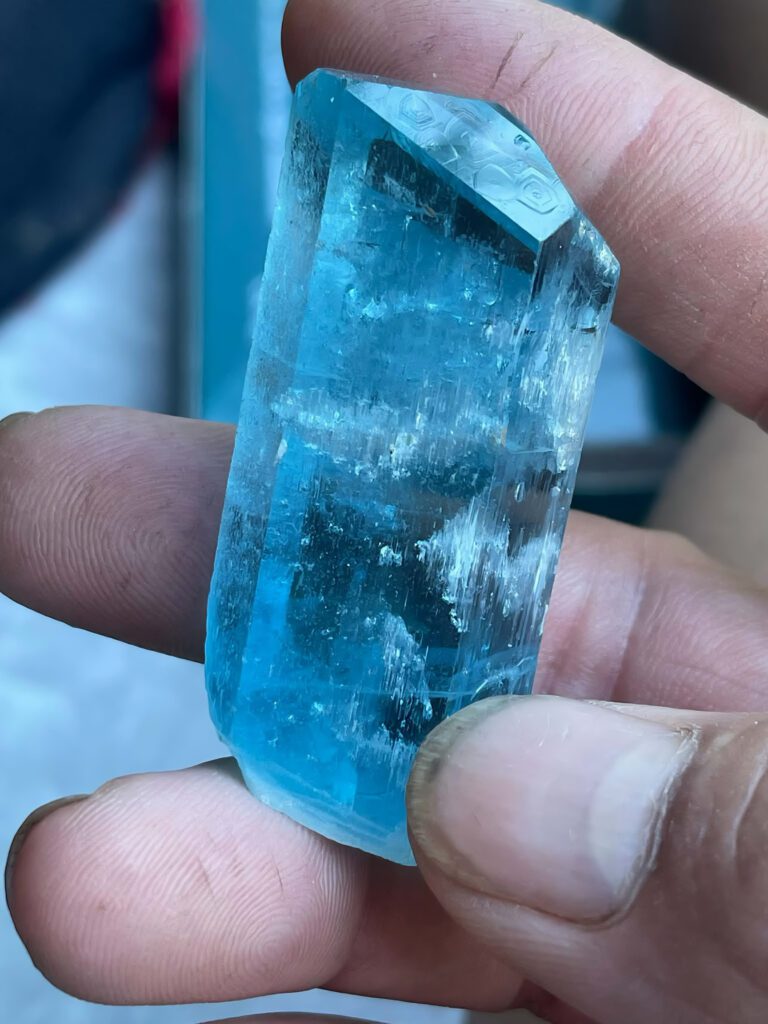
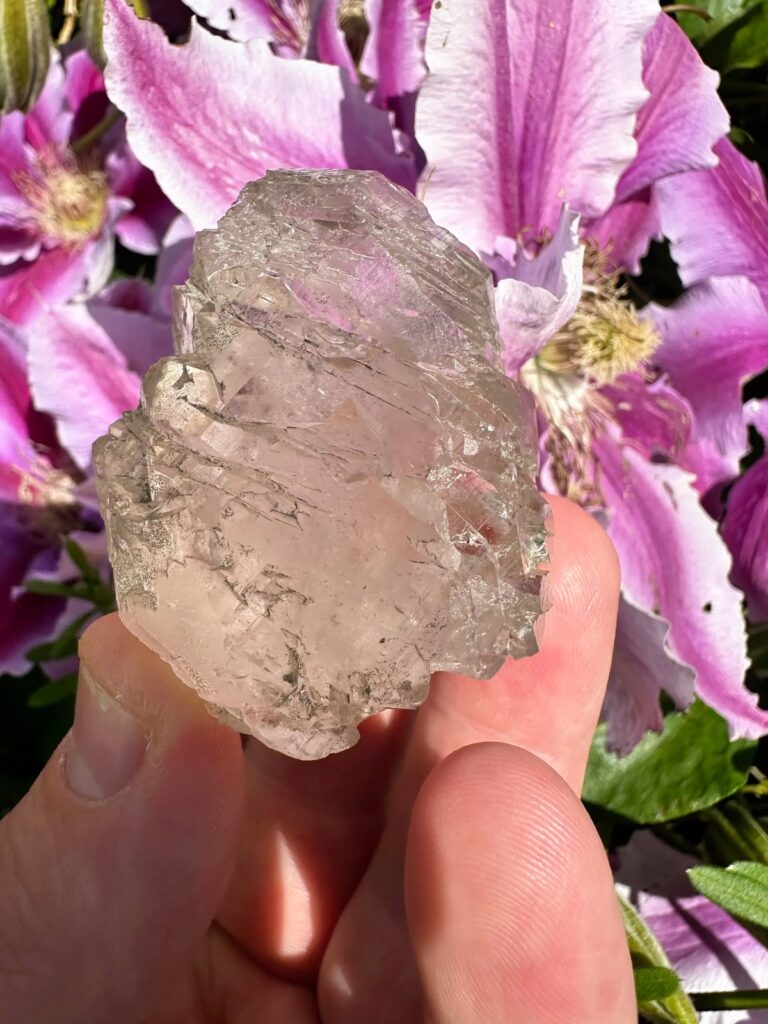
What makes all of this slightly ridiculous is that beryl itself is not particularly rare. Aquamarine occurs in many countries. Emerald has important deposits across several continents. Morganite and heliodor are hardly everyday minerals, but neither is confined to one tiny geological corner of the world.
Red beryl is different. Confirmed occurrences are concentrated in only a handful of places in the western United States, particularly the Thomas Range and Wah Wah Mountains in Utah and the Black Range in New Mexico. At the New Mexico occurrence, researchers described red beryl crystals only around one to three millimetres across, growing sparsely in cavities in rhyolite.
What surprised me was how restricted red beryl really is. Beryl turns up in plenty of places around the world, but the red variety only seems to have formed in a handful of very specific volcanic environments.
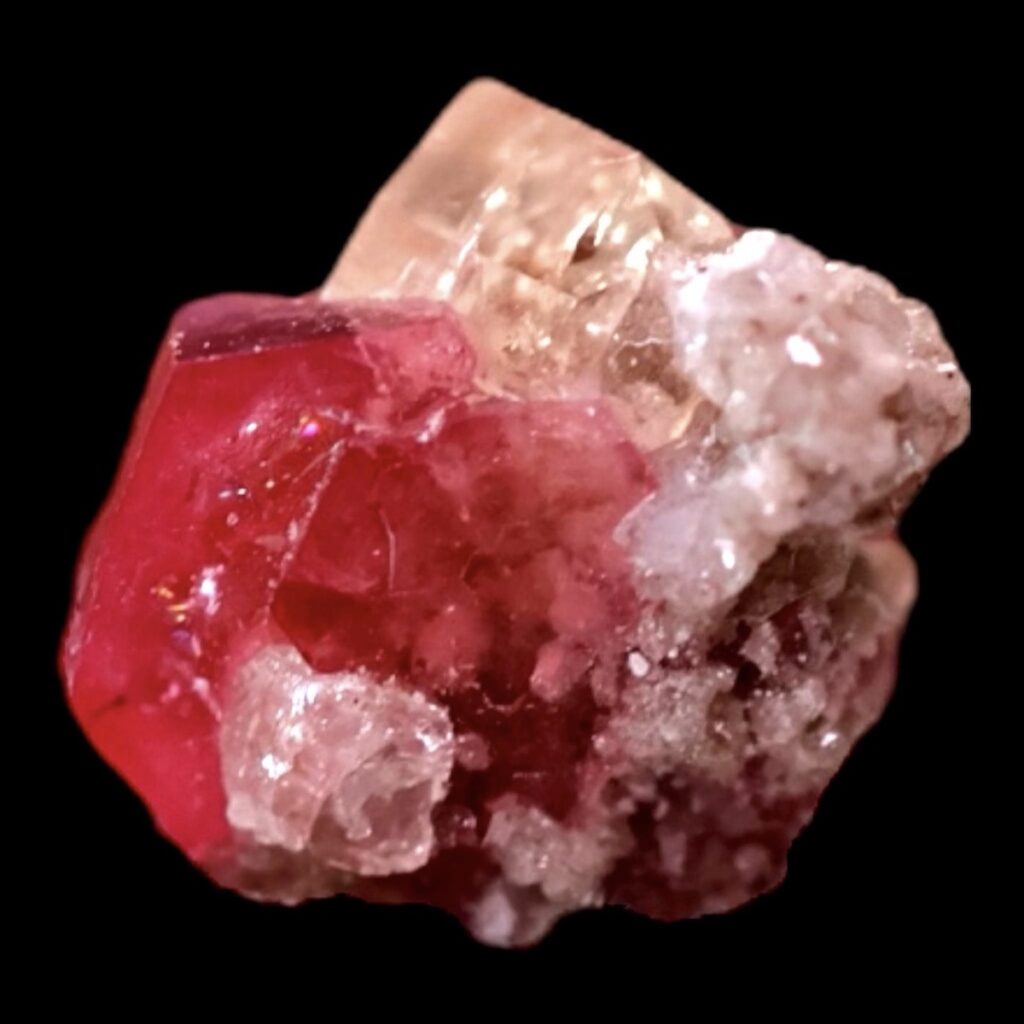
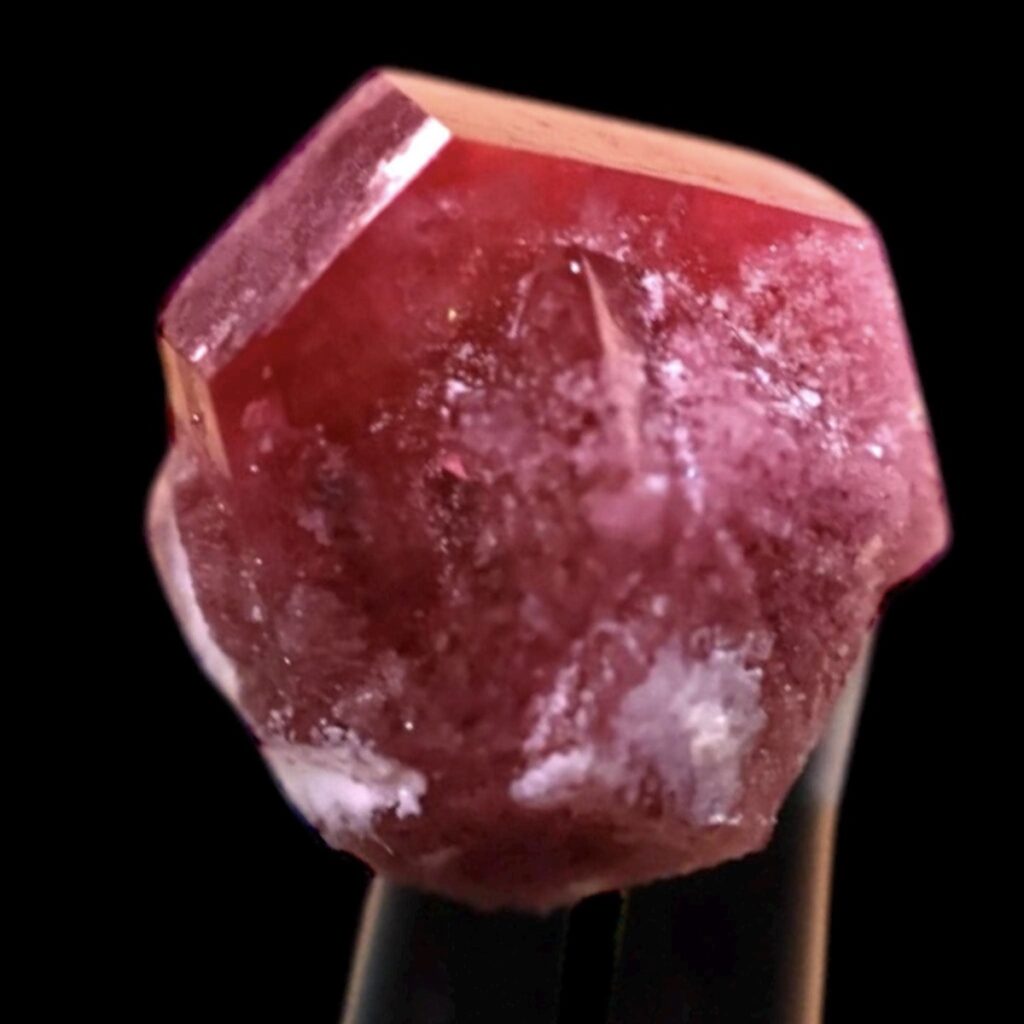
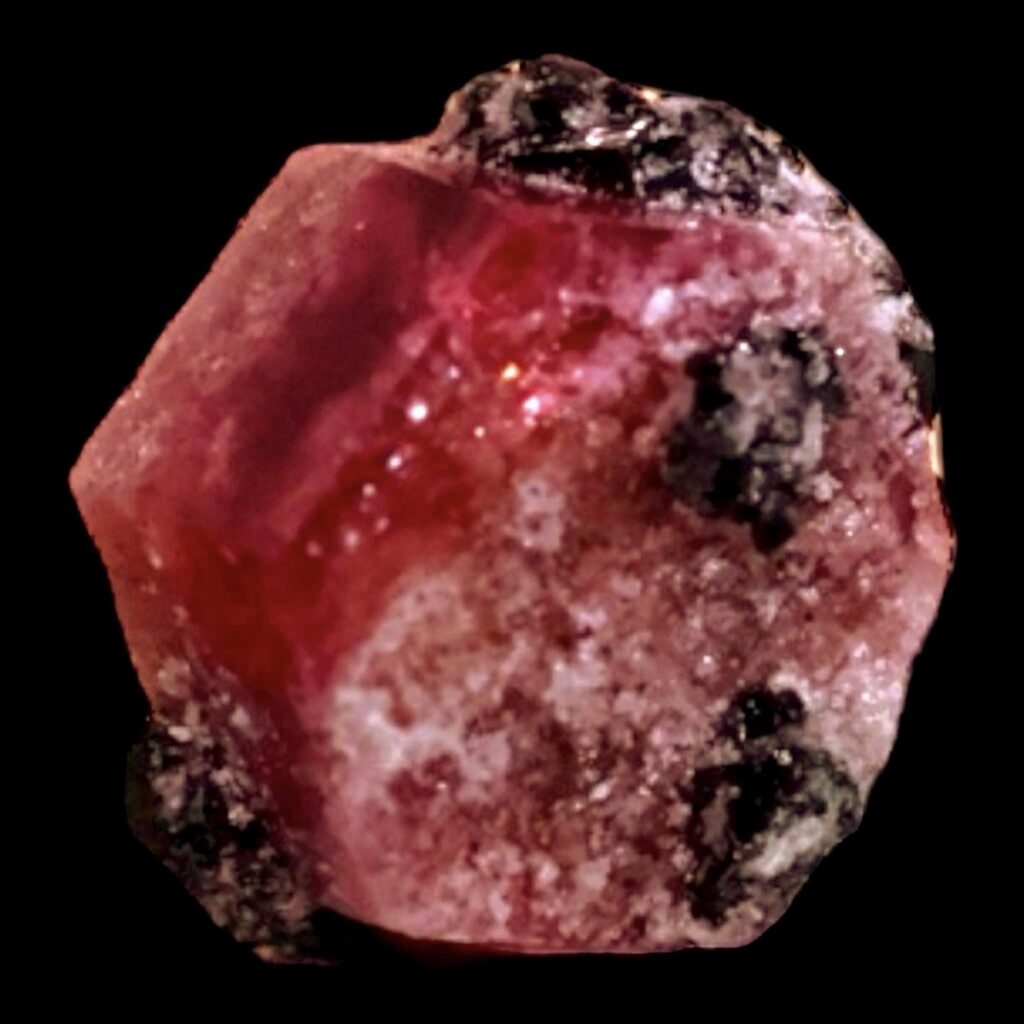
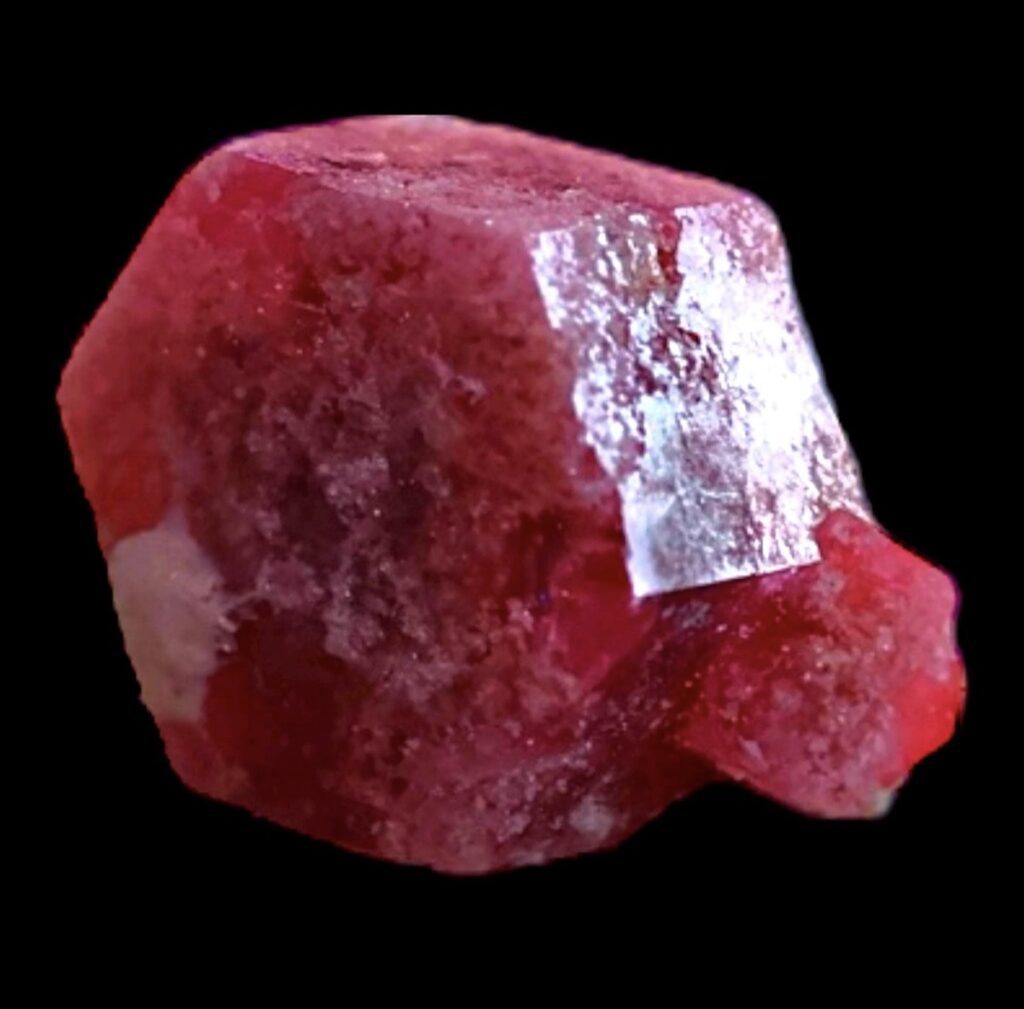
Red beryl was first recognised in Utah after Maynard Bixby found the material in the Thomas Range in 1904. For a time it was known as bixbite, after Bixby, although red beryl is now the preferred name. The old name is particularly unhelpful because bixbyite is a completely different manganese-iron oxide mineral, and the two can actually occur together.
That matters to me because one of my own Searle Canyon specimens shows exactly that association. The red beryl sits beside black bixbyite, and rather than being some unrelated extra mineral on the specimen, it belongs to the same unusual volcanic environment. The wider Topaz Mountain area is known for red beryl, bixbyite, topaz and several other minerals occurring in cavities within rhyolite.
My own material comes from Searle Canyon in the Thomas Range, which tends to get rather less attention than the famous red beryl from the Wah Wah Mountains. That is largely because Ruby-Violet became the best-known commercial source of gem material, but it can leave the impression that worthwhile red beryl somehow belongs only to the Wah Wah Mountains.
What I had not realised until I started researching the locality was that the two areas are not even the same age. Red beryl from Searle Canyon has been dated to about 5.41 million years old, while material from Maynard’s Claim elsewhere in the Thomas Range gave an age of about 6.75 million years. Ruby-Violet red beryl in the Wah Wah Mountains is much older, at about 20.96 million years.
So these are not simply pieces from one mineralising event spread across Utah. Red beryl formed in different volcanic systems, millions of years apart, and still remained incredibly restricted.
The geology helps explain why. Red beryl in Utah is associated with unusual rhyolitic volcanic rocks rather than the pegmatites in which many people expect to find beryl. At Ruby-Violet, GIA researchers described the crystals growing mainly along fractures in topaz rhyolite, with crystallisation linked to gases from the rhyolite, heated groundwater-derived vapours and reactions with minerals and volcanic glass already in the rock.
Manganese helps explain the red colour, but that still does not explain why red beryl is so rare. There are plenty of places on Earth containing manganese and beryllium. Almost none of them produced this. The right volcanic chemistry, the right fluids or vapours and somewhere suitable for the crystals to grow all had to come together.
That is why the usual comparison with diamond is interesting, although I think it needs treating carefully. The Utah Geological Survey has repeated an estimate that roughly one red beryl crystal is found for every 150,000 diamonds. I would not turn that into a precise statement that red beryl is scientifically proven to be exactly 150,000 times rarer than diamond, because the two minerals come from completely different geological settings and mining industries. The estimate still gives some sense of just how seldom red beryl turns up.
More than fifty years after Bixby’s original discovery, another important red beryl occurrence was found in the Wah Wah Mountains of south-western Utah. The deposit became known as the Ruby-Violet, or Red Beryl, mine, and it was different because it produced enough crystals with sufficient size, colour and transparency to create a genuine faceted-gem market.
GIA described Ruby-Violet in 2003 as the only known commercial occurrence of gem-quality red beryl in the world. That helps explain why so much of the older literature focuses on the Wah Wah Mountains. It should not be taken to mean that gem-quality crystals cannot occur elsewhere. Searle Canyon also produces gem-quality material; Ruby-Violet was exceptional because of the amount of usable gem material that came from one deposit.
Even there, the numbers were not exactly generous. GIA reported that more than 60,000 carats of red beryl had been produced over roughly 25 years, with only about ten per cent considered facetable. Most cut stones were small, which makes much more sense once you have handled natural crystals and seen how little material there often is to begin with.
That is probably why I find the natural crystals more interesting than the faceted stones. A cut red beryl can be beautiful, but I like being able to see the original hexagonal form, the contact points and the way the crystal sat in the rock. One of mine has the bixbyite association, while another is made up of intergrown red beryl rather than one perfectly isolated crystal.
A gem cutter might see those as flaws or inconveniences, but as a collector they are part of what I want to see. They show what actually happened in the pocket.
Rarity by itself is not enough for me anymore. A mineral can be extremely rare and still be broken, poorly formed or simply not very interesting to look at. With red beryl, though, there is another problem before you even get to specimen quality: there is usually very little crystal in the first place.
Put one beside a large fluorite or quartz specimen and it can look almost insignificant, but by that point I know size is telling me very little about what I am actually looking at. A well-formed piece with good colour and reliable provenance may be tiny, but that does not make it ordinary.
I notice this when I show red beryl to people who have never seen it before. A large amethyst cluster explains itself from across the room, while red beryl often needs an introduction. Someone sees a tiny red crystal, hears what it is, and then usually looks at it again.
I think we expect something this rare to look more dramatic than it usually does. Much of it occurs as minute crystals hidden in volcanic rock in a few exceptionally specific places in the American West.
The more I have learned about it, the more that smallness has become part of the appeal rather than something I wish were different. Beryl formed aquamarine, emerald, heliodor and morganite across huge areas of the world, but turning it red required such an unusual set of conditions that we can point to only a handful of places where it worked.
When I look at one of my Searle Canyon crystals now, I do not think about how little red beryl there is. I think about how many chances the Earth had to make beryl, and how rarely it ended up red. Explore our collection of red beryl and heliodor specimens to see individual pieces, photographs and availability.