29 million years ago, something hit the Earth hard enough to turn sand into glass
The first time I handled Libyan Desert Glass, it felt completely alien to me.
I had never seen anything quite like it.
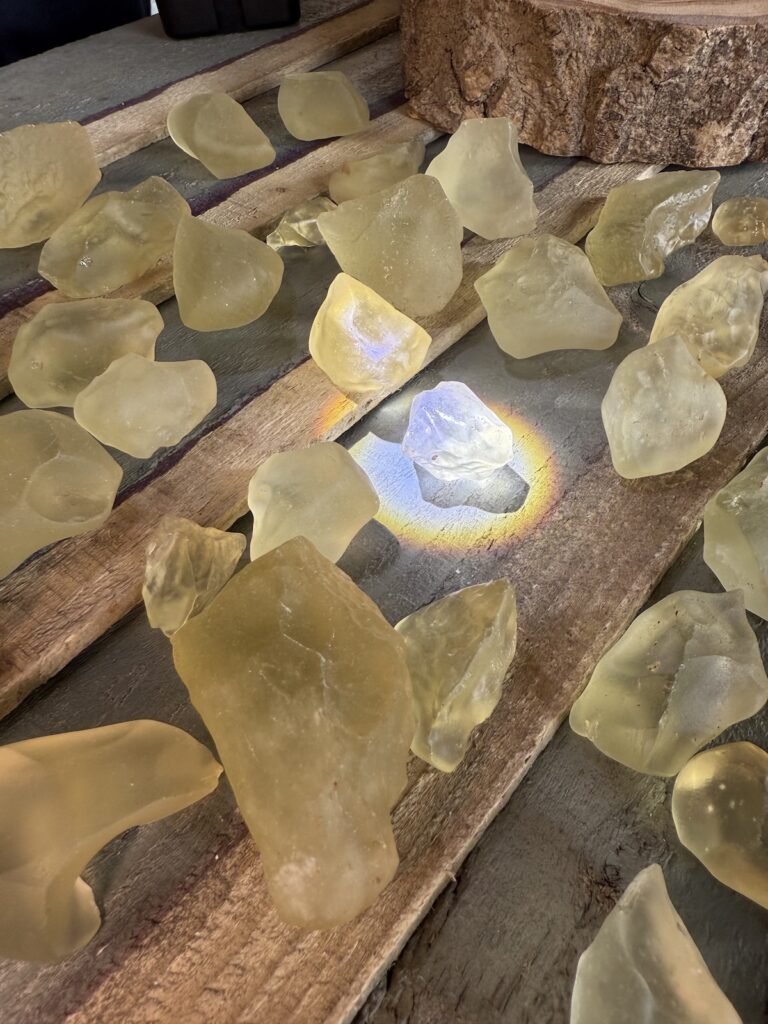
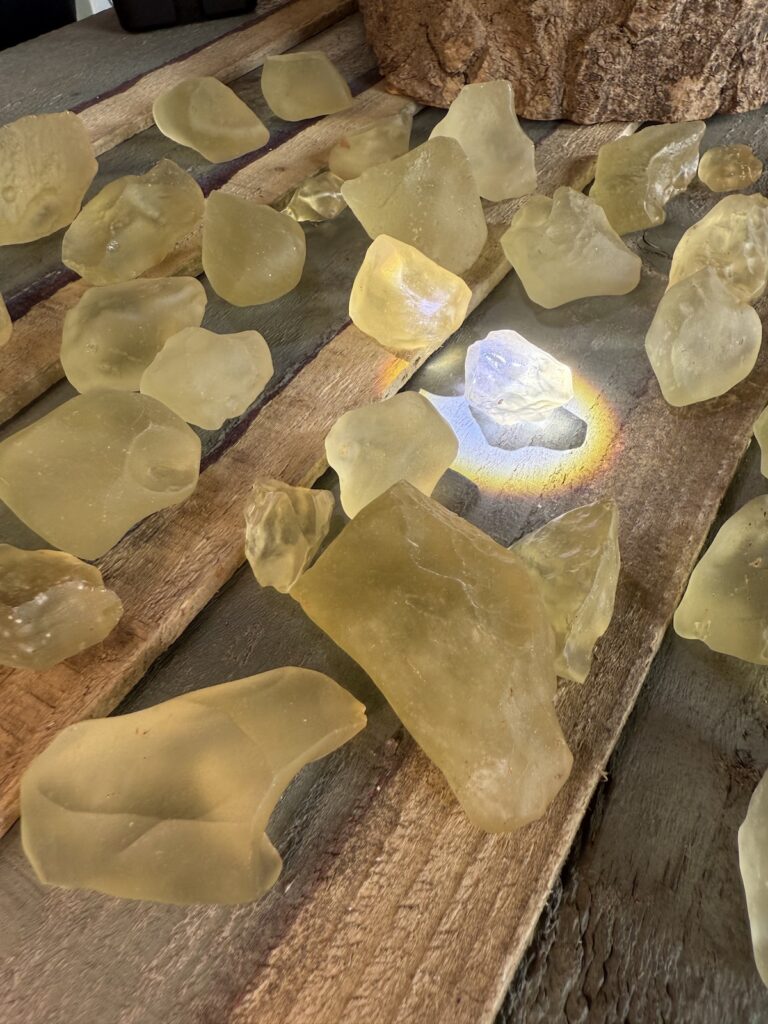
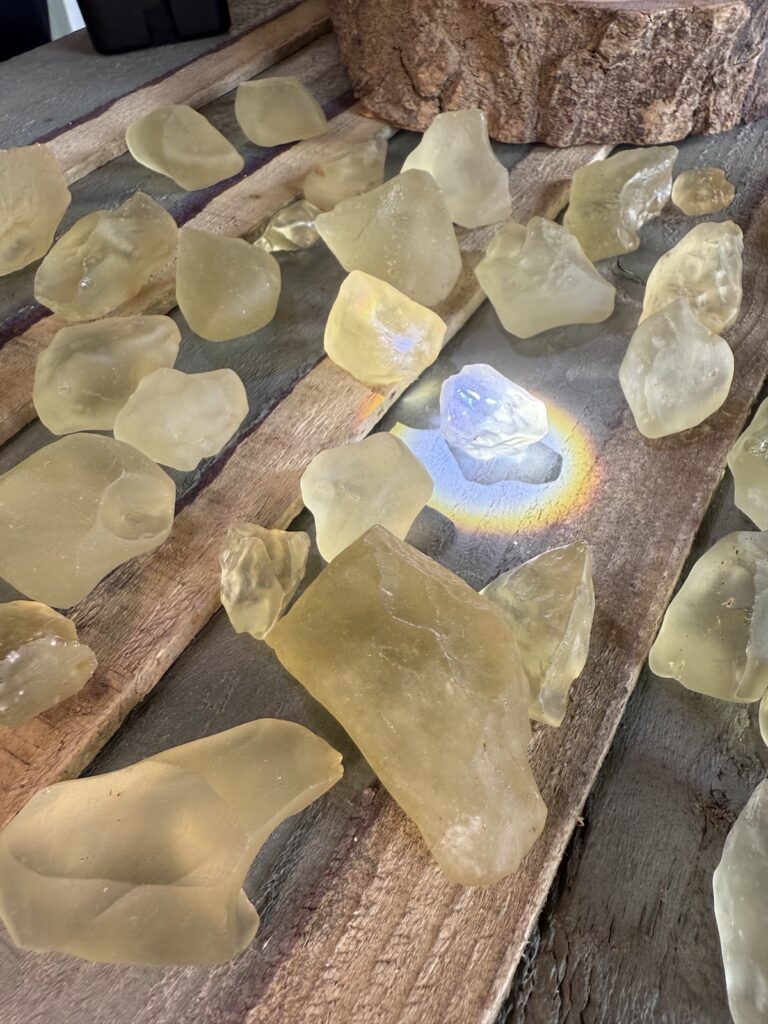
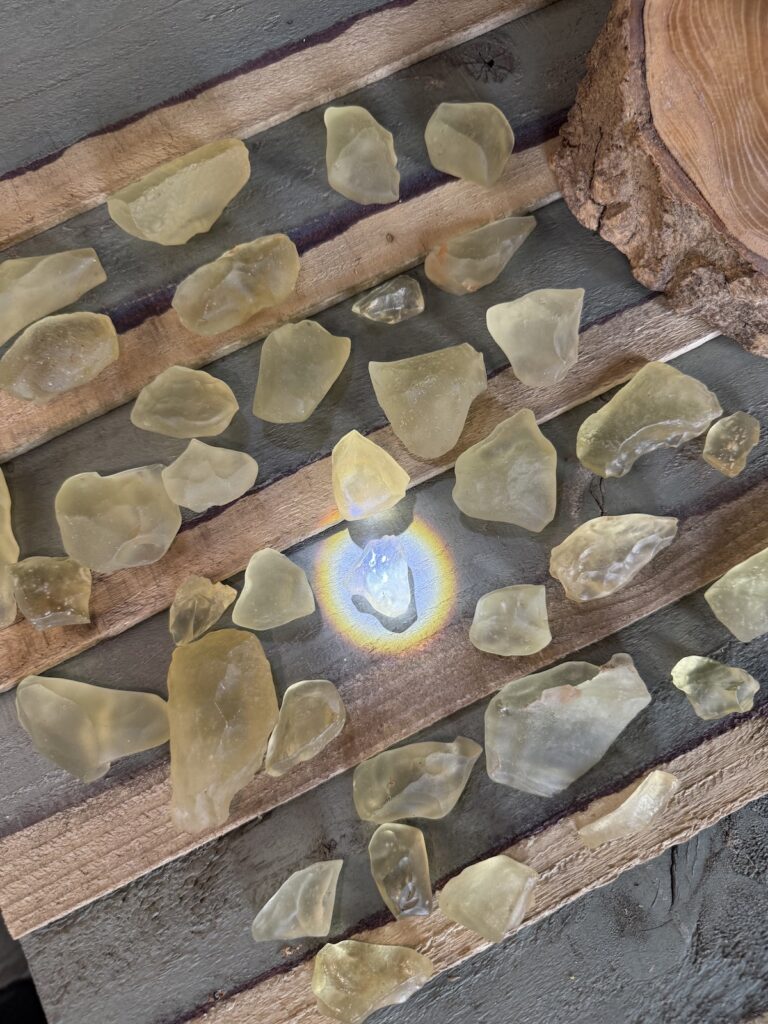
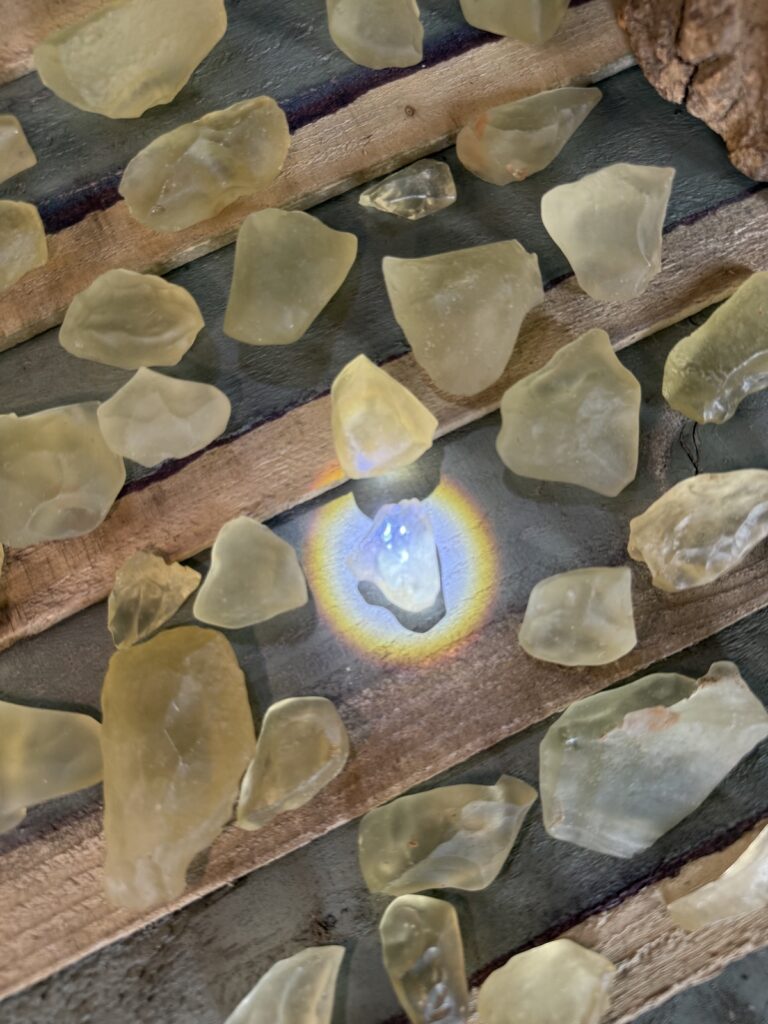
Every piece seemed to have a different shape, texture and shade of yellow. Some were pale and almost transparent. Others were cloudy, honey-coloured or filled with bubbles, dark streaks and small inclusions. The surfaces could be smooth, folded, pitted or deeply weathered.
It looked as though the material had melted, moved and then stopped halfway through becoming something else.
Even the texture was unfamiliar. It was lighter than I expected and softened by millions of years in the desert, but some pieces still held strange flowing shapes from the moment the material cooled.
It looked natural, but not like any natural material I already knew.
It is glass.
Nobody made it.
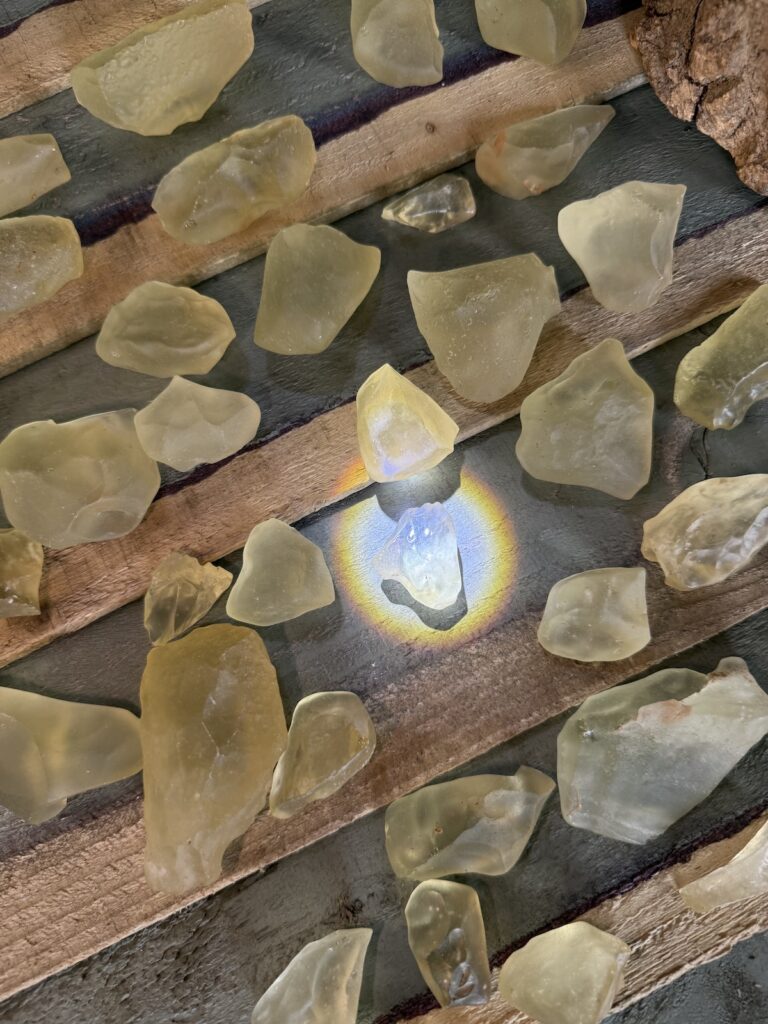
Around 29 million years ago, an event in what is now the Western Desert of Egypt produced enough heat and pressure to melt silica-rich material at the Earth’s surface. It cooled into natural glass and was later scattered across part of the Great Sand Sea, close to the modern border with Libya.
The name is slightly misleading.
Although it is called Libyan Desert Glass, the main strewn field where it is collected lies in south-western Egypt. “Libyan Desert” is also an older geographical name for the wider region west of the Nile, rather than evidence that each piece came from within the modern country of Libya.
I had always associated natural glass with volcanoes.
Obsidian forms when silica-rich lava cools quickly enough that crystals do not have time to develop. Libyan Desert Glass has a completely different origin. There is no volcano beneath the Great Sand Sea that explains it.
Something else supplied the heat.
For many years, researchers debated whether the glass formed during a meteorite impact or an enormous airburst, with an incoming object exploding above the ground and heating the surface through intense radiation.
Recent studies have uncovered evidence that increasingly favours an impact.
Researchers examining tiny minerals preserved inside the glass have identified structures formed under extreme pressure and temperature. One study of zircon grains supported pressures associated with a meteorite striking the ground rather than simply exploding in the atmosphere. A later nanostructural study estimated that parts of the melt exceeded 2,700°C.
That is much hotter than an ordinary glass furnace.
The surface did not just become warm enough to soften. It melted under conditions violent enough to alter minerals at a microscopic level.
Then it cooled.
The impact itself still raises questions. The evidence increasingly points towards an impact event, but the crater has never been identified with certainty. It may have been eroded, buried beneath younger sediments or simply remains undiscovered.
I like that the smallest evidence survived.
The crater may have disappeared, but changes inside grains of zircon remained locked inside the glass for roughly 29 million years. Researchers can examine something far smaller than a grain of sand and recover evidence of pressures that affected an entire landscape.
Most Libyan Desert Glass is made almost entirely from silica. Chemical and isotopic studies show that it formed from silica-rich sediments already present in the desert rather than from the meteorite itself. Small traces of extraterrestrial material have been detected in some samples, but the yellow glass is overwhelmingly melted Earth.
This is not a lump of meteorite that fell out of the sky.
It is part of the Earth that was changed by one.
The colour can range from almost colourless through pale lemon, honey yellow and deeper amber. Iron and other minor components influence its appearance, while bubbles, mineral fragments and darker streaks record differences in the material that melted and the way it cooled.
When I select pieces, transparency is only part of it.
A clear yellow fragment can look beautiful under light, but heavily weathered surfaces can be every bit as appealing. Some pieces have been shaped by wind-blown sand until their edges feel softened. Others still have strange folds and stretched forms that seem closer to cooled wax than glass.
No two pieces have quite the same surface.
The event created the glass, but the desert continued working on it.
Wind moved sand across it. Water crossed the region during wetter periods. Pieces were transported, exposed, buried and uncovered again. Research suggests that ancient river systems may have helped move some of the glass long before the Sahara became the dry landscape we know today.
So the Sahara was not simply sitting there unchanged for 29 million years.
The glass is older than the present desert landscape around it.
Human beings eventually found it and worked it long before anyone could explain where it came from. Pieces were shaped into tools during prehistoric times, but the most famous example was discovered much later in the tomb of Tutankhamun.
At the centre of one of his gold pectorals is a yellow scarab carved from Libyan Desert Glass.
The Egyptians who made it could not have known about impact pressure, altered zircon or silica melting at thousands of degrees.
They only knew that somebody had crossed the desert and returned with an unusual yellow material.
Then somebody carved it into a scarab and placed it among gold and precious stones for a pharaoh.
The glass was already unimaginably old by then.
Tutankhamun’s burial was not the end of its story either. The pectoral remained inside his tomb for more than three thousand years before archaeologists identified the strange yellow material properly.
Some people associate Libyan Desert Glass with spiritual properties, such as transformation, strength or personal change.
I can understand why.
Ordinary material was exposed to an event powerful enough to melt it, then became something rare enough to be placed inside a pharaoh’s tomb.
I would not claim that holding it produces those changes in a person.
The physical transformation is already enough for me.
Silica-rich ground melted. Minerals were altered by enormous pressure. The liquid cooled into yellow glass, then survived changing climates, moving sand and millions of years of exposure.
Twenty-nine million years is long enough for climates to change, rivers to disappear and entirely new species to appear.
That difference in scale is difficult to ignore. Explore our collection of Libyan Desert Glass specimens to see individual pieces, photographs and availability.