By Alex Ehrlich, Rare Minerals Earth
When a Vietnamese reporter reached a group of gemstone diggers in the forests of Thanh Hoá, he asked how long they had been working there.
Ten days, one of them replied, without a lucky find.
There were five people in the group. They had been digging for the material described locally as đá xanh, or blue stone, around Xuân Lẹ in the Thường Xuân district of Thanh Hoá, an area known for Vietnamese aquamarine. The reporter had spent much of the day travelling through forest and streams to reach them. For the people doing the digging, the journey was only the beginning of the work.
That encounter, published in Công An TP.HCM in 2017, helped answer something I had been wondering about the Vietnamese aquamarine I buy. I knew what attracted me to the specimens. I understood much less about what made people go looking for them, or what happened when they found nothing worth bringing back.
I recently asked one of my suppliers about the people recovering our Thanh Hoá material. They described local miners working by hand with basic equipment, selling their finds to local buyers who then traded them more widely across Vietnam. They also sent photographs and videos of the workings and the people involved.
Alongside their account, I began reading Vietnamese reporting from the area. Some of the articles contain direct interviews with diggers. They discuss unsuccessful trips, working arrangements and the money people hoped to make, all things I would never learn from a photograph of an aquamarine for sale.
For me, the attraction began with the deep blue.
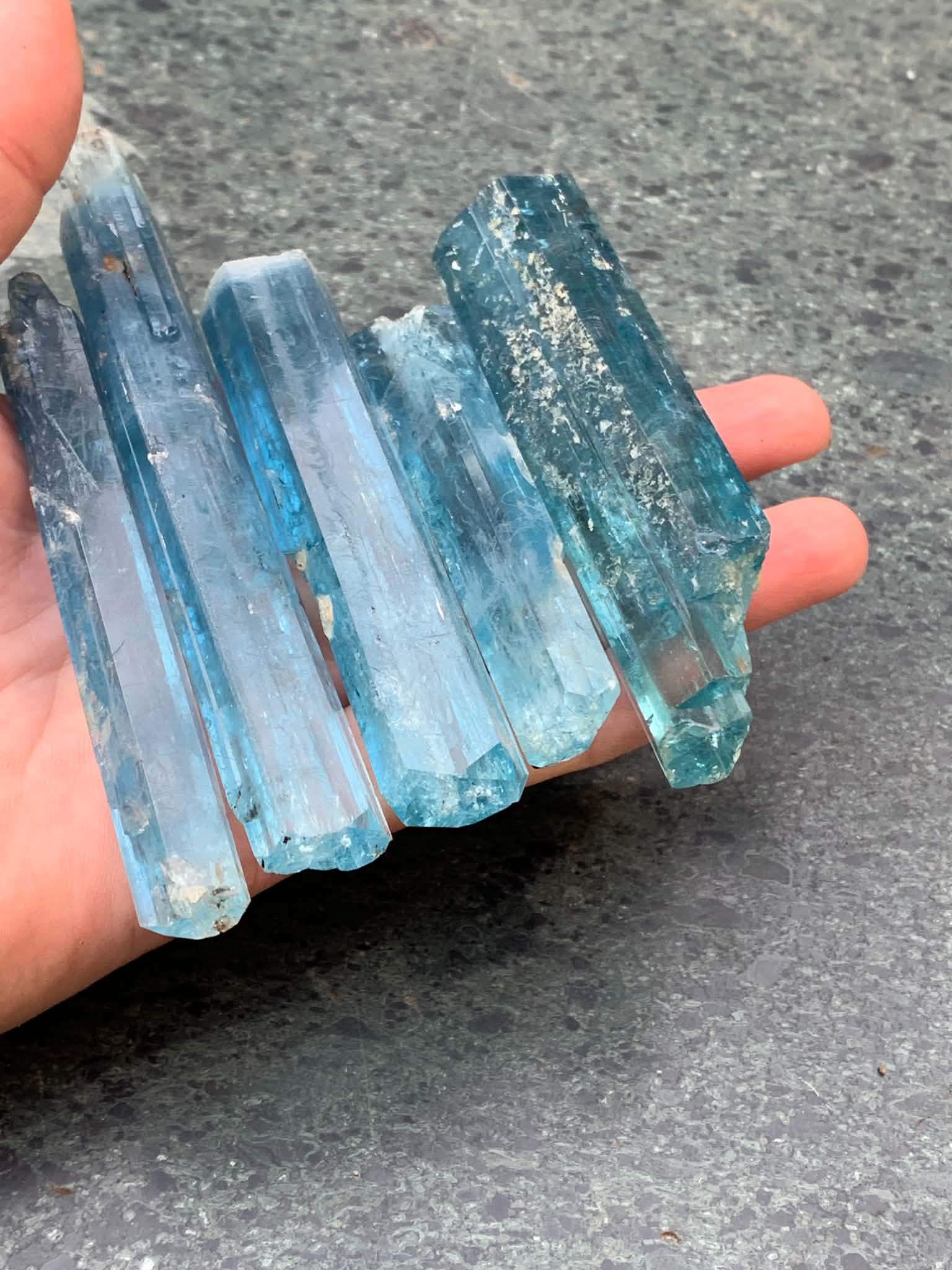
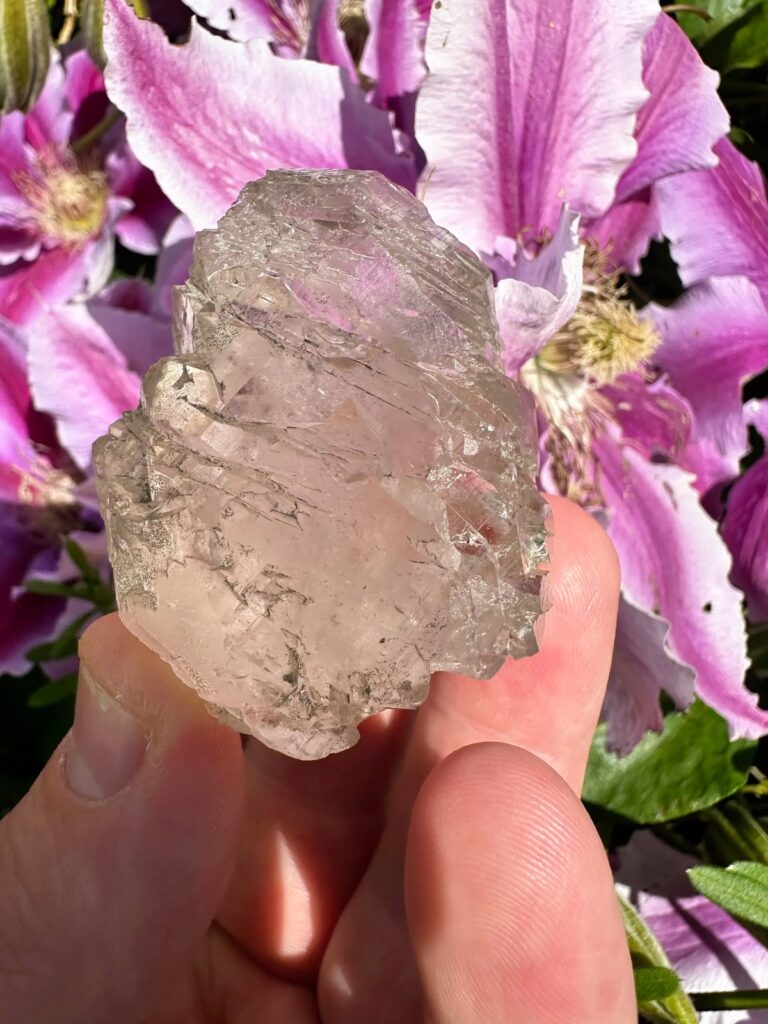
Aquamarine often brings to mind a pale, watery colour. Some of the Vietnamese material I buy is far more intense than that. The better Thanh Hoá crystals can carry a rich, deep blue while remaining transparent enough to show the interior clearly. That combination is what first made me interested in them.
It is not a colour exclusive to Vietnam. Brazil’s Santa Maria material is famous for its blue, and Nigeria also produces strongly coloured aquamarine, including stones that retain considerable colour in smaller sizes. But good Vietnamese crystals deserve to be considered alongside those better-known sources. The colour itself is a reason to seek them out.
Namibia’s Erongo Mountains have produced beautiful aquamarine growing alongside tourmaline and feldspar, where the arrangement of several minerals contributes enormously to the appeal. With the Thanh Hoá material that interests me, an individual crystal can be enough. When the deep blue comes with good lustre, well-defined faces and an intact termination, I understand why a collector would want to leave it exactly as it is. Cutting might produce a beautiful gemstone, but it would also remove the natural form that makes the specimen appealing in the first place.
Not every Thanh Hoá aquamarine has that depth of colour. There is paler material, fractured material and crystals whose best features have not survived. Finding aquamarine is therefore only part of the challenge. The particularly desirable finds combine the blue with the form and condition.
Those are the specimens that keep me interested in Vietnam, and help explain why a good discovery can matter so much to the people searching for them.
A miner interviewed by Pháp Luật Việt Nam in May 2017 explained that a group would usually consist of four or five people, often relatives. Before setting off, they gathered food, medicine and supplies for a week to ten days, sometimes longer. He described the frustration of staying and working for an extended period without a worthwhile result, alongside the possibility that one fortunate discovery could bring a substantial sum.
There is an obvious attraction in that possibility. A good find offers something to keep working towards, especially when other opportunities are limited. But the successful finds are also the ones people hear about. The unsuccessful trip produces no spectacular crystal to photograph and no remarkable sale to discuss.
As buyers, we only see what somebody found. We do not see the unsuccessful trips. We can compare several attractive aquamarines without knowing how many people searched for them, how much ground they worked or how many other trips produced little of interest.
The stories of valuable discoveries need some care. Newspapers and miners repeat accounts of stones selling for enormous sums, but those are not independently verified transaction records. They do, however, help explain the expectations surrounding a good find, and why people might continue when the last attempt had disappointed them.
Not everybody doing the digging was working on that basis, either.
A former hired digger interviewed by Tiền Phong in 2013 described two different arrangements. Some people searched independently and sold what they found. Others received a daily wage to dig at locations chosen by the people financing the work, handing over the recovered stones to them.
The report also described groups establishing camps and sending members down periodically to buy provisions or move and sell material. A local resident recalled how people had become interested after seeing outsiders find valuable crystals in forests they had previously visited for firewood, vegetables and medicinal plants.
Finding an expensive crystal does not necessarily mean receiving the price it eventually sells for. People can be working beside the same deposit under quite different arrangements.
The same report described groups choosing areas according to their prospecting experience. There was judgement involved in deciding where to establish a camp and begin digging, even though that judgement could not guarantee a result.
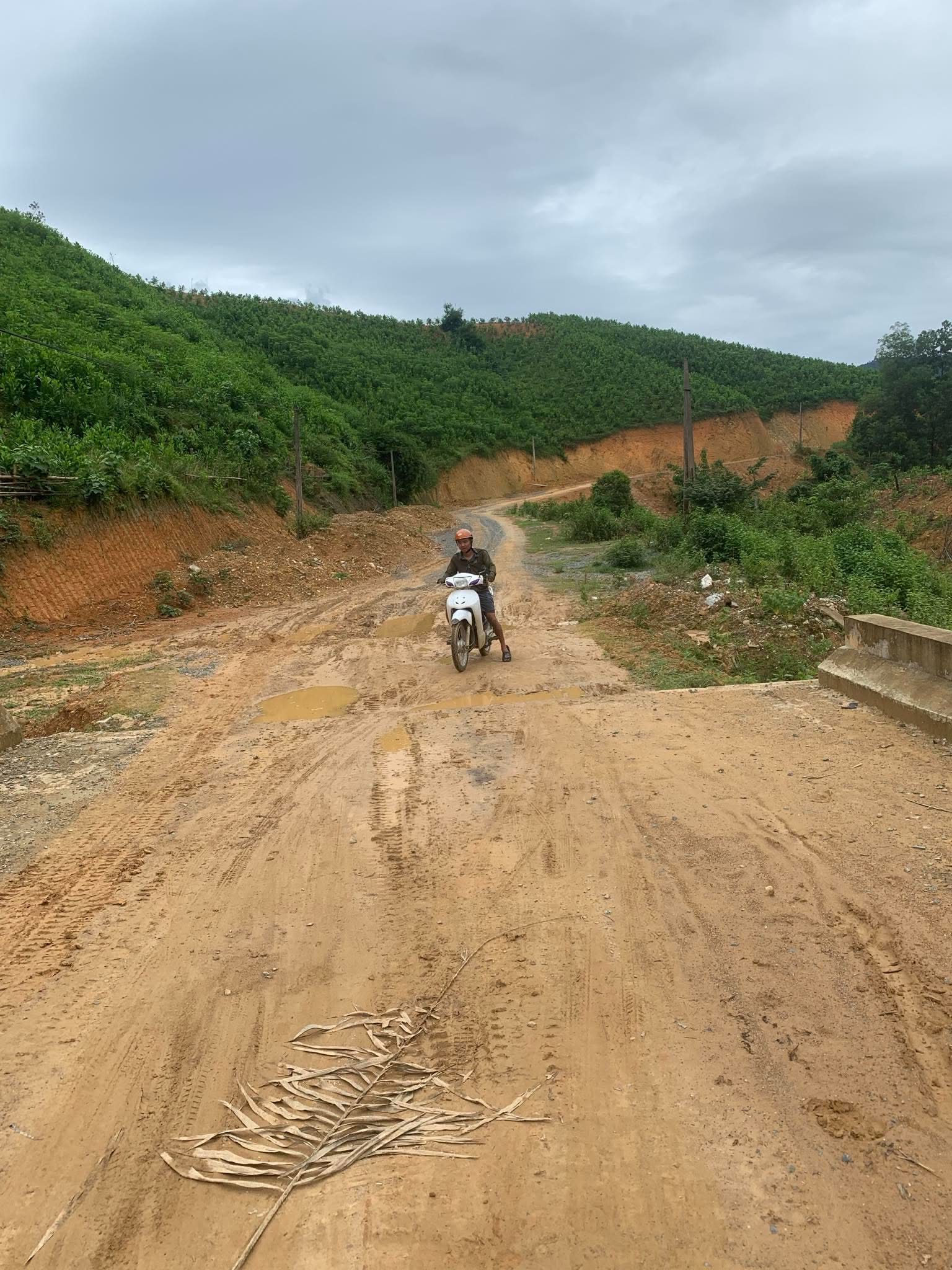
The photographs my supplier sent show some of the practical difficulties around that work. A loaded motorbike lies on its side in a deeply rutted muddy road. Another photograph shows the route through green hills, with puddles across the track and exposed banks of reddish earth.
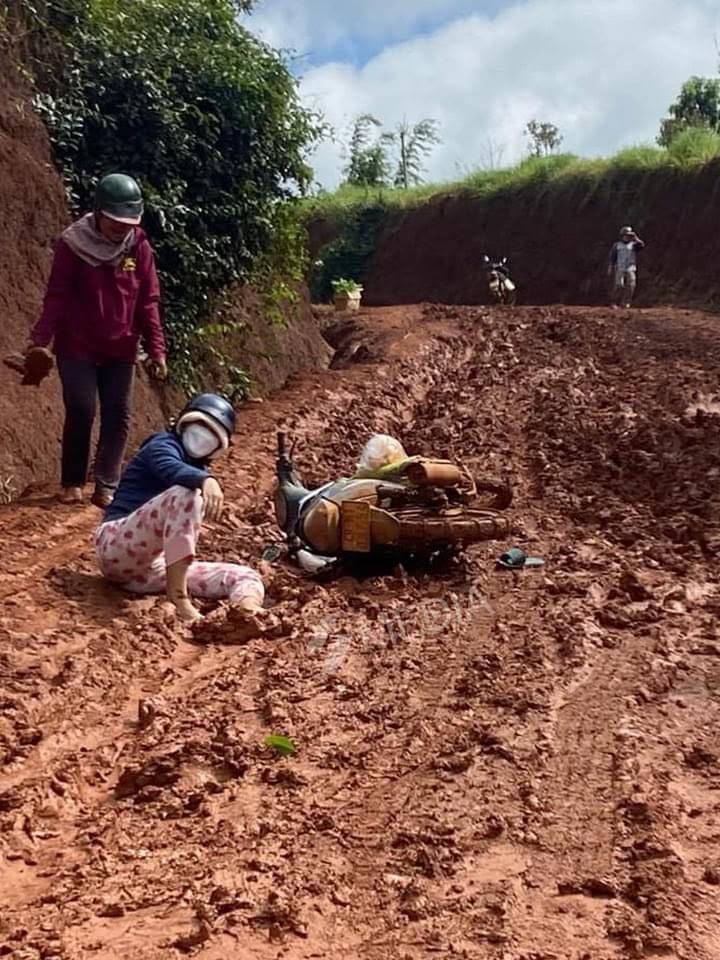
The videos take you into confined rocky workings, where headlamps illuminate the surfaces close to the people working. Other clips show them outside, eating together from bowls and shared dishes. Along with the digging, there are supplies to carry, meals to prepare and journeys to make, without knowing what the trip will produce.
Aquamarine in this area occurs in pegmatites and in the material left as those rocks weather, as described in GIA’s study of the Thường Xuân deposits. Some ground can therefore be worked with hand tools, although digging and removing it still requires substantial effort.
My supplier describes local families earning a living with hand tools and very basic equipment. They are not using explosives or heavy machinery, and they say they try to keep damage to the surrounding land to a minimum. Digging still disturbs the ground, of course. But the scale and circumstances matter when we talk about the people doing it.
A collector might be looking for a particular shade of blue or a complete termination. The person searching for that crystal has the more immediate concern of whether the trip will earn them anything.
The risks are more serious than an unsuccessful trip.
In February 2015, Người Lao Động reported that three young men had died when a gemstone working collapsed in the Xuân Lẹ area. The newspaper also described accompanying diggers through the forest and seeing people working without protective equipment. One experienced miner explained his involvement in terms of a lack of other employment. These were historical accounts of the local gemstone workings, rather than the particular people shown in my supplier’s footage.
My supplier also explained why the miners wanted to remain anonymous. They said the mining was unlicensed and that discovery could mean confiscation of equipment and recovered aquamarine. That was why the miners did not want too much attention drawn to their activities.
I had asked for an anonymous account, and I am keeping the individuals and precise workings private.
From the miners, the material passes to local buyers. My supplier says much of the buying and selling now happens online. Photographs and videos circulate, prices are discussed and parcels move between sellers before some are offered overseas.
I can participate in that from Cheshire. Before I receive a message asking whether I am interested, other people have already made the journey, done the digging and taken the chance that they might come back with very little.
I began looking into this because I wanted to know more about the people finding the aquamarine I buy. What stayed with me was the account of those five diggers who had worked for ten days without a lucky find.
There was no exceptional crystal at the centre of their story. They were still looking for it.
The deep blue is what first attracted me to Thanh Hoá aquamarine, and it remains the reason I seek out the better specimens. But a selection of beautiful crystals gives a misleading impression of how readily they appear. By the time they reach a seller, we are looking at the finds that made it through.
I would still love to hear about somebody’s best discovery. After reading these accounts, I would also want to know how long they had been looking before they found it.
You can browse aquamarine at Rare Minerals Earth.
Further reading: GIA’s aquamarine quality guide, Santa Maria aquamarine and the Smithsonian’s gem and mineral collection.