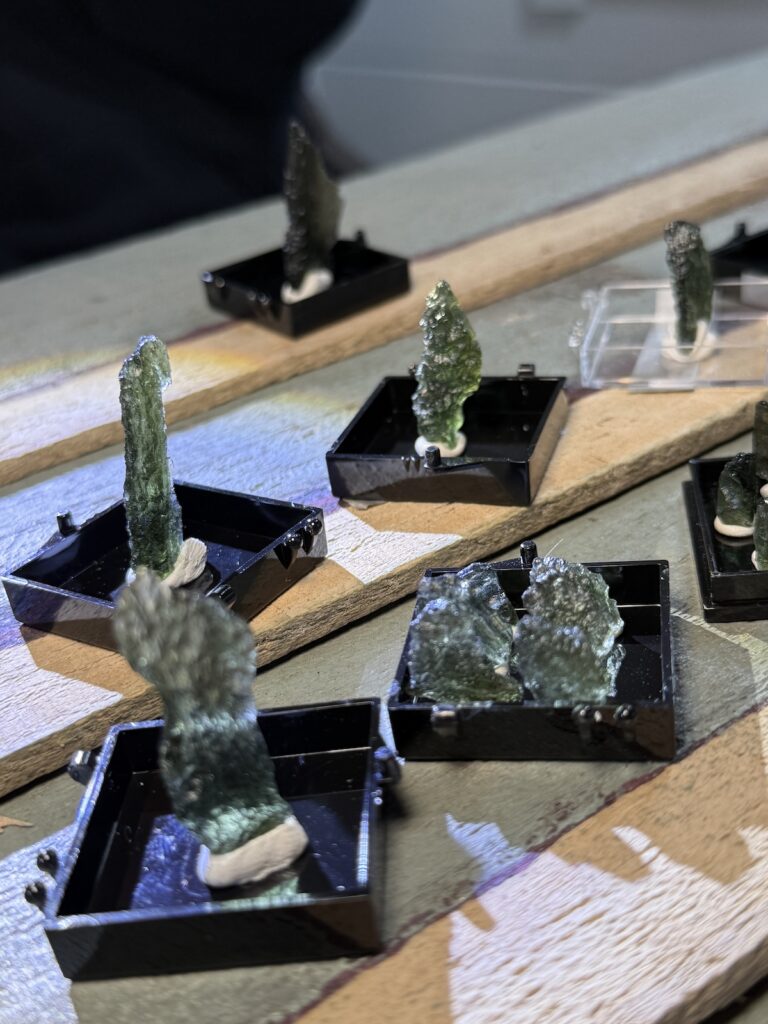
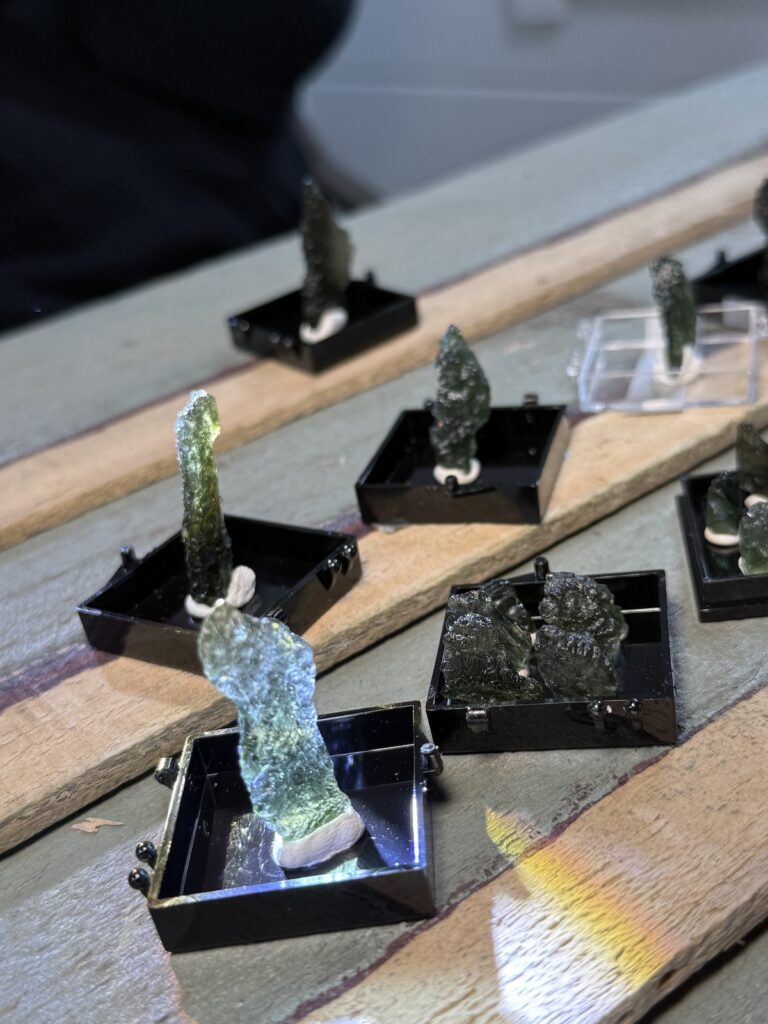
Moldavite already had a strange enough story before the internet got involved
Around 15 million years ago, an extraterrestrial object struck what is now southern Germany. The impact was violent enough to excavate a crater roughly 24 kilometres across, melting and throwing terrestrial material high into the atmosphere. Some of it travelled hundreds of kilometres before eventually falling back to Earth as natural green glass.
If we had been standing in what is now Czechia in the aftermath, we may have witnessed something extraordinary: Moldavite falling from the sky.
Most Moldavite found today comes from southern Bohemia in Czechia, with smaller amounts found in Moravia and a handful of other areas. I have handled plenty of it, but I still find the origin difficult to fully absorb. A small green piece sitting in my hand exists because an extraterrestrial object struck Europe hard enough to melt material from the Earth and send it flying hundreds of kilometres through the atmosphere.
Moldavite belongs to a group of natural impact glasses known as tektites. It is sometimes described online as a meteorite or “space glass”, but neither description is quite right. The material that became Moldavite was overwhelmingly terrestrial. The extraterrestrial object caused the event that transformed it, which I think makes the real explanation more interesting anyway.
The impact happened close to what is now the town of Nördlingen in Bavaria and created the Ries crater. Exactly how Moldavite formed during those first moments is more complicated than simply imagining lumps of rock being melted and thrown into the air. Researchers have studied its chemistry and the geology around the crater to understand which surface materials were involved and how molten material could have travelled so far.
What survived was glass scattered far beyond the place where the impact happened. The pieces that fell back to Earth still had a very long journey ahead of them, becoming buried in sediments, moved and redeposited as landscapes changed, and slowly altered over millions of years. Groundwater interacting with the buried glass helped produce the grooves, pits and sculptured surfaces that make Moldavite so recognisable today.
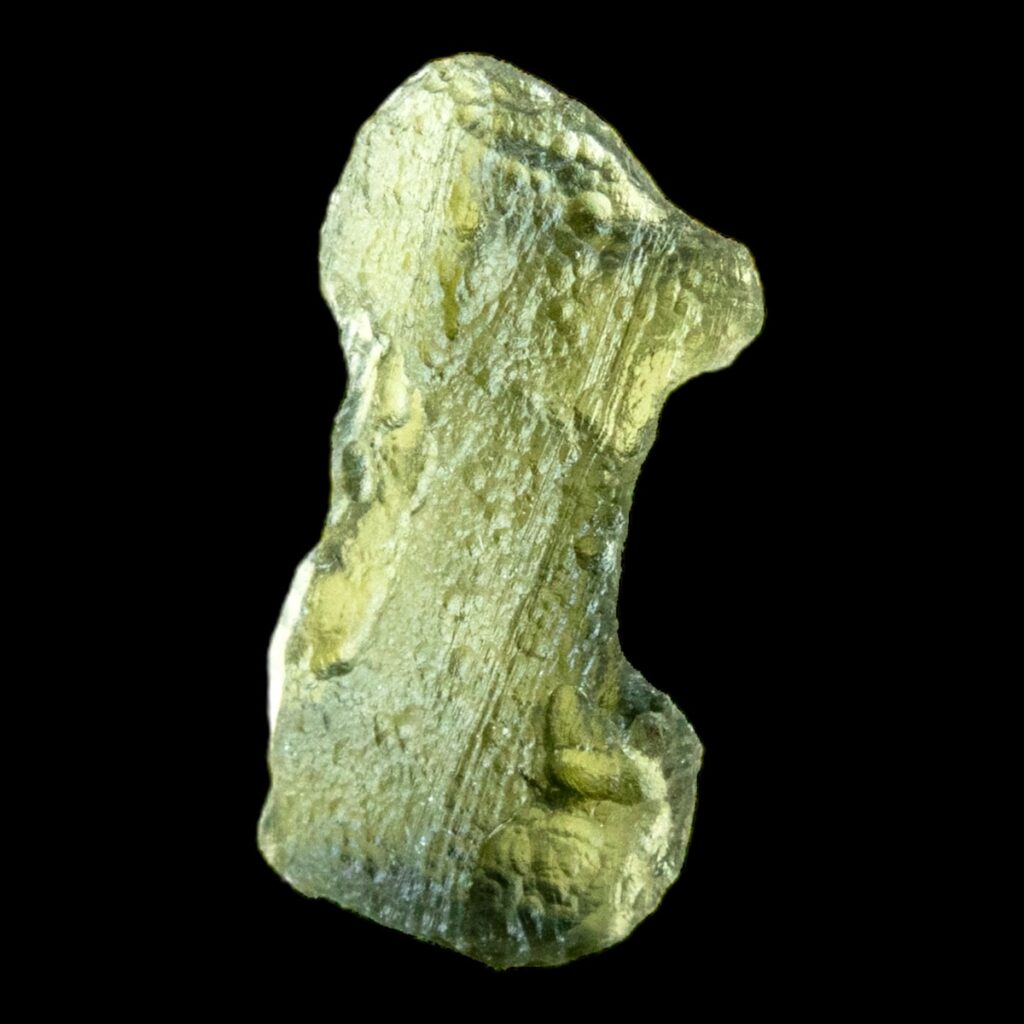
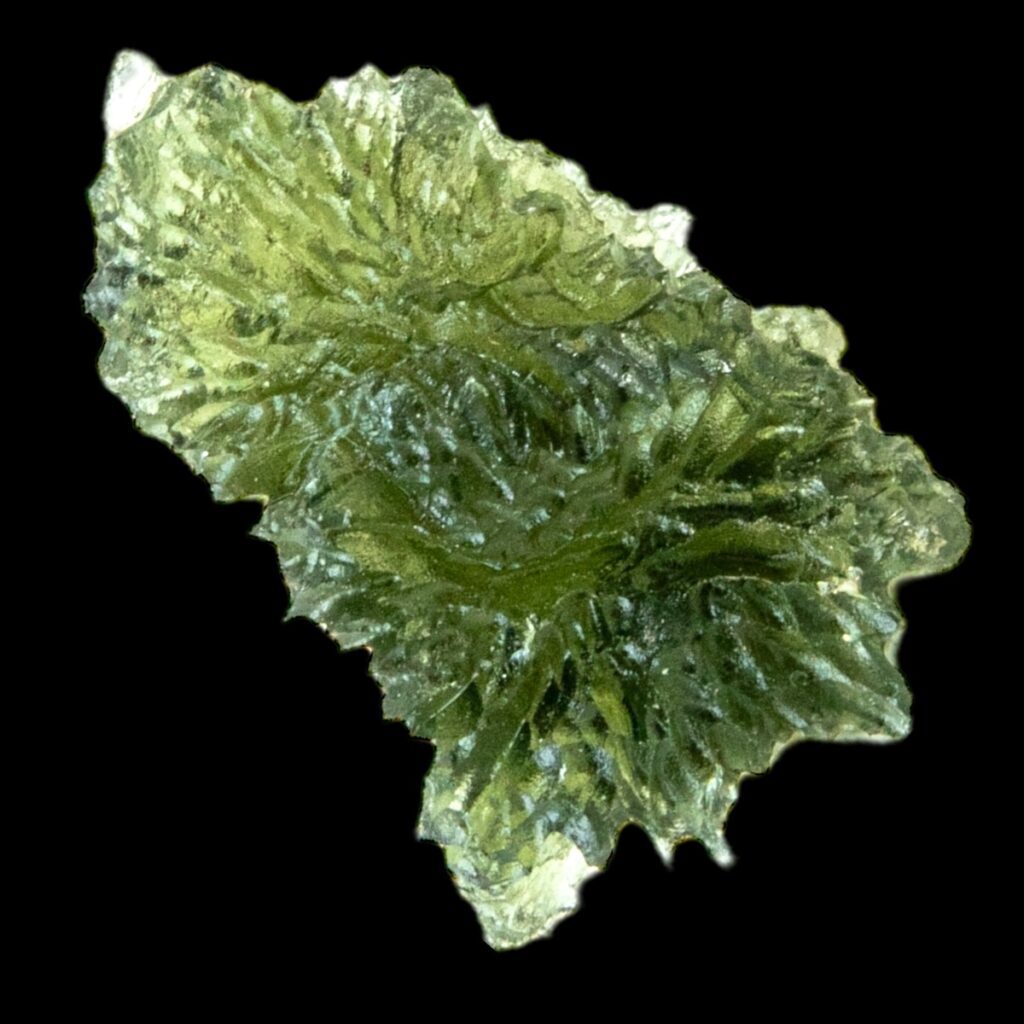
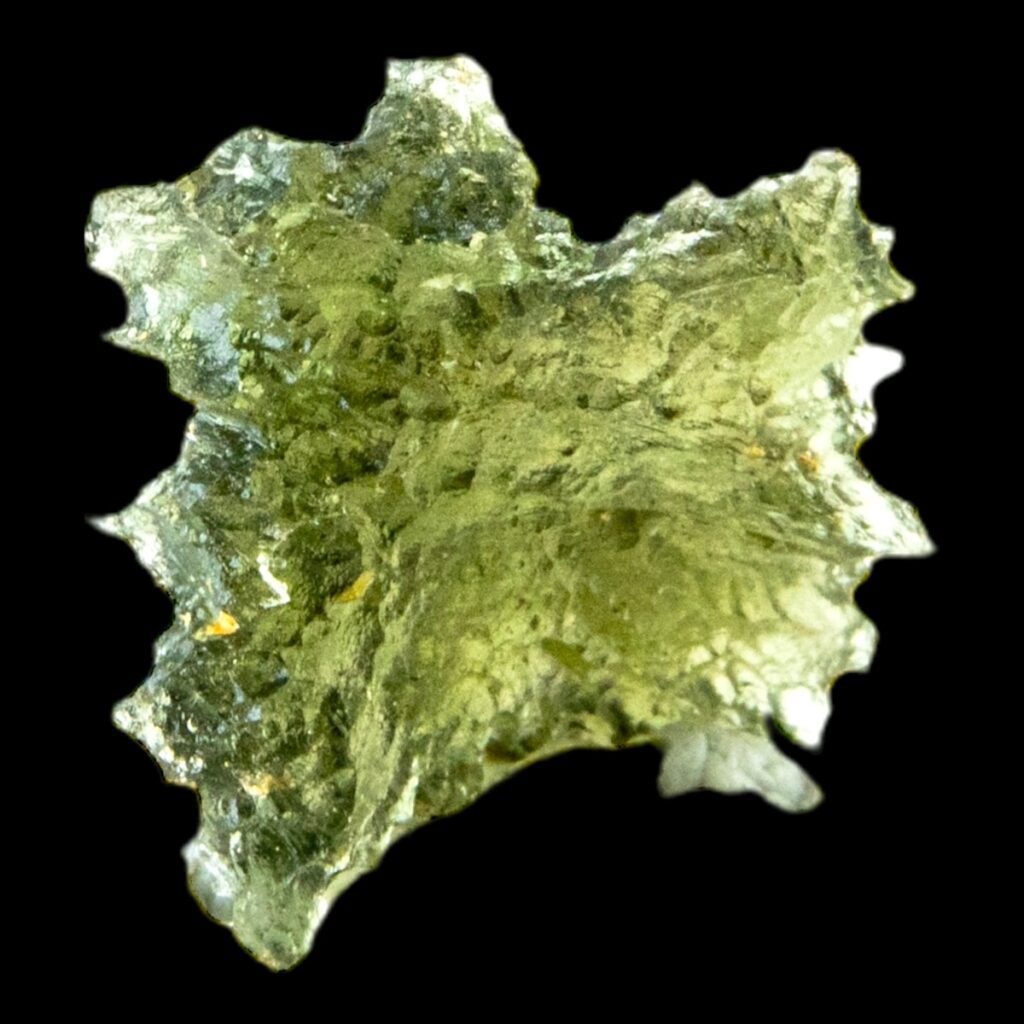
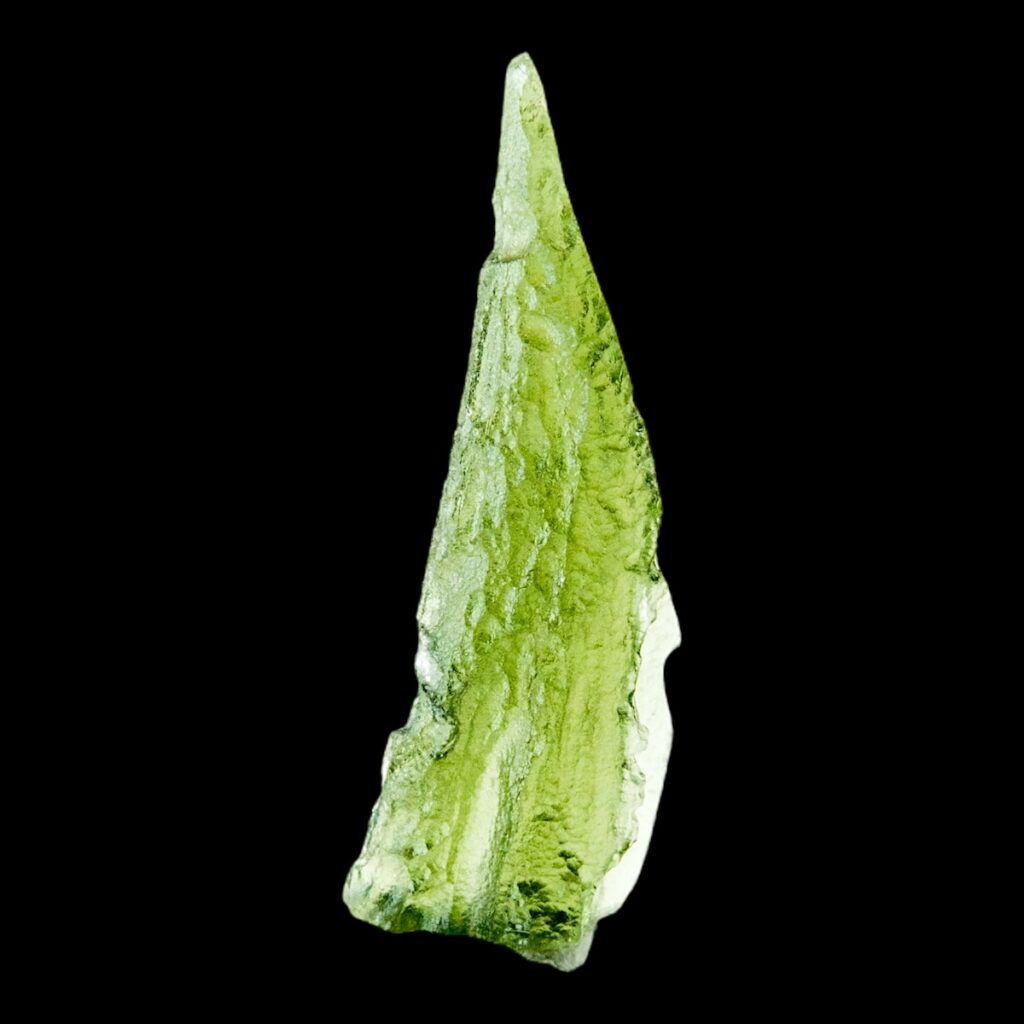
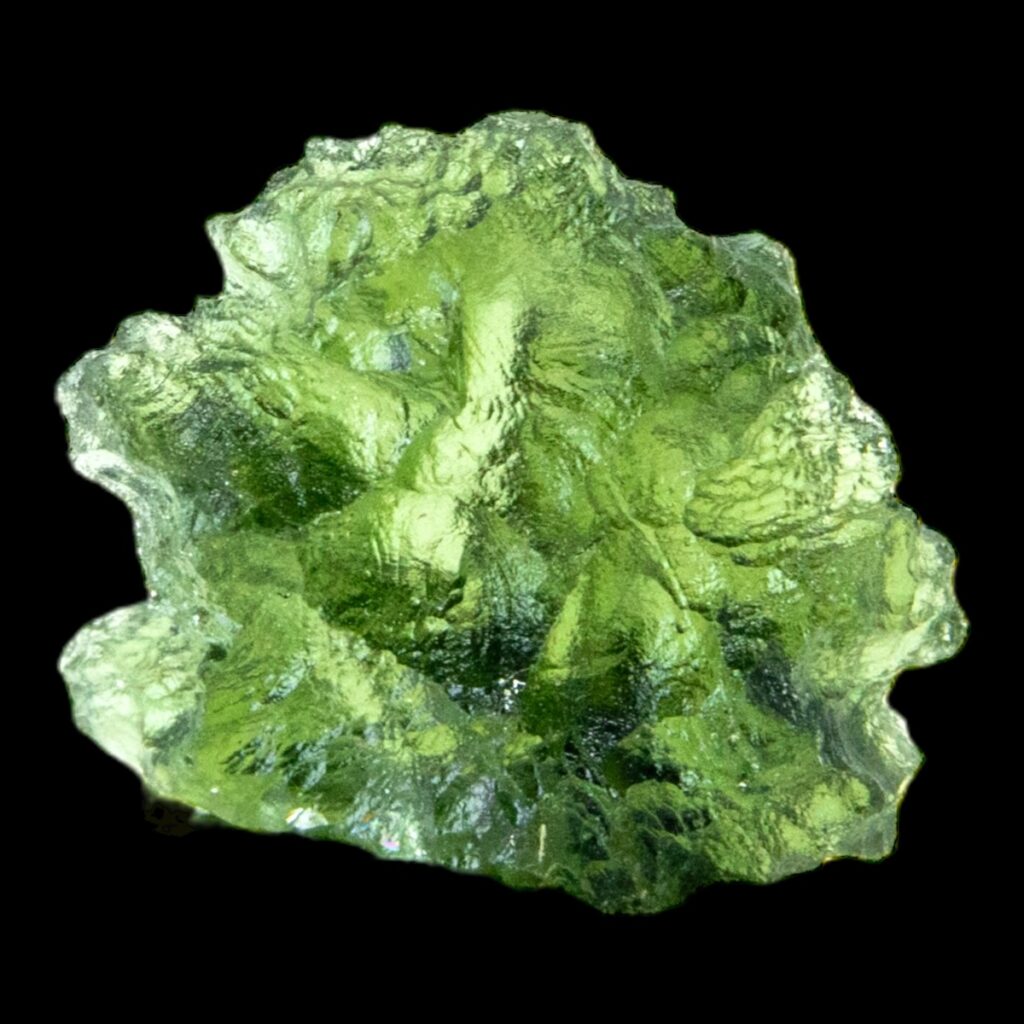
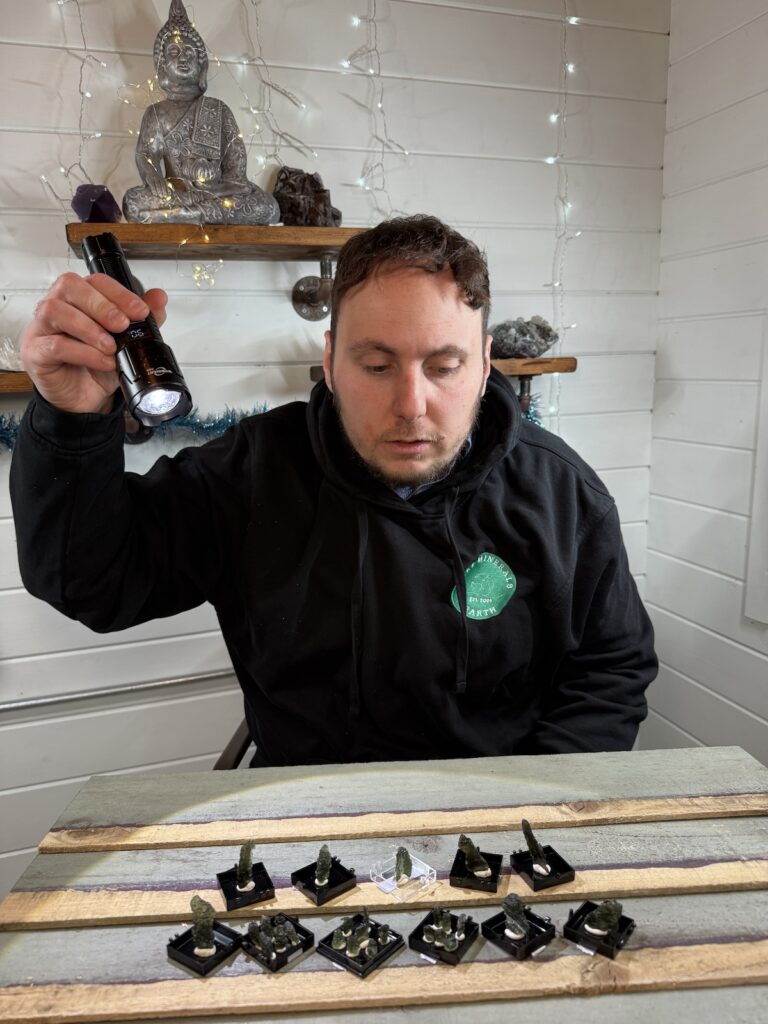
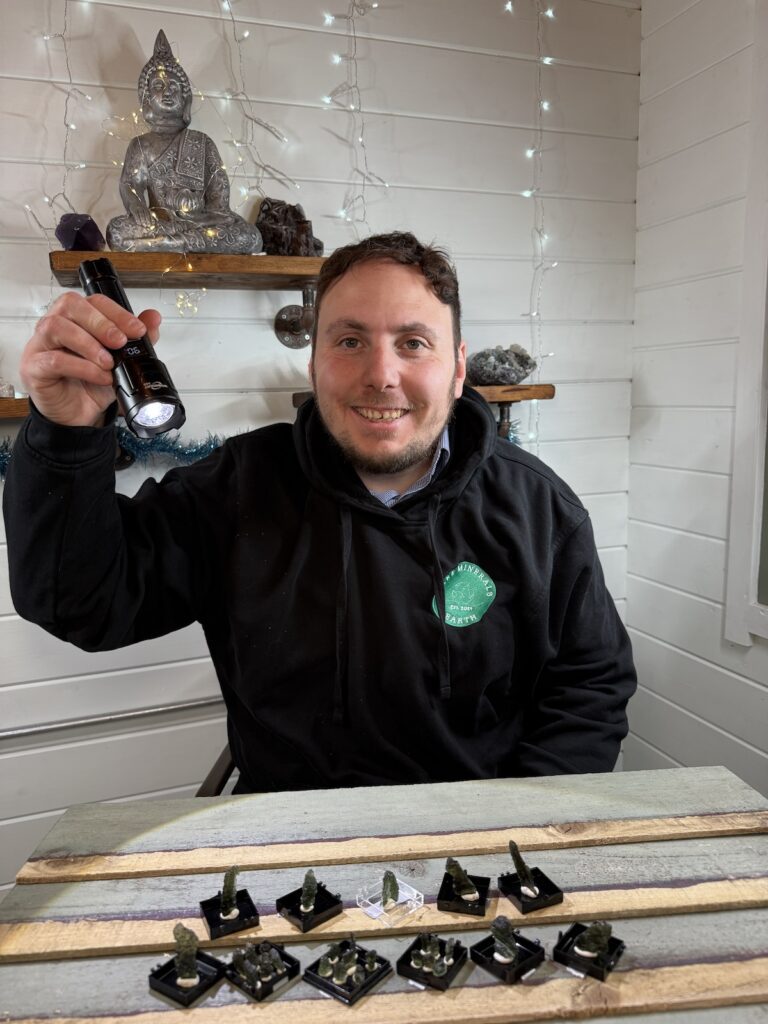
That is one of the things I love most about collecting it. Most of the pieces in my collection look completely different from one another. Some are relatively smooth, while others are covered in deep grooves or sharp ridges. A few have an almost hedgehog-like appearance, covered in little projections. Others are thin and sharp enough to remind me of a blade.
You can put several pieces of Moldavite next to each other and, despite knowing they were created by the same extraordinary event, each one still seems to have its own character. That variety is part of what keeps me interested in it. I find myself turning pieces over in my hand and following the grooves with my eyes, trying to work out what happened to them during the millions of years between falling from the sky and eventually being dug out of the ground.
Nobody designed those shapes. The impact created the glass, but everything that happened afterwards helped turn each piece into something individual.
Humans have been interested in Moldavite for much longer than the modern crystal world might suggest. Archaeological finds show that people were collecting and working it thousands of years ago, including during the Stone Age, when pieces were used to make tools. I would love to know what those first people thought they had found.
They knew nothing about the Ries crater. They had no concept of an asteroid impact millions of years earlier or terrestrial material being thrown hundreds of kilometres through the atmosphere. They simply found an unusual green glass in the landscape and recognised that it was worth picking up.
By the time we eventually understood its extraterrestrial connection, Moldavite had acquired another identity altogether. People ask me about it all the time, and surprisingly few of those conversations begin with geology. They tell me what happened after they bought one.
Several people have independently told me that their Moldavite “tried to escape”. Usually a necklace snapped, the stone fell out of its setting or a piece disappeared somewhere they could not explain. They say it with complete seriousness, as though the Moldavite had made the decision for them.
Others swear it reorganised their entire life. They bought a small piece of green glass and, not long afterwards, a relationship ended, they changed jobs, moved house or suddenly decided that something they had tolerated for years was no longer acceptable. The stories are surprisingly consistent.
Moldavite has become associated spiritually with rapid transformation and change, and there is even something commonly called the “Moldavite flush”. People describe feeling warmth, tingling, pressure, dizziness or an intense emotional response when they first hold it. Some claim they know almost immediately that they are holding Moldavite because of the physical sensation it produces.
There are also people who buy a piece, wear it every day and wait for something enormous to happen. After a few months of remaining in the same job, the same house and broadly the same emotional state, they shrug, keep wearing it and stop expecting anything at all.
I love all of these stories. I am open-mindedly sceptical about crystal healing, and Moldavite does not change that. I cannot demonstrate that a piece of impact glass can end somebody’s relationship, make them change career or decide that it has finished its work and disappear.
I also do not think somebody is necessarily imagining an experience simply because we cannot demonstrate that the crystal caused it. Expectation can produce genuine physical sensations, coincidences can take on greater significance when we are looking for them, and buying something associated with transformation might happen at exactly the point when somebody already feels ready to make a change.
There is also the possibility that people experience things we do not yet understand. I am comfortable not knowing.
What interests me is that Moldavite has developed such a specific reputation. Plenty of crystals have supposed spiritual properties, but very few seem to generate quite so many stories about dramatic change, physical sensations and pieces apparently deciding to leave their owners.
Moldavite had been known to mineral collectors and people interested in crystals for generations, but lockdown changed the scale of that attention. Social media, particularly TikTok, introduced it to an enormous new audience, and videos began appearing of people describing the Moldavite flush, filming their first reactions and warning others not to buy it unless they were “ready” for what might happen afterwards.
It is easy to understand why that spread. Here was a strange green glass created by an asteroid impact, with people claiming that simply owning a piece could turn your life upside down. Demand increased dramatically, prices rose and people who had never previously heard the word tektite suddenly wanted Moldavite.
For a material created by one geological event around 15 million years ago and found predominantly within a relatively restricted part of Czechia, that created an obvious problem. There is only so much of it. No new natural Moldavite is being produced. The event that created it happened once, around 15 million years ago, and every genuine specimen ultimately comes from material produced during that impact.
Where something becomes scarce, expensive and fashionable, somebody will eventually fake it. Fake Moldavite is not entirely a product of social media, but the explosion in demand made the problem much more visible. Ordinary green glass can be manufactured and shaped to imitate genuine material, and the quality varies enormously. Some fakes look like green glass that has been attacked with a kitchen utensil. Others are considerably more convincing.
That is one reason I am careful about where I buy Moldavite. There is no single appearance that proves a specimen is genuine. Natural Moldavite varies in colour, thickness, transparency and surface texture. Some pieces have relatively gentle sculpturing, while others develop the deep grooves, ridges and projections that attracted me to the material in the first place.
Knowing the provenance matters. So does knowing the person supplying it.
I find it strange that a material can have such different identities depending on who is holding it. To a geologist, Moldavite is evidence of an enormous impact event and an opportunity to understand what happens to terrestrial material under conditions most of us will thankfully never witness. To an archaeologist, it is a material humans noticed and worked thousands of years before its origin could possibly have been understood.
To a mineral collector, it can be a beautiful and increasingly finite natural glass, with different localities, shapes, colours and surface textures worth studying in their own right. To somebody interested in crystal healing, it may be one of the most powerful and intimidating crystals they own. To somebody else, it is simply a funny-looking piece of green glass that did absolutely nothing when they wore it.
I think all of those perspectives are interesting. For me, the spiritual stories are part of Moldavite’s appeal because they tell us something about the way human beings respond to unusual natural objects. I enjoy hearing them, particularly the strange ones, and I am not interested in telling somebody that an experience they found meaningful was meaningless simply because I cannot explain it.
For all of that, I still find myself coming back to the geology. I can hold a small piece of green glass in my hand today that exists because, around 15 million years ago, an extraterrestrial object struck Europe in an extraordinarily violent event. Material from the Earth was melted and thrown hundreds of kilometres through the atmosphere before coming back down over what is now Czechia.
It effectively rained natural glass.
Those pieces then survived millions of years of burial, movement and weathering before humans found them, made tools from them, collected them, attached spiritual meaning to them and eventually argued about them on TikTok.
Moldavite has a tendency to attract the dramatic, the sceptical and the curious. I understand all three.
Its real story is strange enough that I am still not sure we needed to add anything to it. Explore our collection of Moldavite specimens to see individual pieces, photographs and availability.