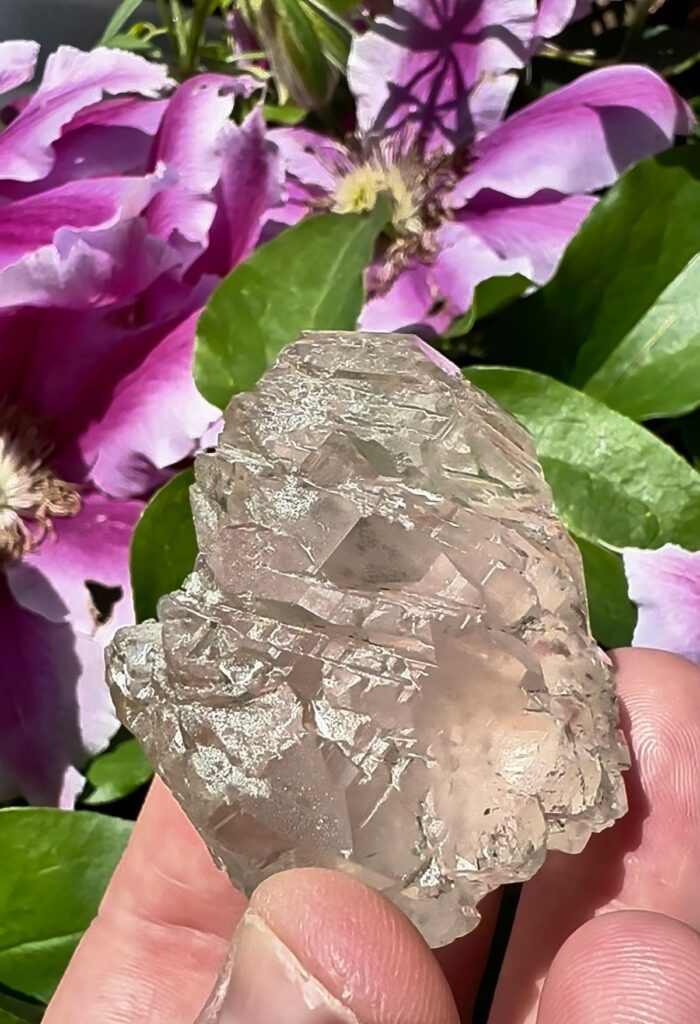
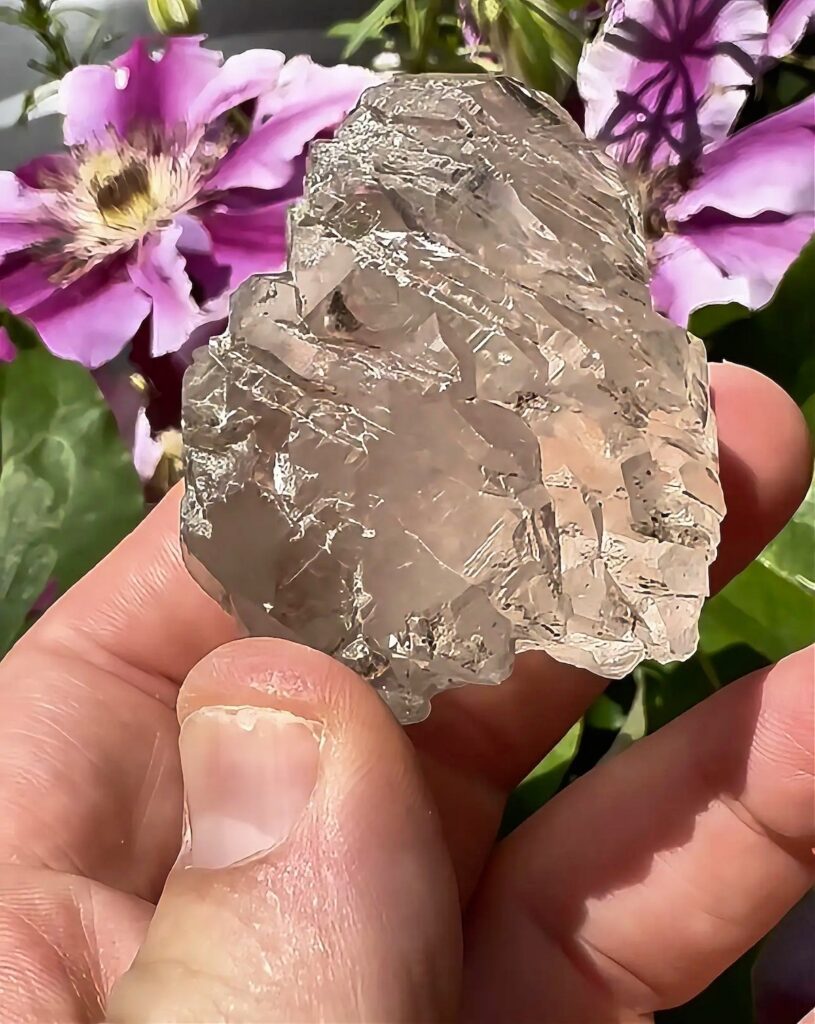
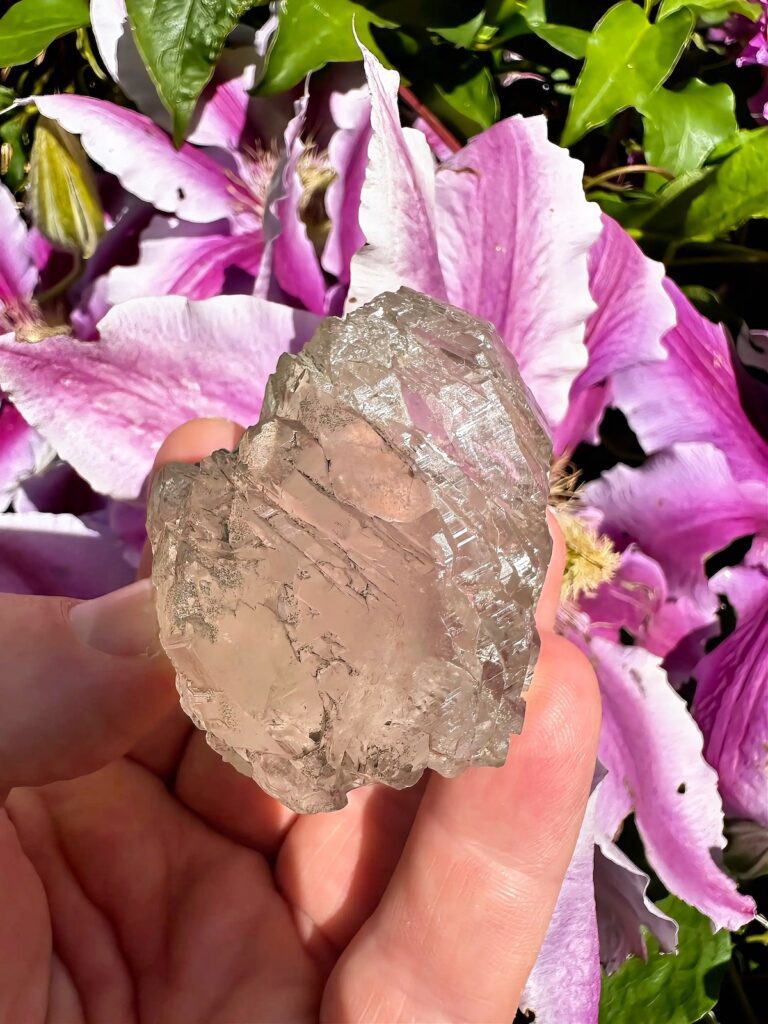
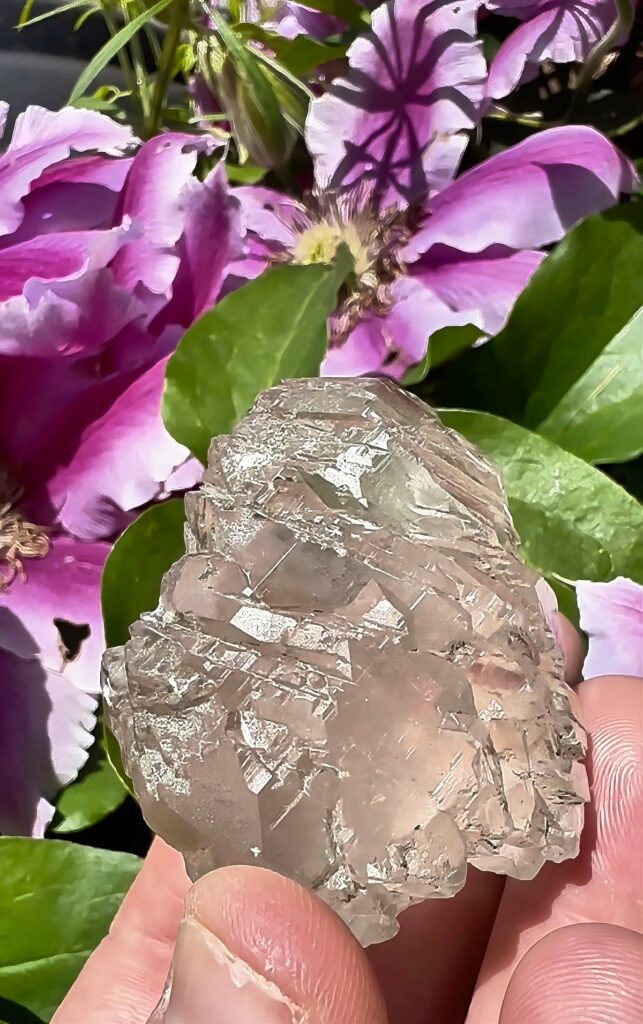
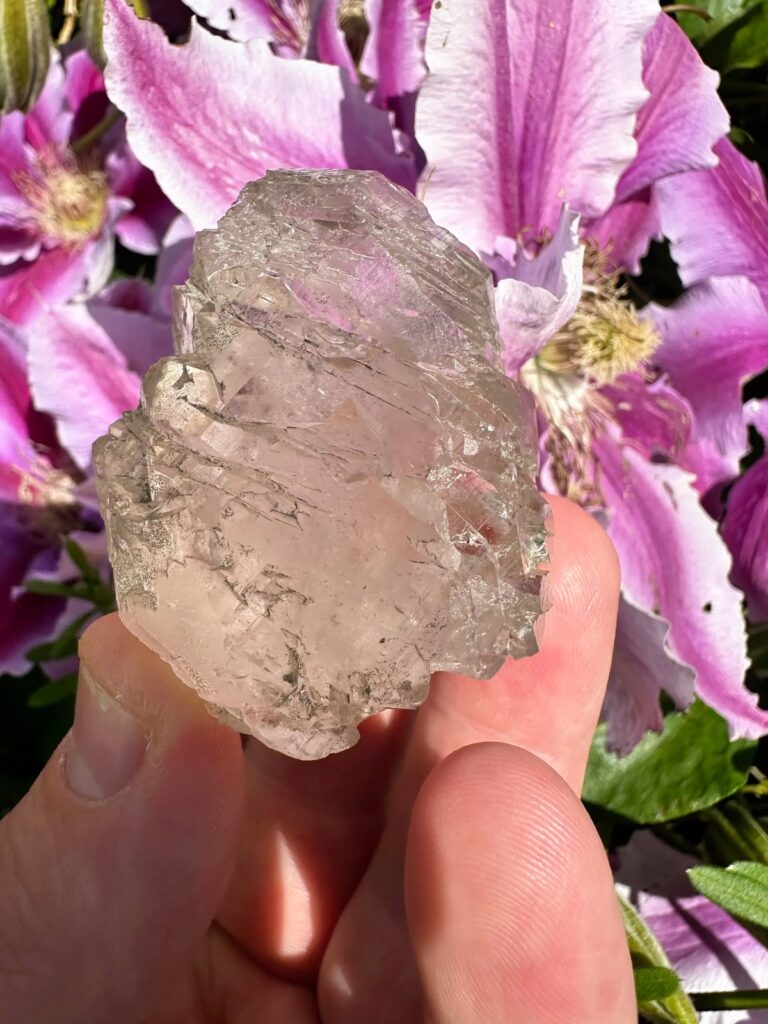
I consider Swiss Alpine quartz the Rolls-Royce of the quartz world
I’ve said for a while that Swiss Alpine quartz is the Rolls-Royce of the quartz world. This usually gets one of two reactions. Mineral collectors understand immediately what I mean, while somebody else eventually looks at me as though I have completely lost the plot and says, “Mate, it’s just quartz.”
The next person who says that to me is going to get a bloody nose.
I am joking, obviously, but I get this reaction surprisingly often when I start talking passionately about Swiss quartz. I understand it too. Quartz is one of the most abundant minerals in the Earth’s continental crust, so describing any of it as particularly special can sound like a mineral dealer getting slightly carried away.
Then I put several Swiss specimens next to each other.
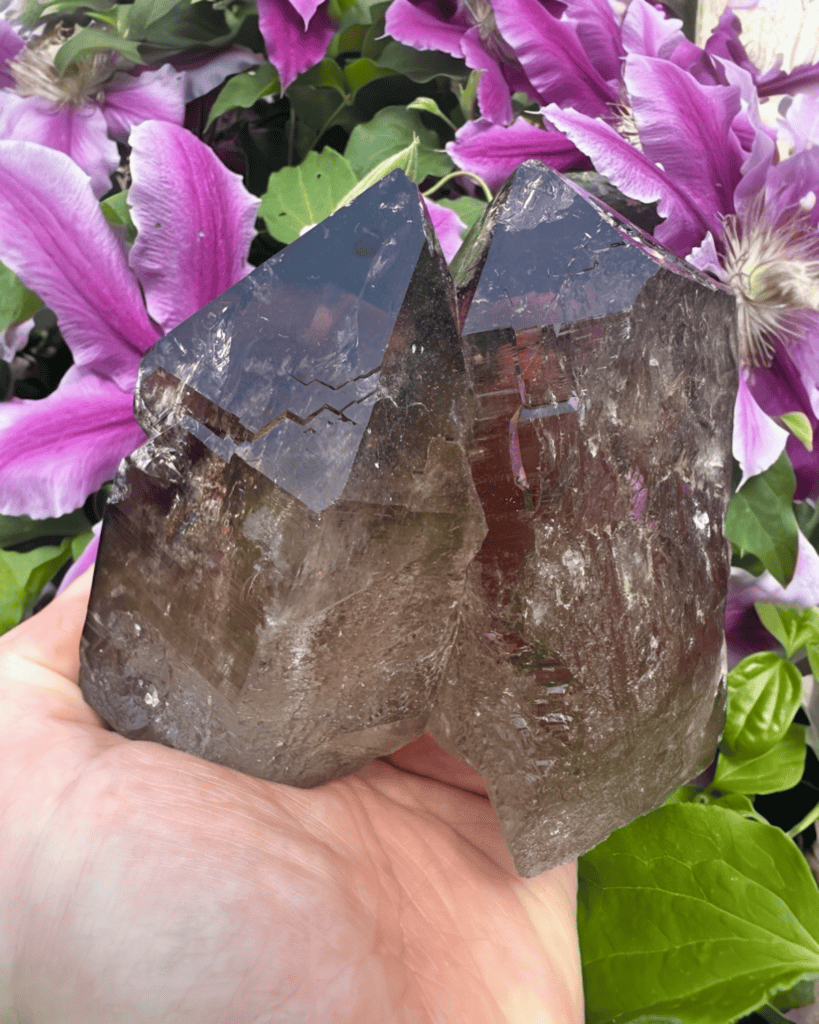
One might be completely clear and slender, another pale smoky brown. I have double terminated points, faden quartz with a white thread running through the centre, naturally etched crystals and morion so dark that it appears almost black. Other pieces carry chlorite, rutile or golden surface coatings, while some remain attached to the rock they grew from.
They are all quartz, but after handling enough of them, “quartz” starts to feel like a surprisingly inadequate description.
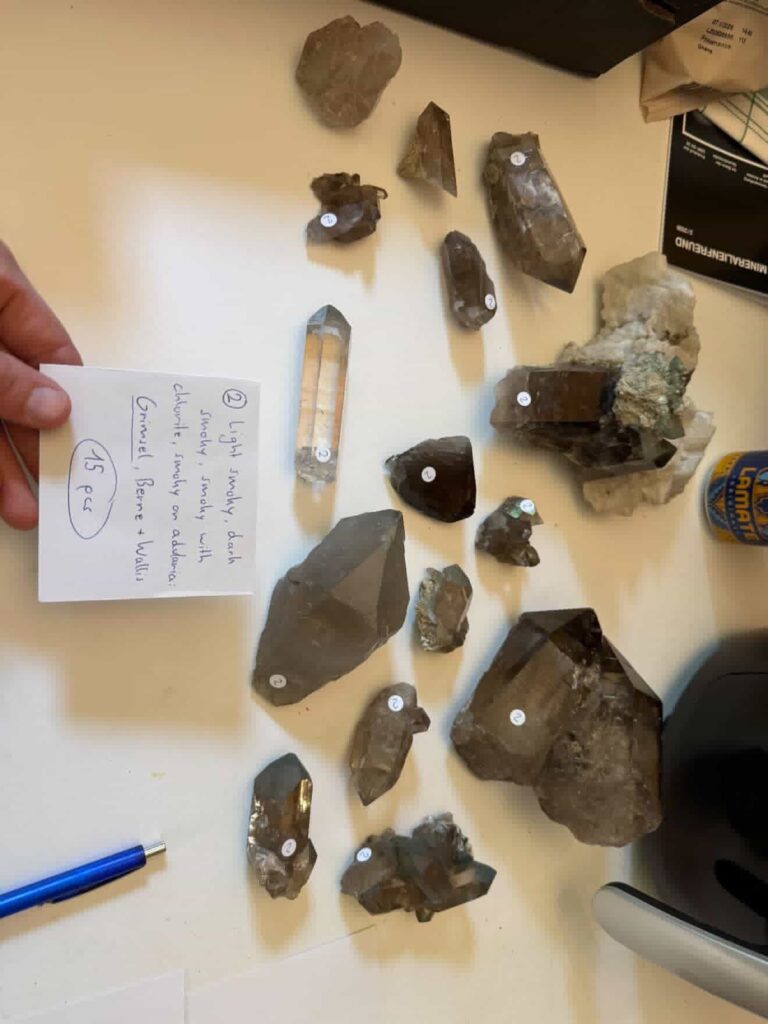
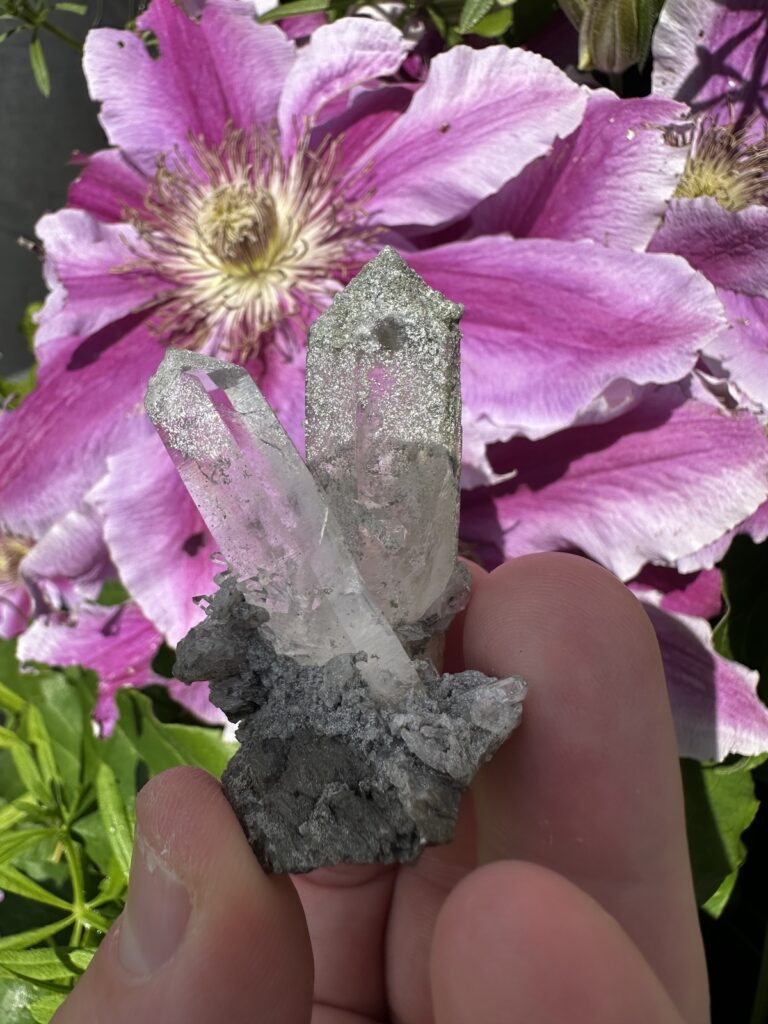
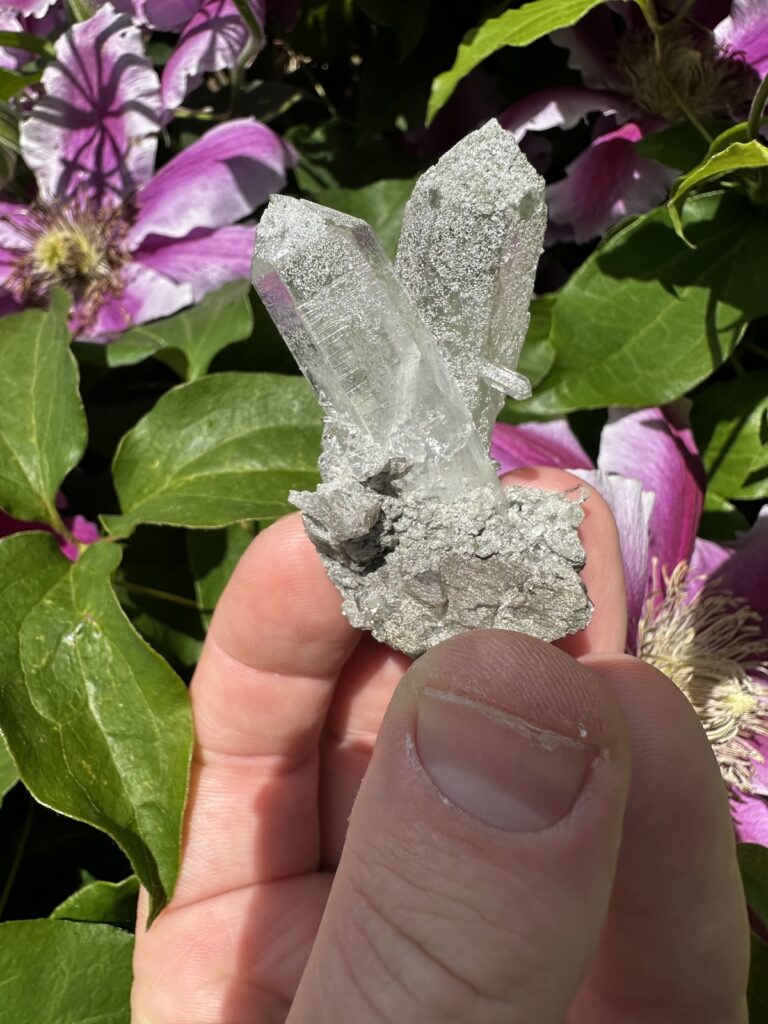
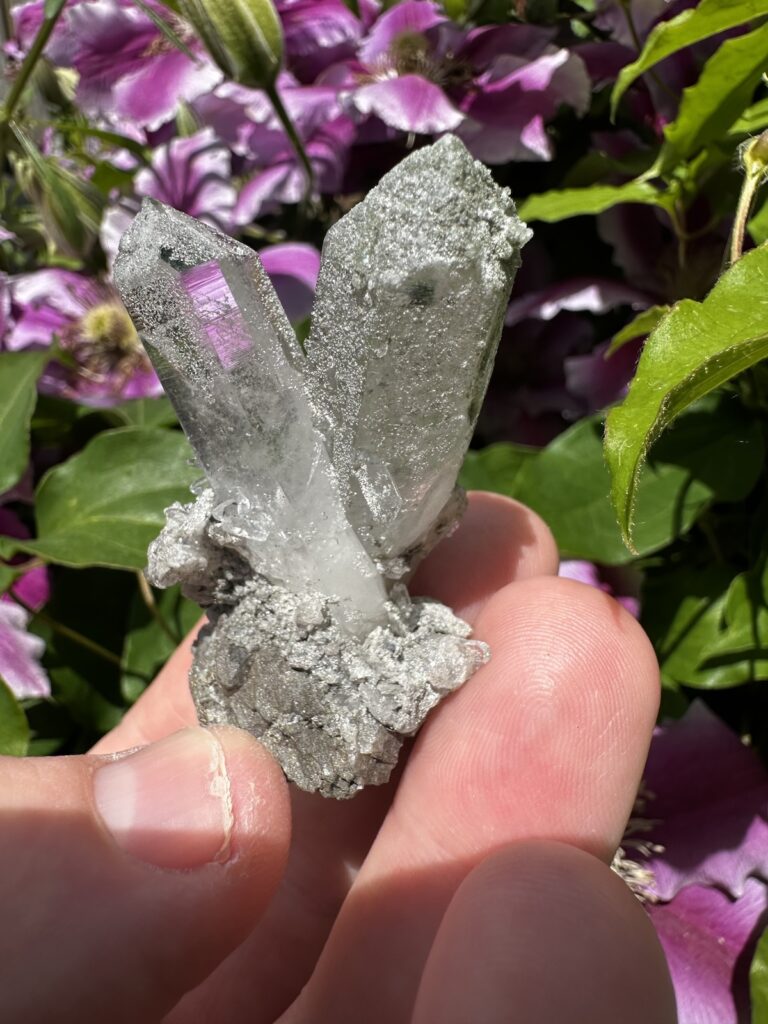
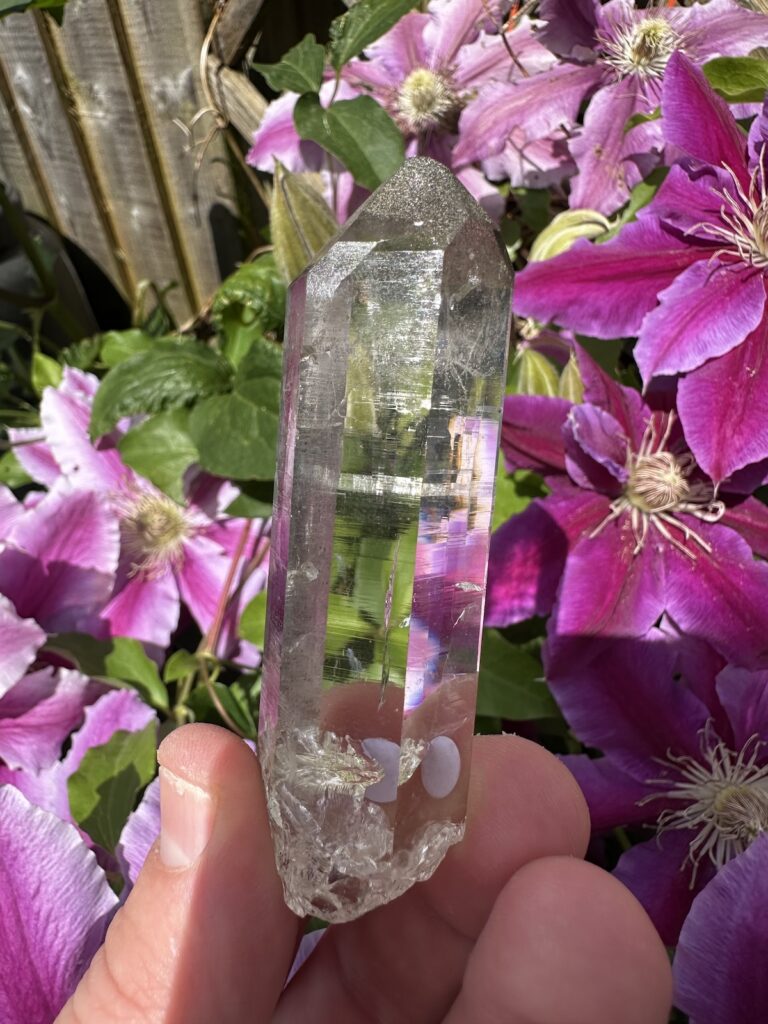
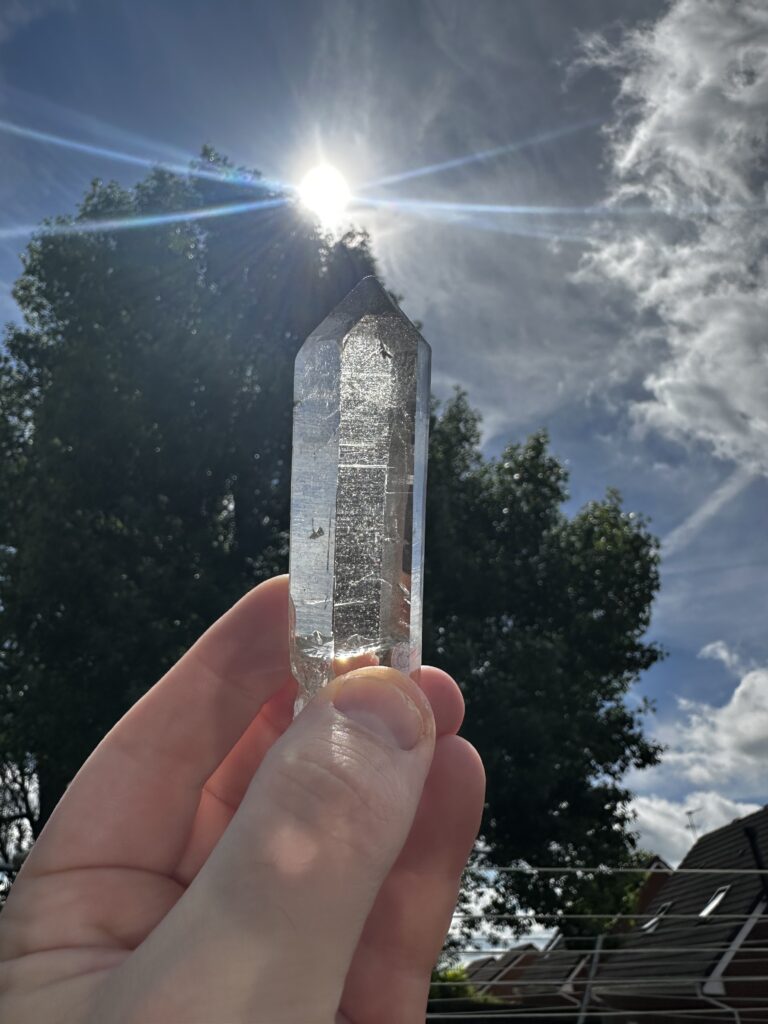
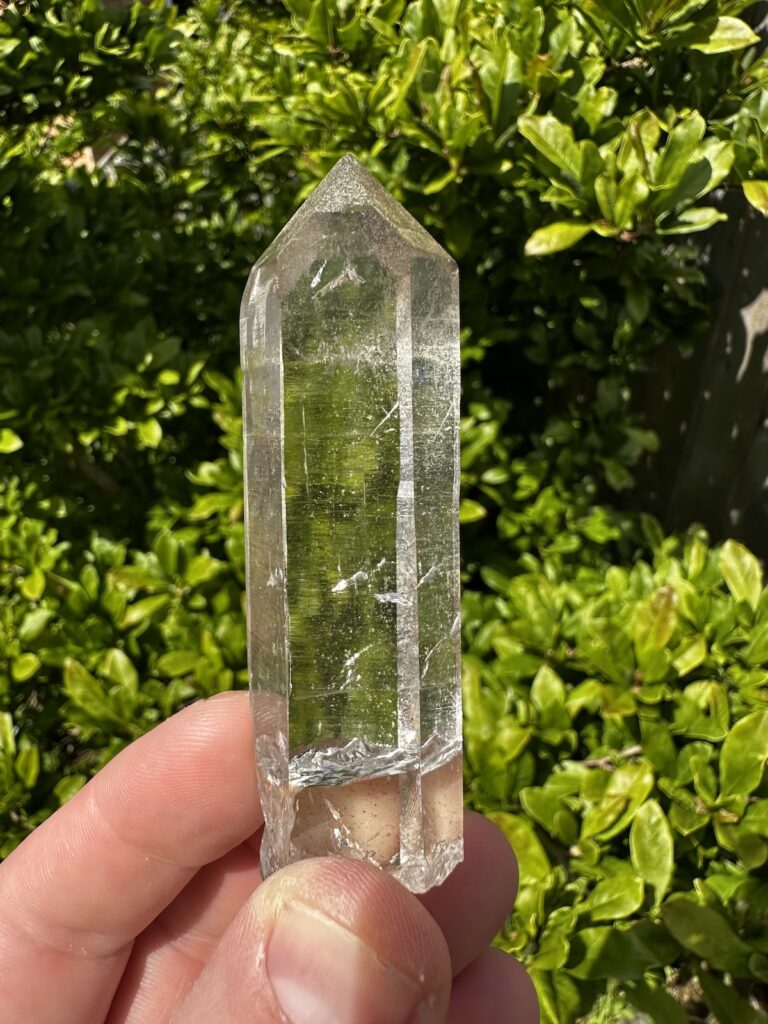
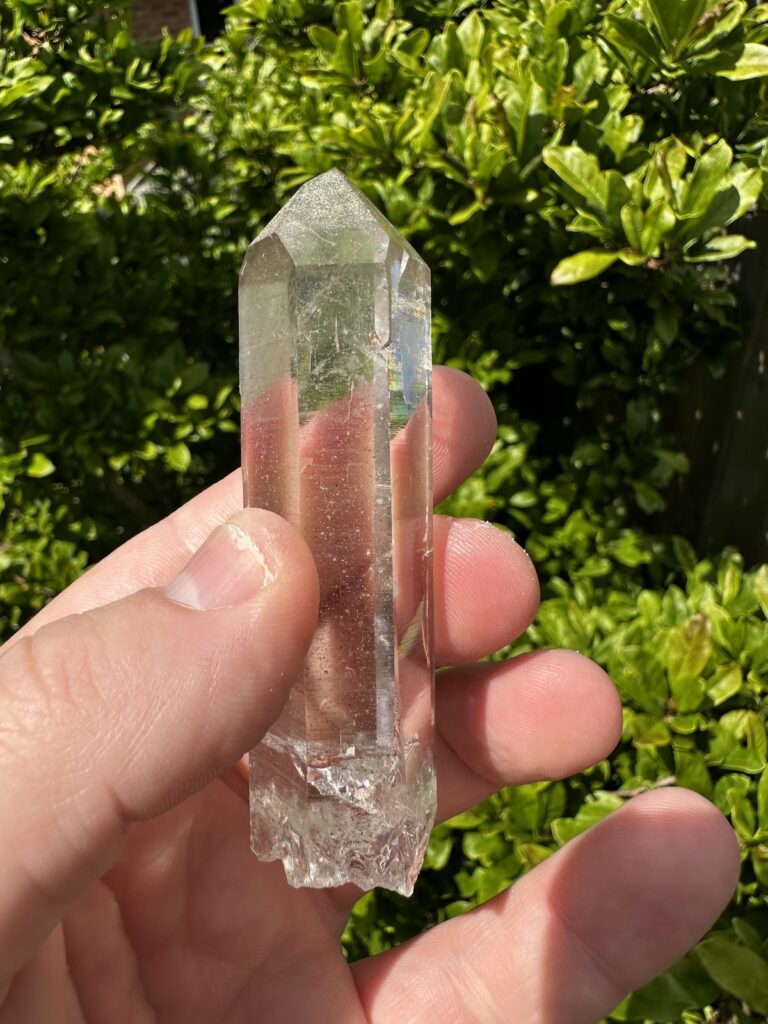
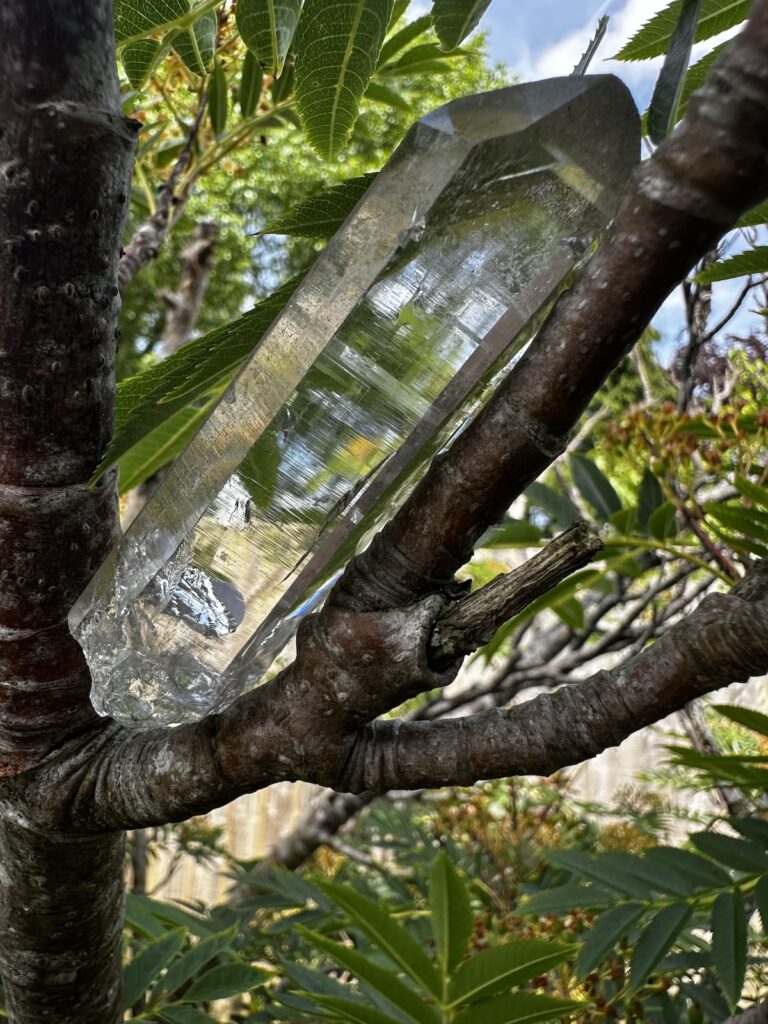
The Alps themselves help explain why. They formed through the collision between the African and European tectonic plates, with rocks buried, compressed, folded and eventually raised during tens of millions of years of mountain building. During that geological history, fractures opened within the rocks and hot fluids circulated through some of them, carrying dissolved silica and other components.
Where those fluids encountered enough open space, quartz could crystallise into the fissure. These Alpine clefts are sometimes remarkably narrow, which is something I had not properly appreciated until I began learning where my own specimens had come from. I had imagined crystal pockets as little underground caves, when in reality the available space can be a crack in the rock where crystals developed because, for a period of time, there happened to be room.
Two pockets relatively close together can therefore produce noticeably different quartz because the surrounding rock, temperature, fluid chemistry, available space and movement of the fissure were not identical.
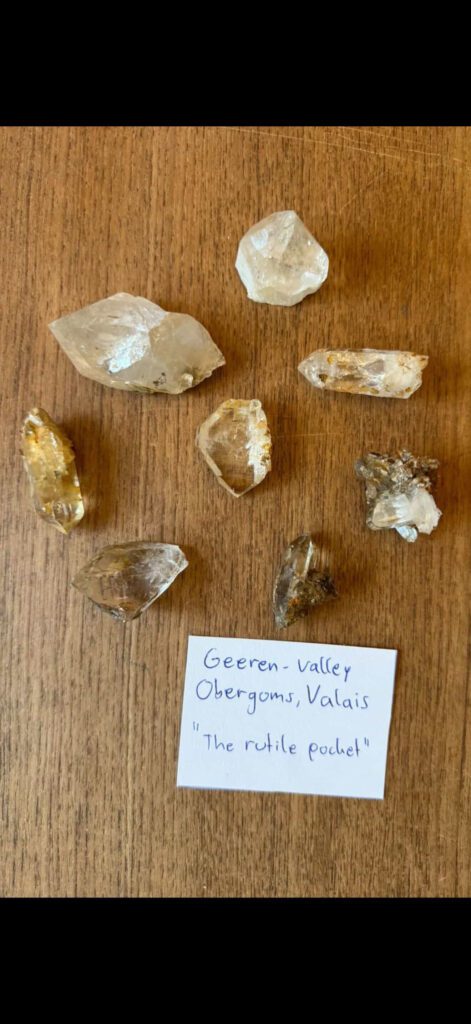
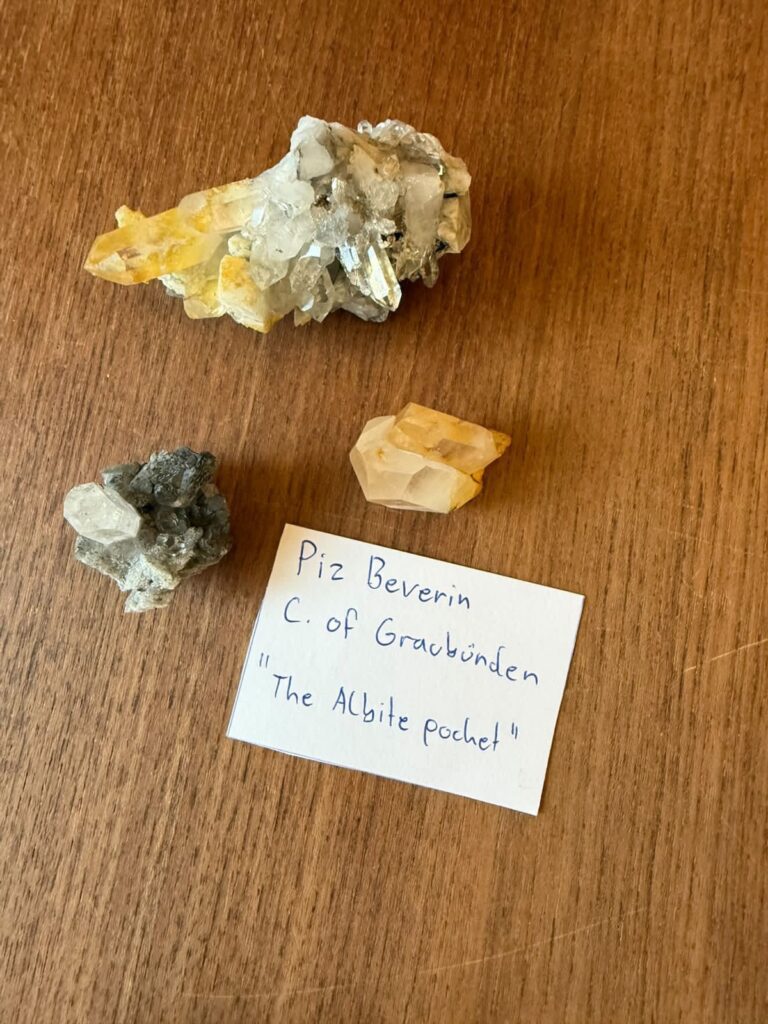
The provenance can become incredibly specific as a result. I have handled quartz from the Geeren Valley in Valais with documentation identifying an individual pocket known as the “fallen tree”. Material from Graubünden includes quartz from an albite pocket at Piz Beverin, while specimens from Uri and elsewhere in Valais have their own collecting histories.
When I am sorting pieces like these, I find myself comparing details I would barely have noticed when I first started collecting. One crystal is longer and more elegant, another has better transparency, while the next has an inclusion or strange surface that makes me keep picking it up even though the crystal beside it is technically cleaner. The pocket information adds another layer because I know these differences are connected to particular spaces inside the mountain.
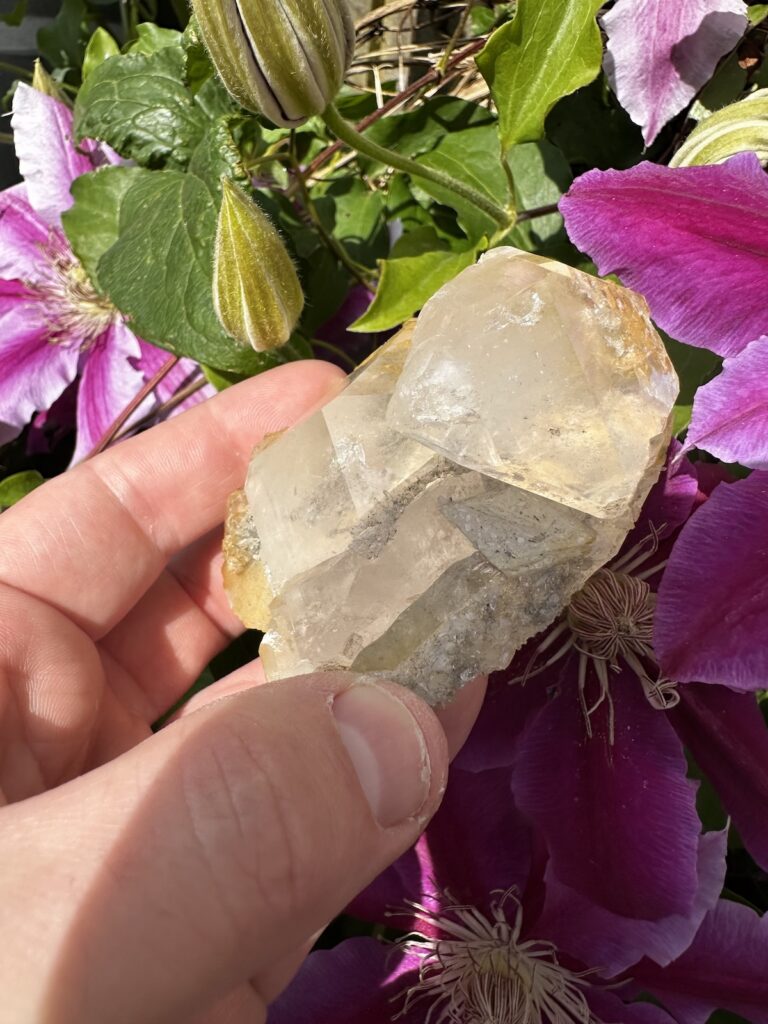
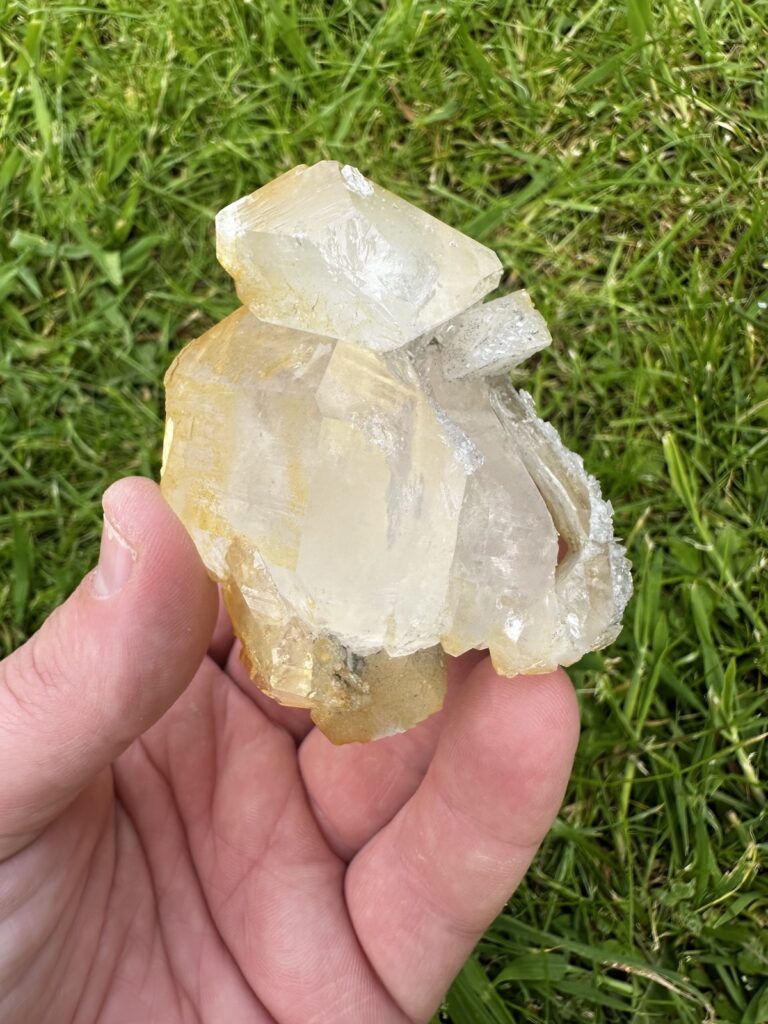
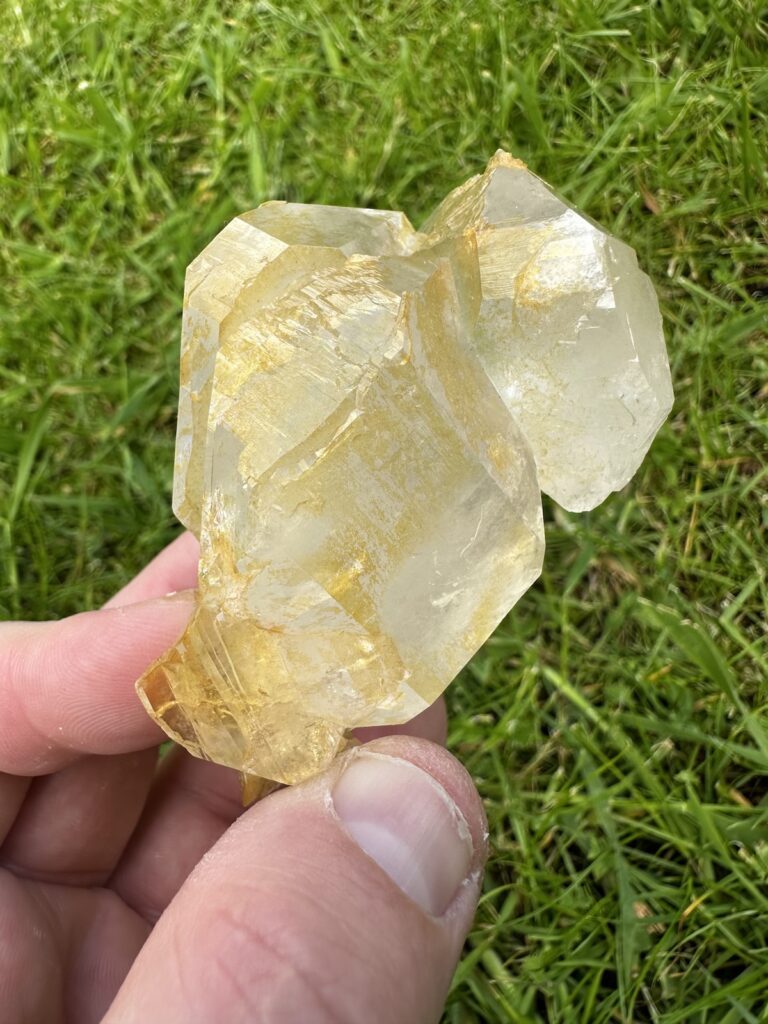
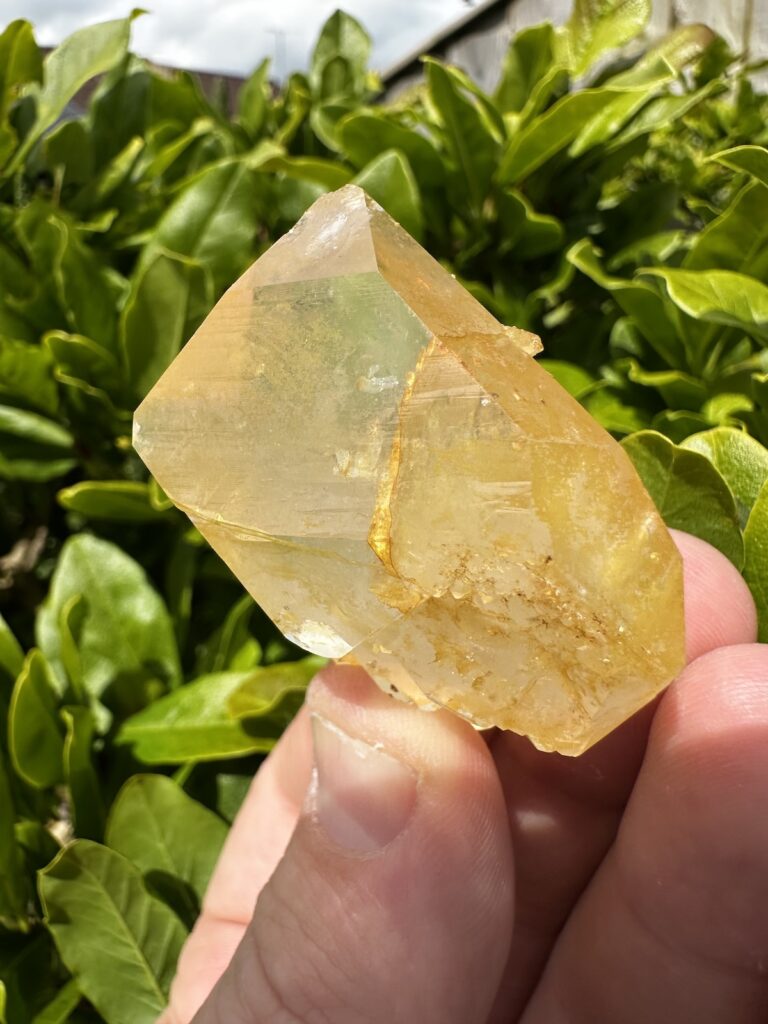
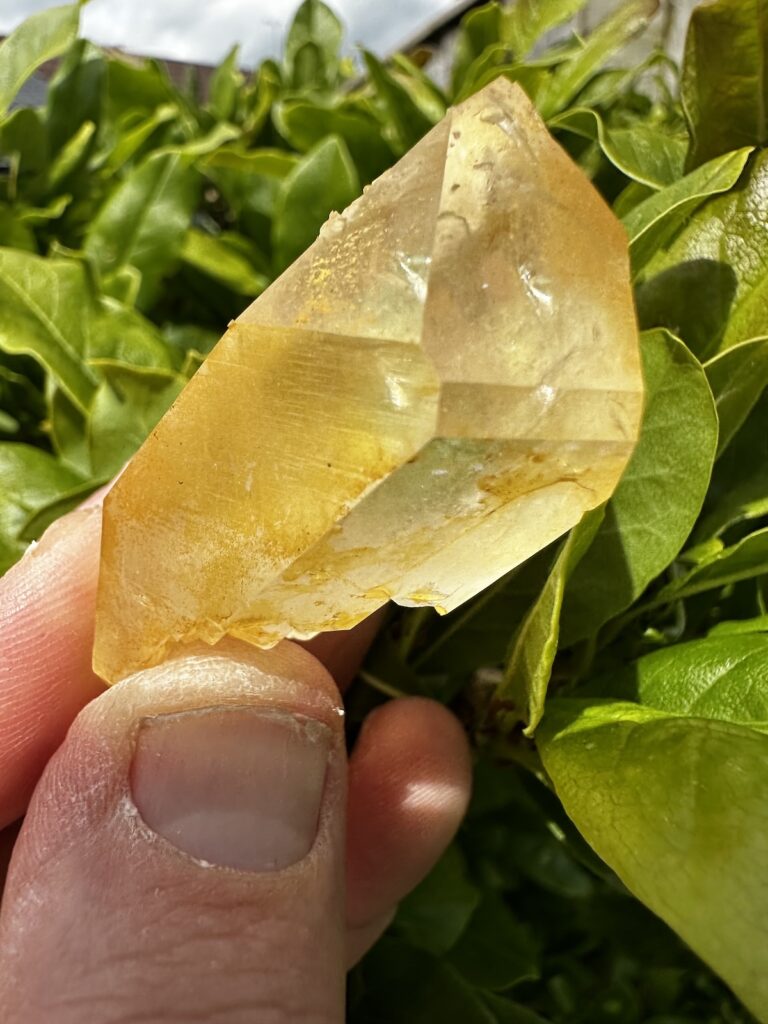
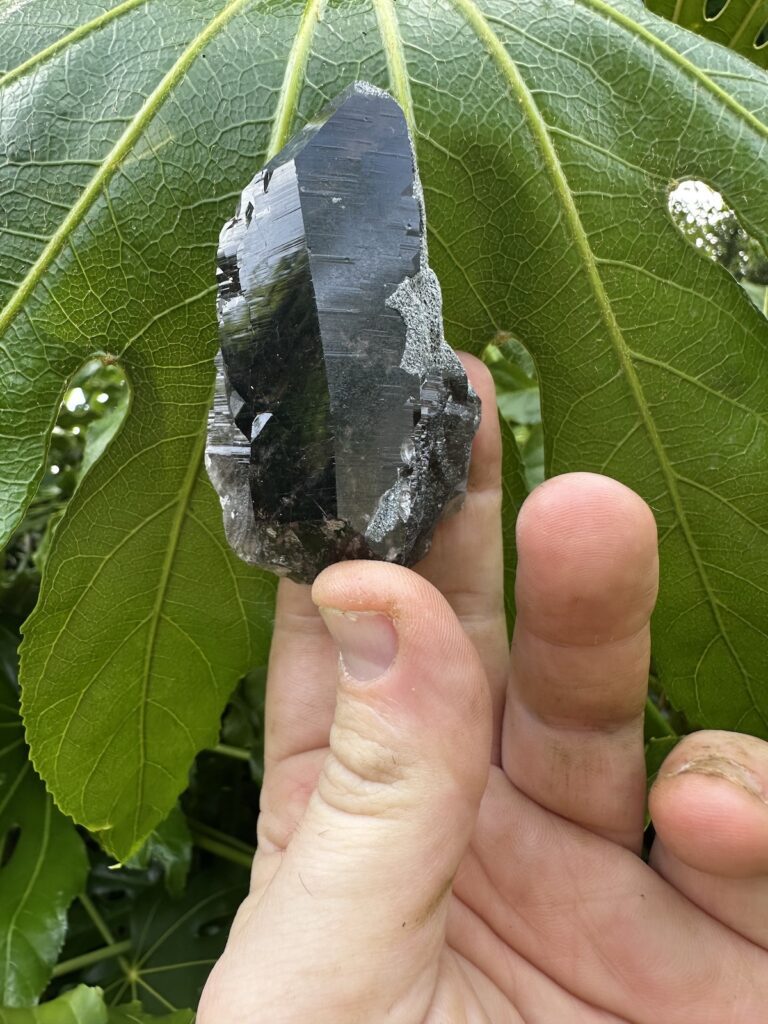
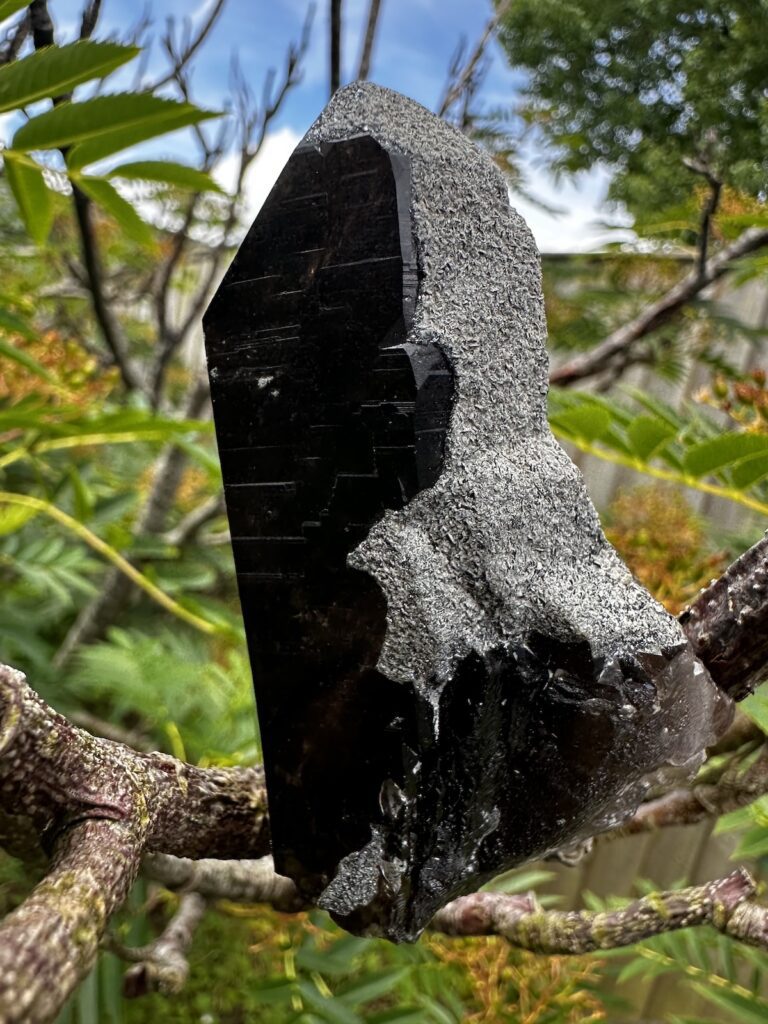
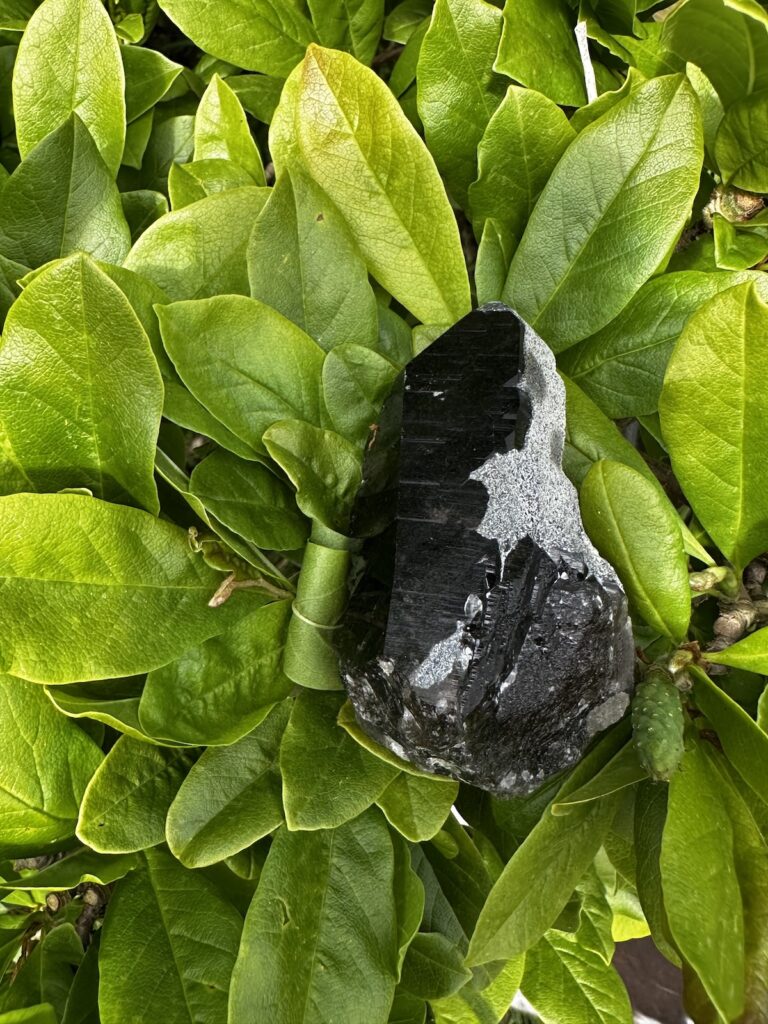
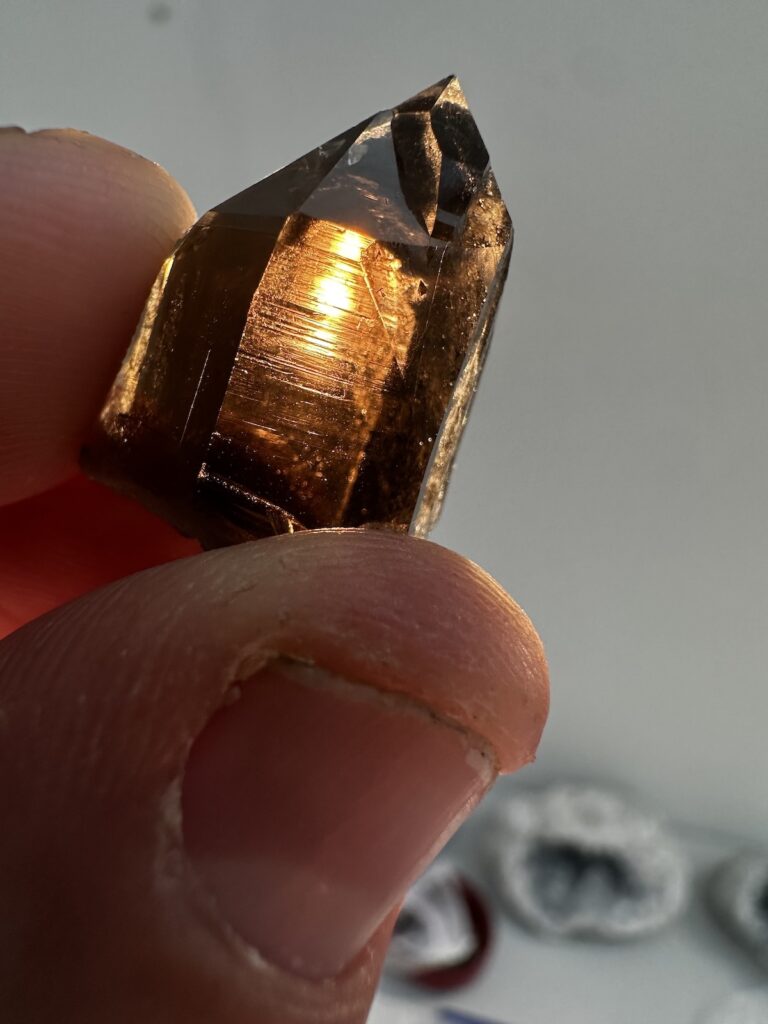
Some of the most elegant specimens develop what collectors call Tessin habit, named after Ticino, or Tessin in German. These crystals can be long and slender, narrowing towards beautifully formed terminations. Good examples almost look as though somebody has deliberately refined the proportions, but the faces and shape are entirely natural.
Faden quartz records something much less peaceful. The word faden means thread in German, referring to the pale line visible through the crystal. It forms in fractures that can repeatedly open while quartz is growing, allowing the crystal to fracture, heal and continue developing as the surrounding rock moves. Once you understand that, the white line becomes much more interesting because you are looking at evidence of movement preserved inside the finished crystal.
Double terminated quartz needed a different set of circumstances again. Most quartz crystals remain attached to rock at one end while the exposed end develops its termination. Give a crystal enough open space to grow freely at both ends and it can terminate on both sides.
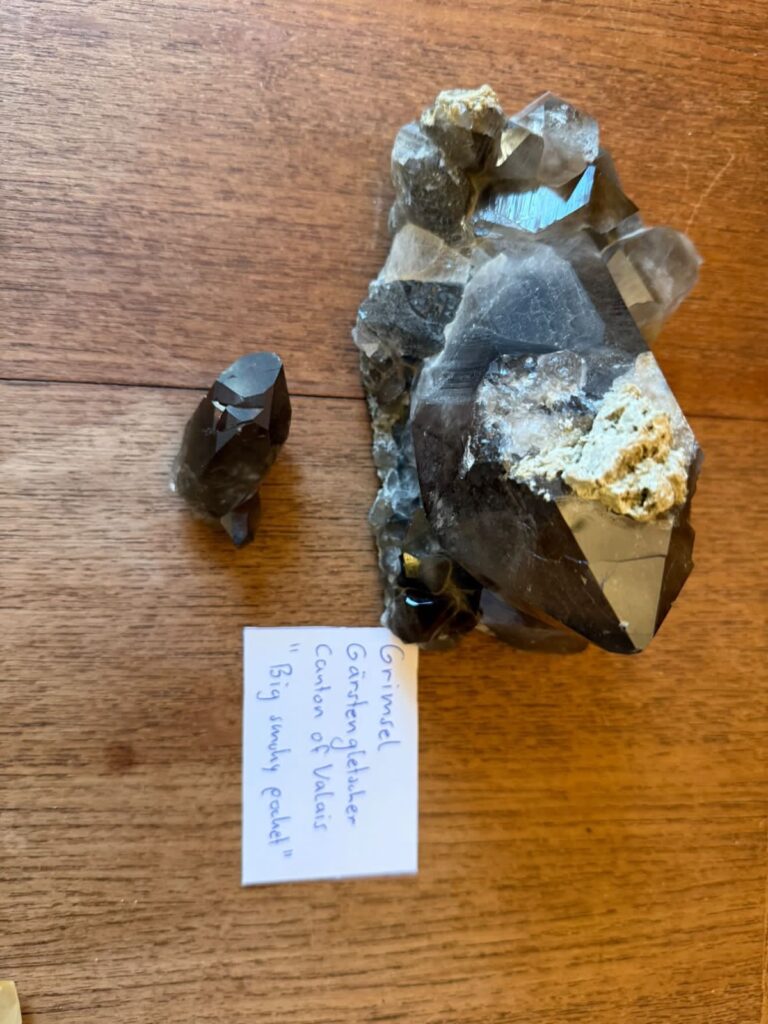
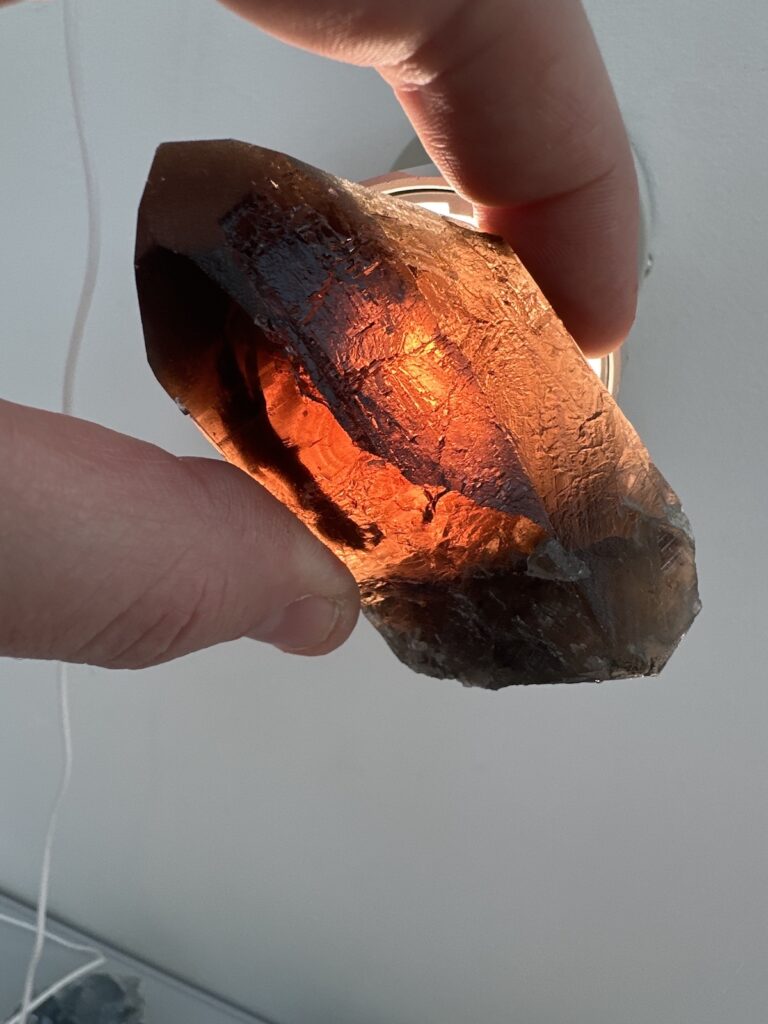
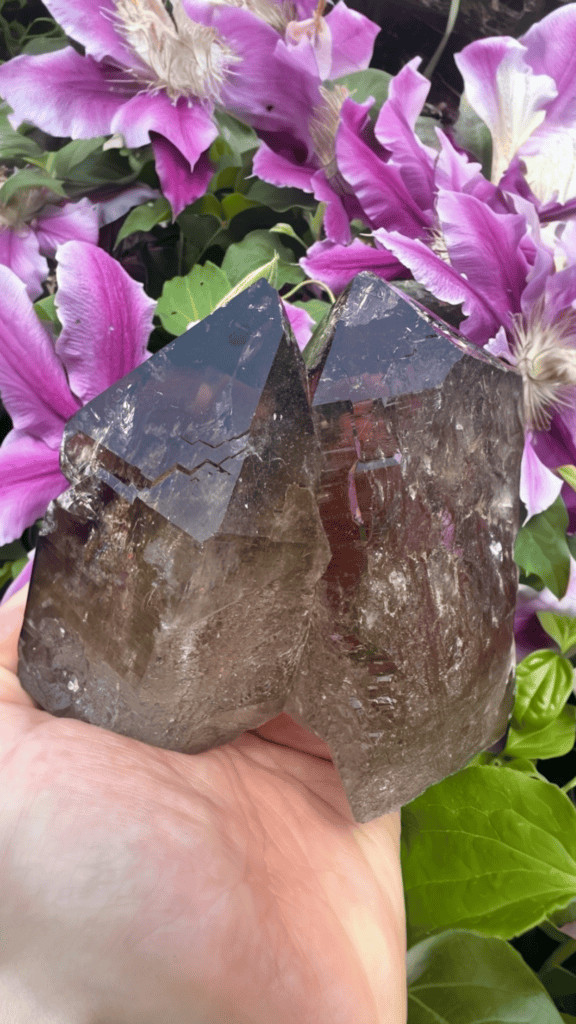
Then there is the colour. Smoky quartz develops when natural radiation interacts with defects associated with aluminium in its crystal structure. Some Swiss pieces are only faintly smoky, while others become deep brown and eventually reach the almost black material known as morion.
I find morion particularly difficult to reconcile with clear quartz when I place the two together. One can be so transparent that its edges almost disappear against the background, while the other seems to swallow light. Chemically, they are still the same mineral.
The differences between pockets are only half the story because somebody eventually has to find them.
Swiss crystal hunters are traditionally known as Strahlers, and collecting Alpine quartz can require a combination of geological knowledge and serious mountaineering ability. They look for signs of fissures in exposed rock and work them carefully, sometimes in terrain most of us would find intimidating enough without adding mineral extraction to the situation.
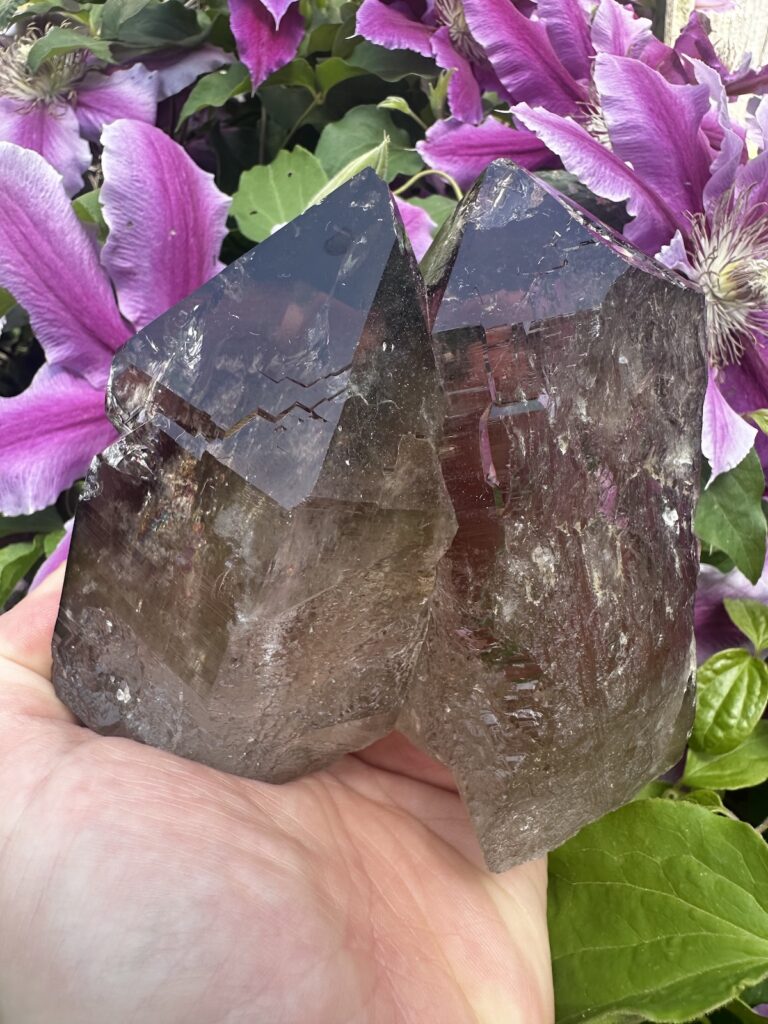
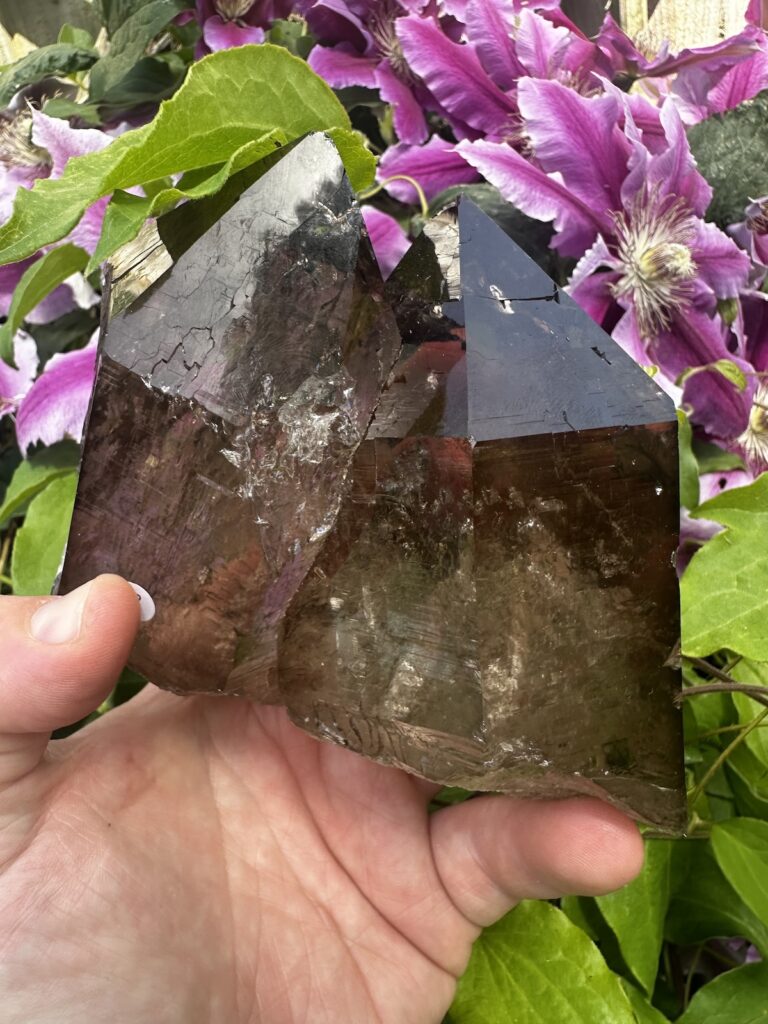
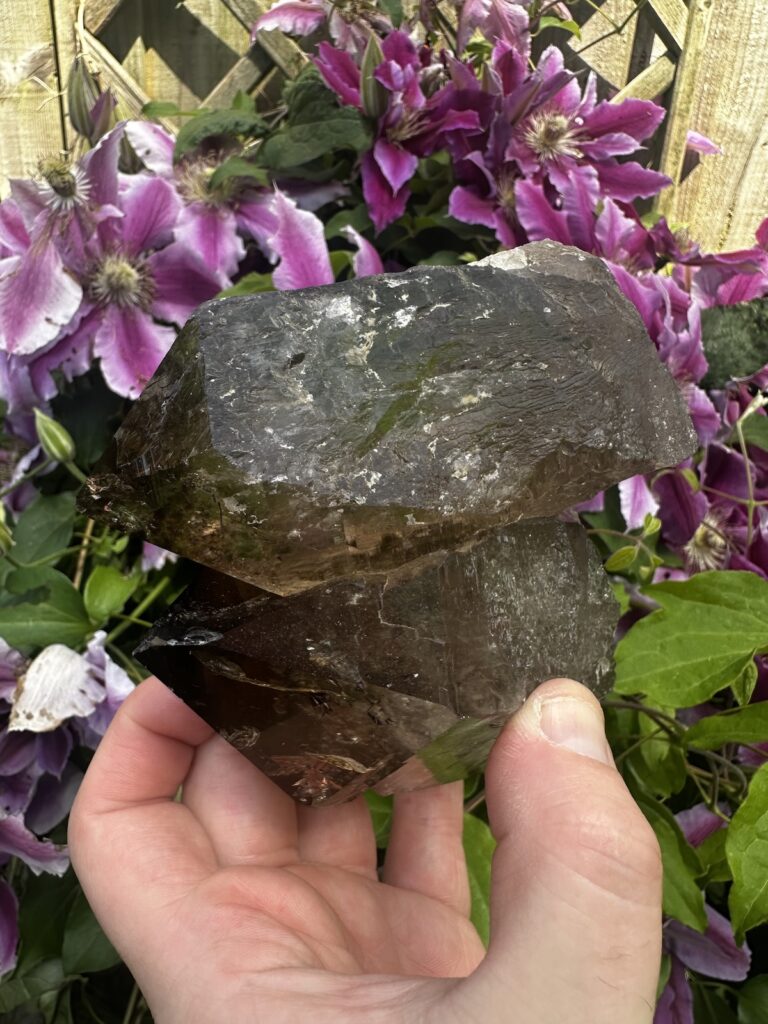
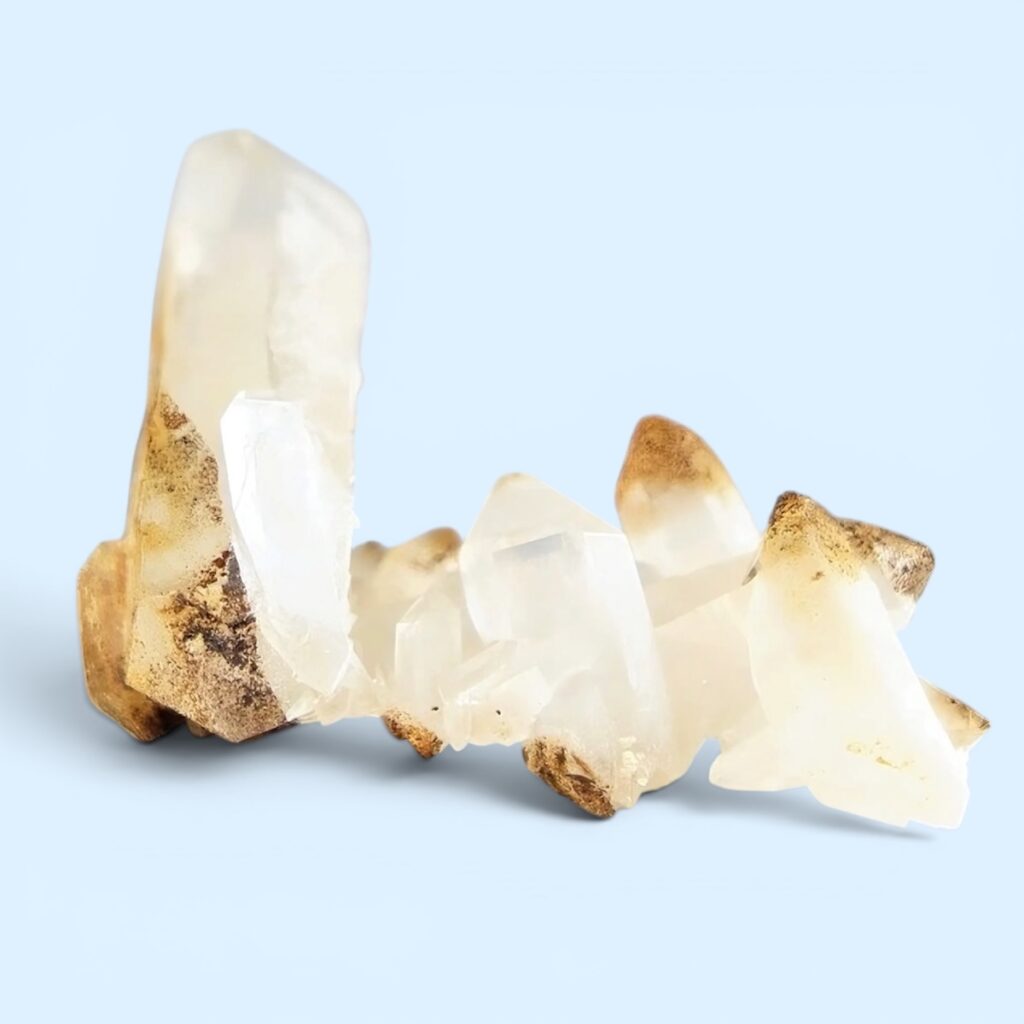
One parcel I have handled came from Le Catogne in Valais, where the specimens had been collected from a vertical cliff face. Knowing that changed the way I looked at them. It is easy to examine a quartz crystal safely on my desk in Cheshire and forget that somebody first had to recognise the potential of the rock, reach the fissure and recover the crystals without destroying them.
The danger involved deserves to be understood in its own right. Some pockets are reached across steep, exposed ground where loose rock, sudden weather changes, ice and altitude are all part of the risk. In places such as Le Catogne, collectors may need genuine mountaineering skill just to get themselves into position before they can even begin working on the fissure. A crystal can remain protected inside a mountain for an immense period of time, only for the final part of its journey to depend on somebody trusting their footing on a cliff face while trying not to damage either themselves or the specimen.
The output from an individual fissure can also be tiny. Once the accessible crystals have been recovered, there is no reason another pocket will produce the same thing. The mountain may shift, new rock may become exposed and another fissure may eventually be discovered, but whatever grew in that particular opening is finite.
That makes the word “common” increasingly unhelpful. Quartz is common, but a particular Tessin habit crystal, intact double termination or morion specimen from a documented Alpine pocket may be extremely difficult to replace.
Quartz also happens to be one of the minerals most closely associated with modern crystal spirituality. Clear quartz is commonly linked with clarity and intention, while smoky quartz is often associated with grounding. I first came to crystals through that world and still sometimes meditate while holding quartz or use one as a physical focus when setting an intention. I cannot demonstrate that the crystal itself is doing anything, but I find the practice useful.
There is an interesting scientific property sitting alongside those beliefs. Quartz is piezoelectric, meaning mechanical stress applied to the crystal can produce an electrical charge. The same physical behaviour has made quartz enormously useful in watches and electronic technology because its crystal structure can produce remarkably stable oscillations.
I would not use piezoelectricity as evidence that quartz amplifies intentions or possesses healing powers, because it does not demonstrate either of those things. I simply find it interesting that a mineral surrounded by so many ideas about energy genuinely does interact with electricity in a measurable way, even if the scientific explanation and the spiritual claims are entirely different questions.
My interest in Swiss quartz has become less about finding the clearest possible crystal and more about understanding what I am looking at. I want the provenance. I want to know which mountain it came from and, where possible, which fissure. I want to understand why one crystal became smoky, why another developed a faden line and why a third had enough space to terminate at both ends.
Sometimes none of those things explain why I prefer one specimen anyway. I can spend ages comparing a parcel and repeatedly come back to a slightly included or strangely proportioned crystal while a technically cleaner one sits beside it. Understanding a specimen and being drawn to it are not always the same thing.
I have handled minerals that are vastly rarer than quartz, minerals with more dramatic colours and specimens worth considerably more money. Swiss Alpine quartz still occupies a different place for me because it demonstrates how misleading the name of a mineral can be when it is separated from everything that happened to create the individual specimen.
A clear Tessin crystal, an almost black morion, a double terminated point and a faden crystal carrying evidence of movement inside it can all be reduced to the same two words on a basic label: quartz, Switzerland.
Then you start asking where in Switzerland. You find out which mountain, which fissure and what grew alongside it. You learn how the Alps formed, how the crystal developed and what somebody had to do to bring it safely out of the rock.
By that point, “Mate, it’s just quartz” seems to have missed rather a lot.
That is why, as far as I am concerned, Swiss Alpine quartz remains the Rolls-Royce of the quartz world. Explore our collection of quartz specimens to see individual pieces, photographs and availability.



You certainly don’t need external validation from a stranger on the internet – the depth of knowledge and reverence for the history, geochemistry and vibrational energy evident in these posts definitely affirms your passion and expertise in this field. But I wanted to let you know that your channelled intention and generosity in opening up the intricacies of this world to more than just influencer crystal hippies, appealing to a broader market of geology enthusiasts, jewellery smiths, spiritual journey folk and chemistry buffs, has fulfilled literally every aspect of my personal Maslow’s Hierarchy of Needs. Thank you for sharing this little pocket of Mama Gaia’s hard work and patience with me, I don’t think I’ve ever come across any other specimen merchants with such commitment to why crystals are so transcendentally under appreciated by the masses. I’ve got a few pieces in my cart, just waiting for the green light from my partner – he’s an avid TCH collector and you can imagine balancing financial investments becomes a fierce negotiation and battle of the wits in our household! TLDR Your work is appreciated, all the way from a little regional town in QLD Australia xx much love, Alisa
Alisa, that comment was so beautiful, I nearly got very overcome with emotion. I don’t cry often, so I consider this a huge compliment. The amount of work that has gone into my website is unprecedented 🙂