Imperial Topaz might be one of the most misunderstood names in the mineral trade
Spend a few minutes browsing mineral listings online and you will notice something odd. Imperial Topaz appears to be everywhere. Golden crystals, champagne-coloured crystals and even plain brown topaz are regularly sold under the name.
I do not think most sellers are deliberately trying to mislead anyone. More often than not, they are probably repeating the description they were given when they bought the material. Mineral terminology is complicated, and one incorrect label can pass through several hands before anybody stops to question it.
The problem is that sellers often use the name for ordinary golden topaz. Once you’ve seen genuine Imperial Topaz, the difference becomes obvious.
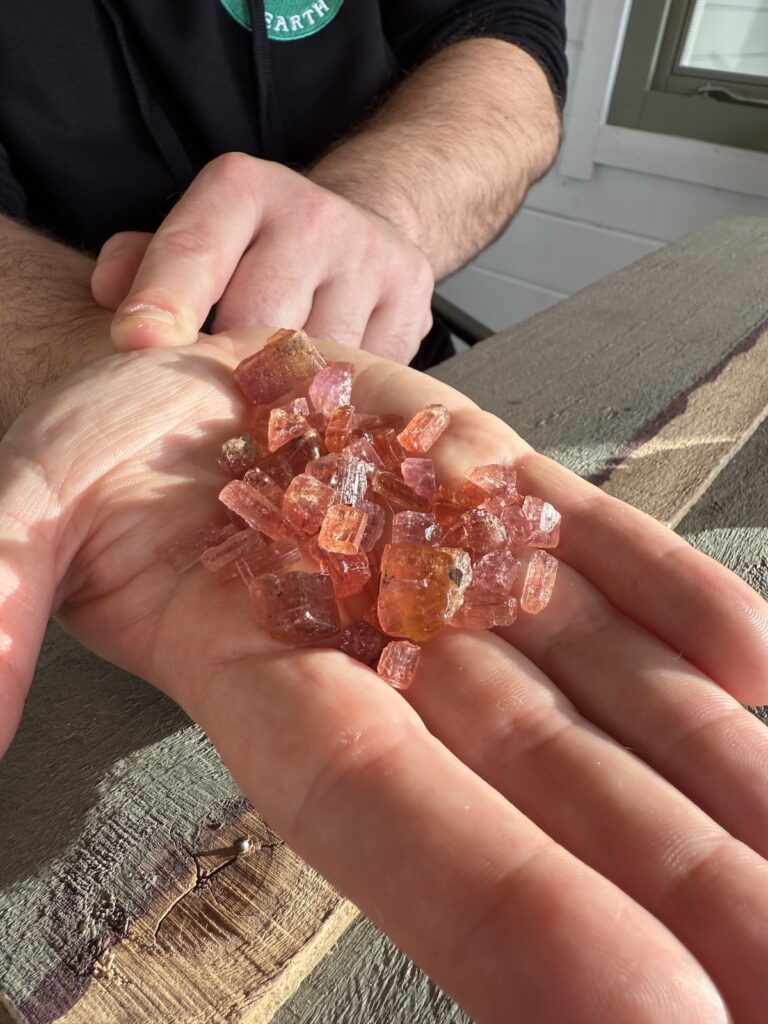
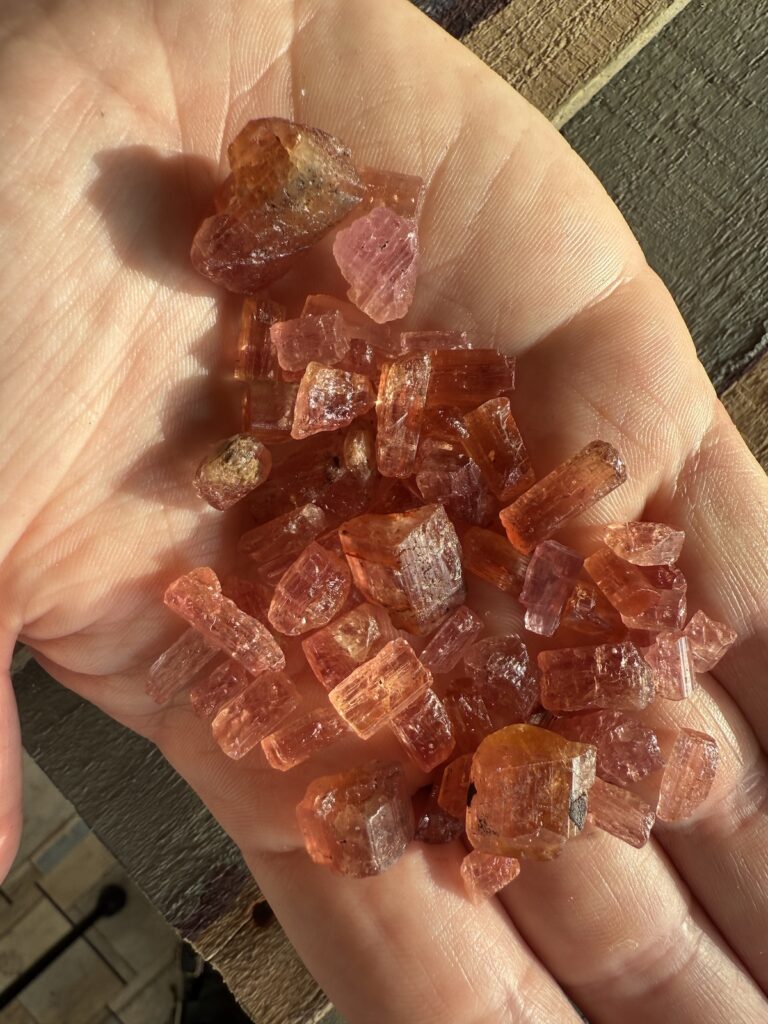
The first parcel I bought came from the area surrounding Ouro Preto in Minas Gerais, Brazil. I had seen photographs of the material beforehand, but photographs did not really explain what was waiting inside the box.
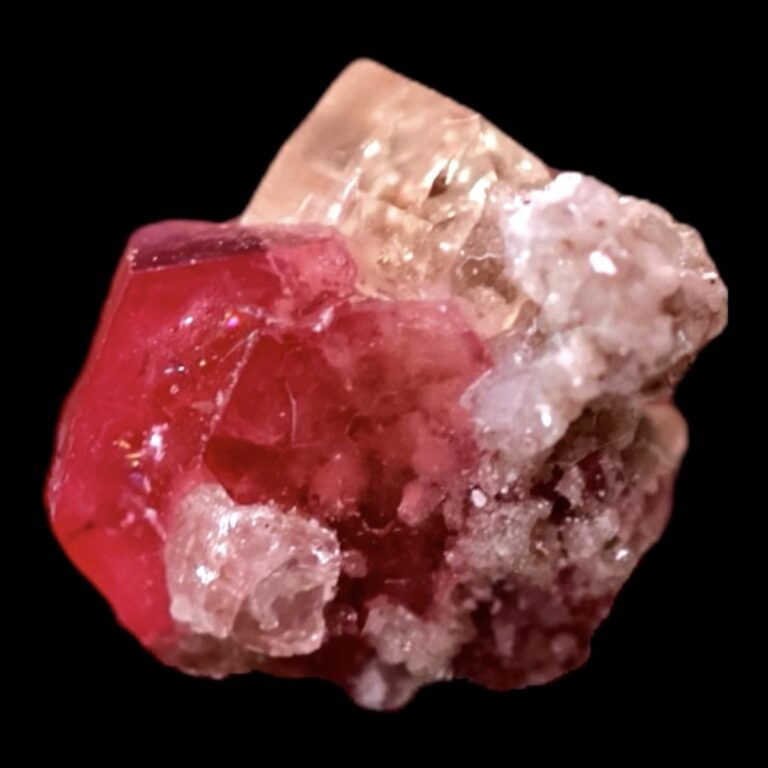
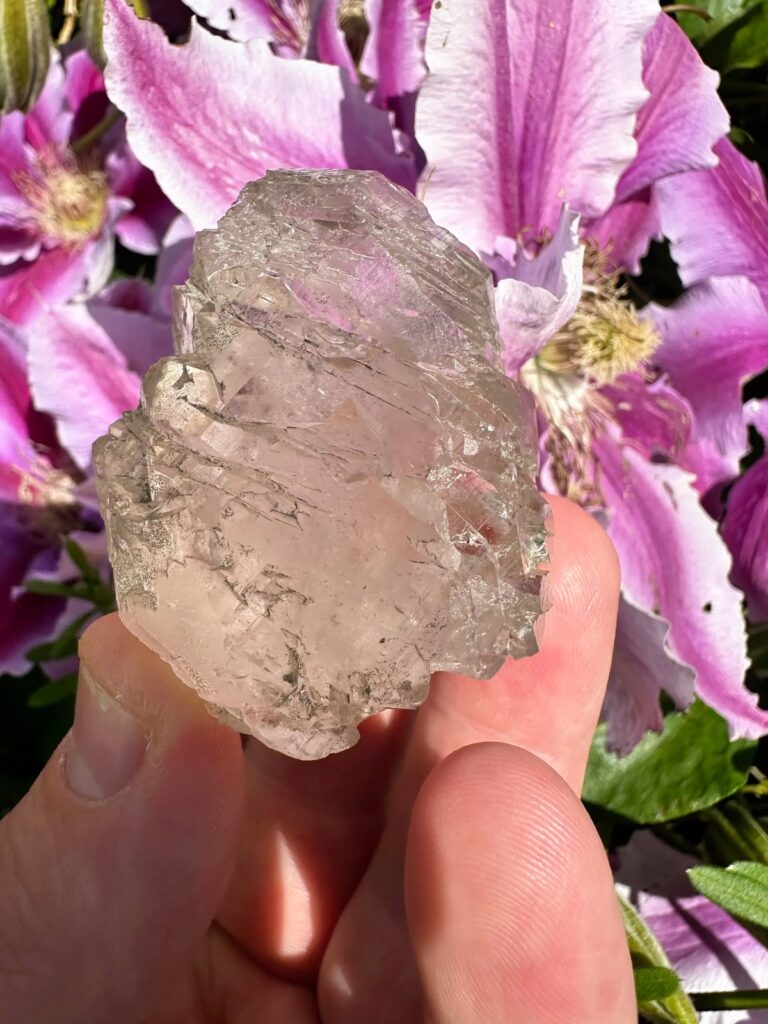
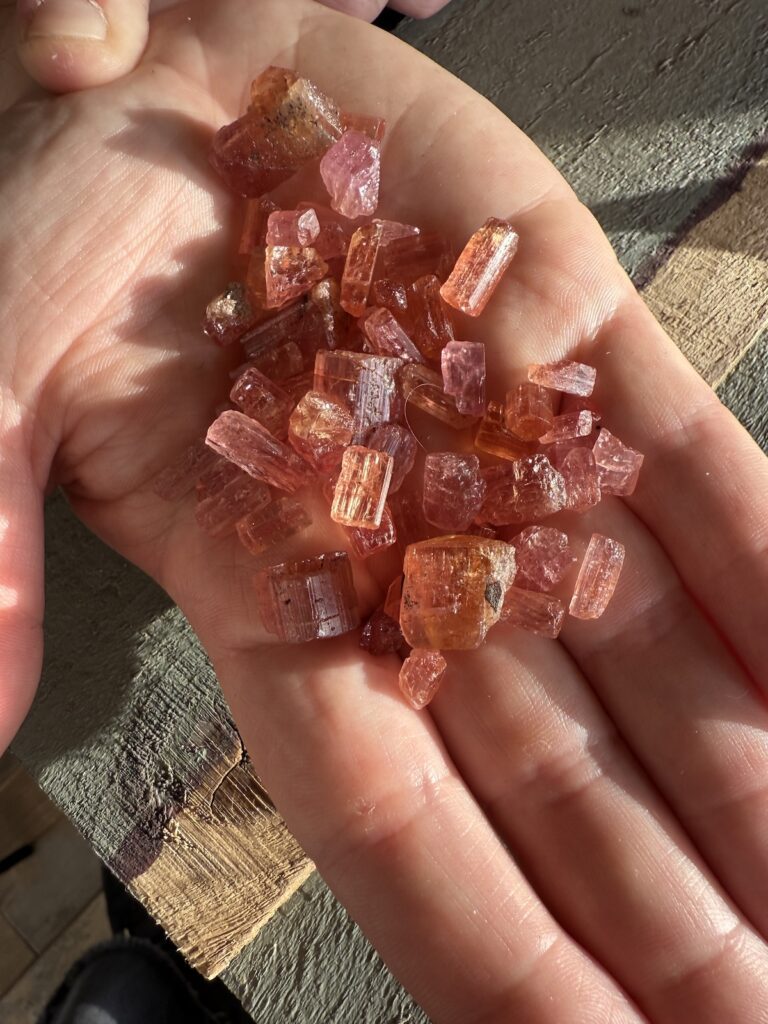
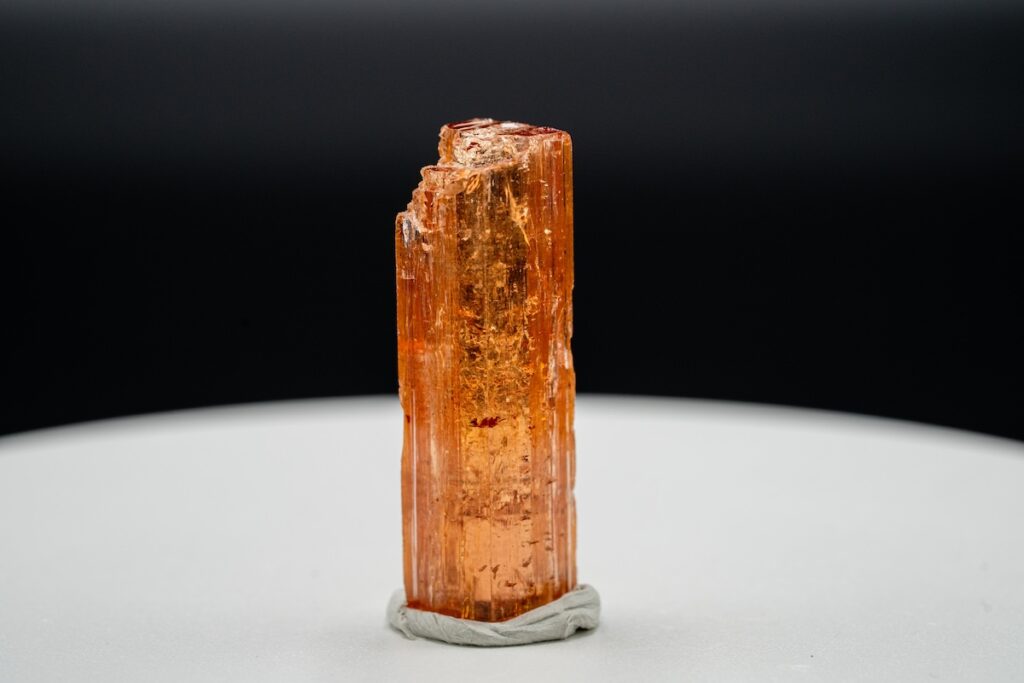
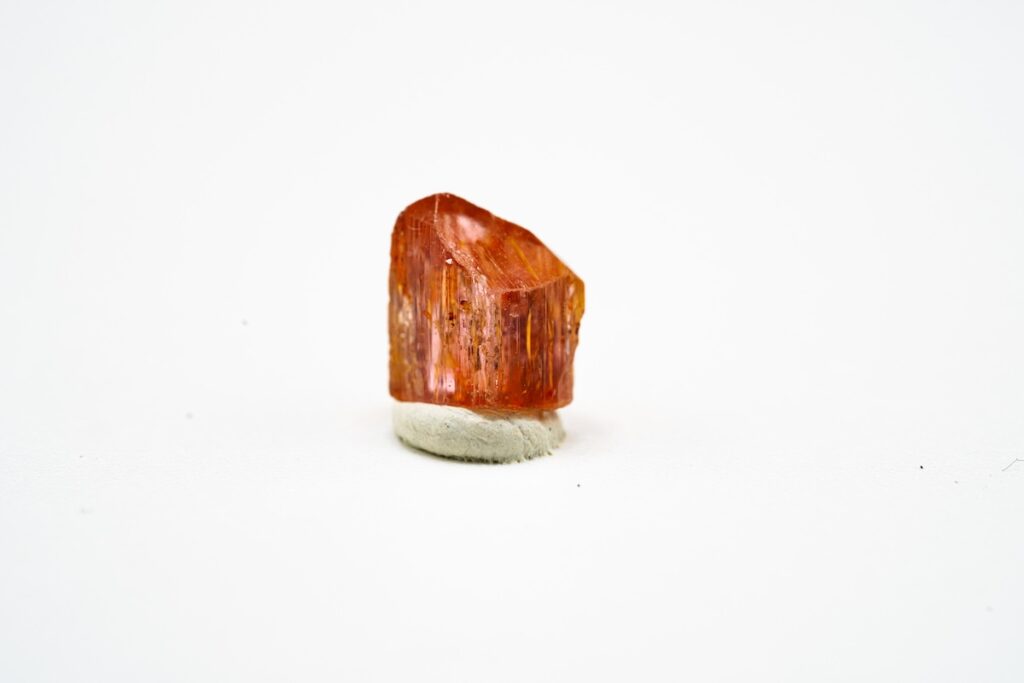
One crystal looked soft peach. Turn it slightly and it became pink. Move it again and a deeper reddish tone appeared.
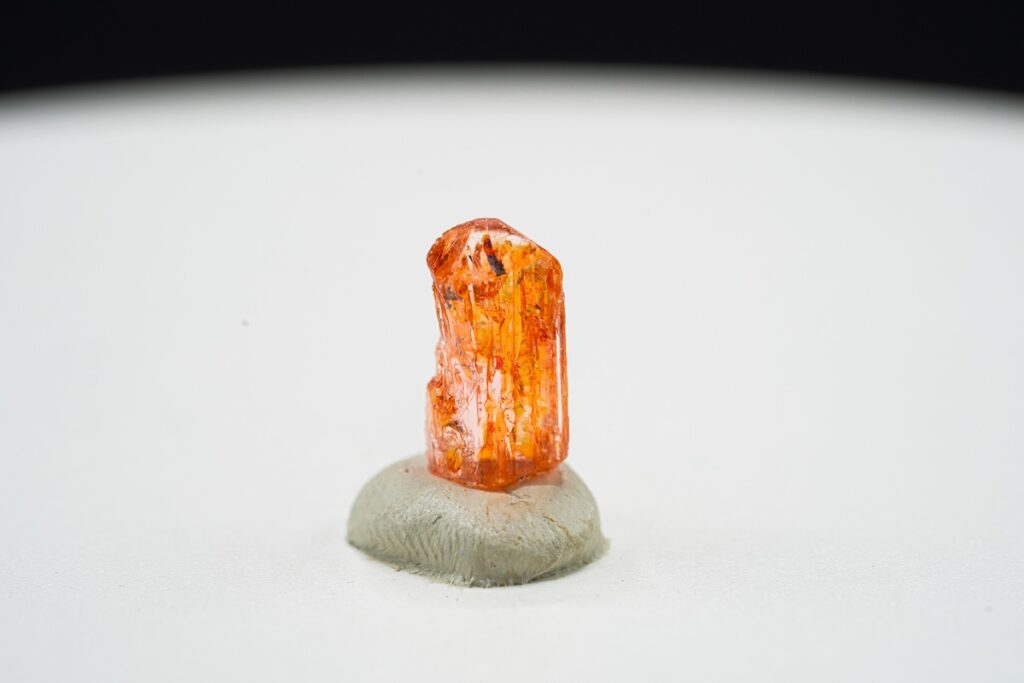
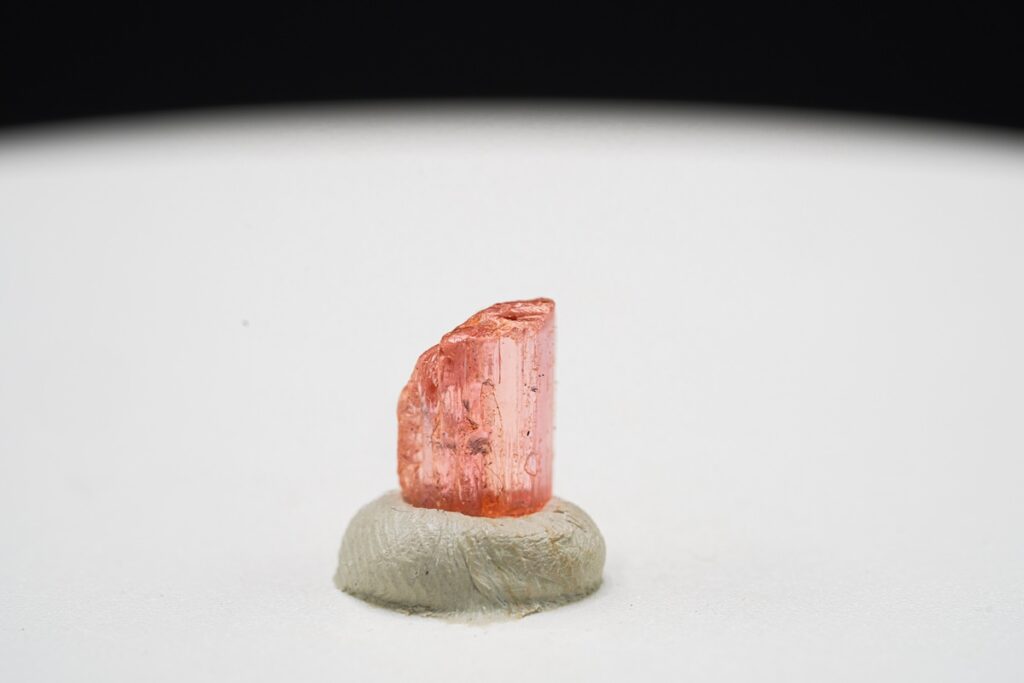
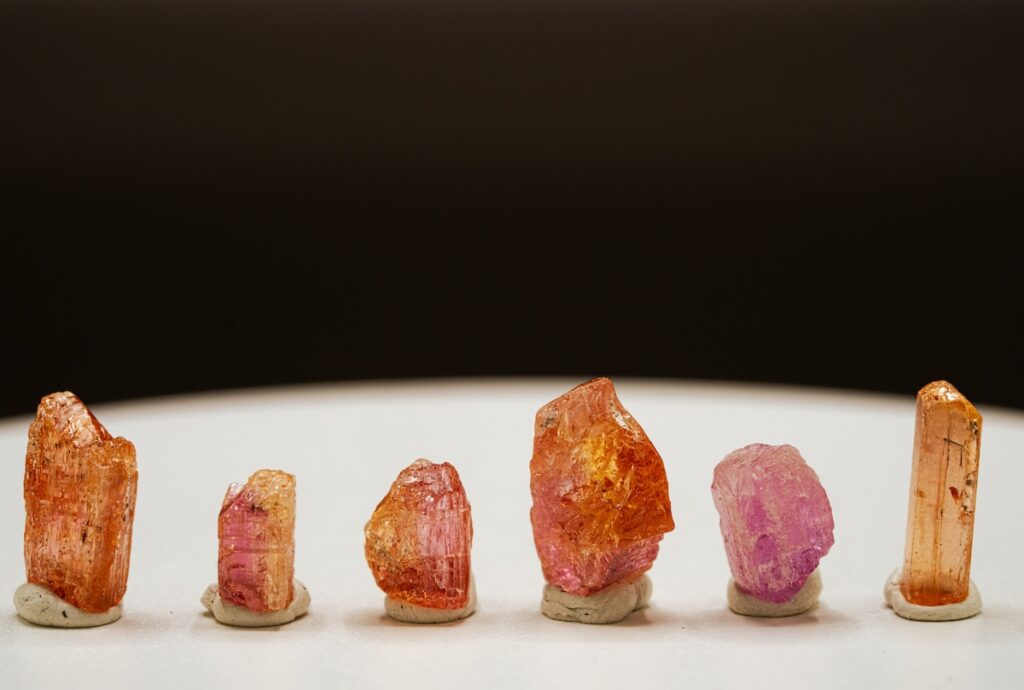
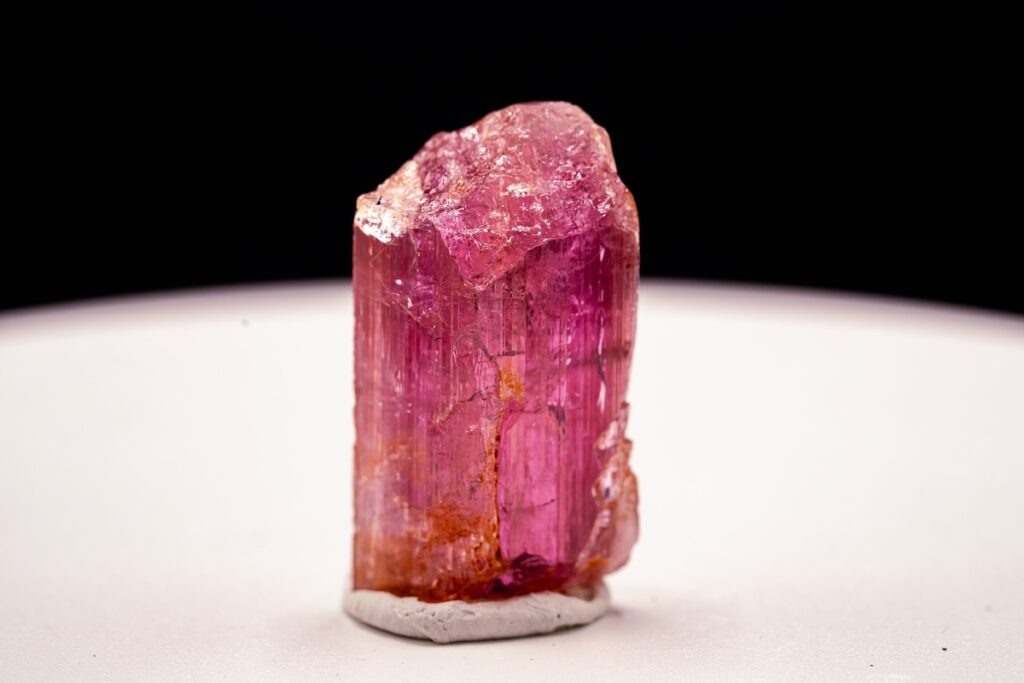
Photographs flatten that effect. In person, the colour shifts between peach, salmon, orange and pink as the crystal moves.
Some pieces were warmer and more orange, while others leaned towards pink. The colours were never gaudy or artificial. They were soft, complicated and surprisingly difficult to describe accurately, particularly when several tones appeared within the same crystal.
Imperial Topaz is not a separate mineral species. It is still topaz, but the name is generally reserved for a particular range of warm colours associated with material from Ouro Preto. Definitions vary slightly between gemmological authorities, which has created some room for disagreement around the palest and most golden examples, but ordinary yellow or brown topaz does not become Imperial simply because a seller adds the word to a listing.
The locality is especially important here. Many varieties of quartz, tourmaline or fluorite can be found across several countries and continents. Imperial Topaz is different. The material recognised under that name is tied to the relatively small area surrounding Ouro Preto, where the right geological conditions produced those distinctive peach, pink, orange and reddish colours.
That makes provenance more than an interesting addition to the label. In this case, it forms part of the identity of the material itself. A crystal may be topaz, and it may even have an attractive golden colour, but that does not automatically place it alongside the Imperial Topaz of Minas Gerais.
The history of the name is less certain. Some accounts connect it with pink topaz from the Russian Urals and the Russian imperial family, while others associate it with Emperor Pedro II of Brazil. The exact origin may never be resolved neatly, but the modern mineral trade now connects Imperial Topaz overwhelmingly with Ouro Preto.
Its scarcity also explains why the misuse of the name is so frustrating. A material confined to such a limited area should not appear to be common, yet the phrase is attached to countless warm-coloured topaz crystals online. Repetition makes the description look convincing, even when the material itself does not match what collectors and gemmologists would usually expect.
That does not mean every questionable label is dishonest. Mineral sellers work with thousands of species, varieties, localities and trade names, and nobody knows all of them. I have corrected my own understanding more than once and will undoubtedly do so again. The important part is being willing to check, particularly when a rare name is being used to justify a higher price.
There is something deeply satisfying about finding a mineral that lives up to its reputation. Imperial Topaz does. It isn’t famous because somebody gave it an impressive name. It became famous because, in one small corner of Brazil, nature managed to produce colours unlike anything else I have seen in topaz.
Beauty and rarity often exist independently of one another. Every now and then, they meet in the same crystal. Imperial Topaz is one of those occasions. Explore our collection of Imperial Topaz specimens to see individual pieces, photographs and availability.