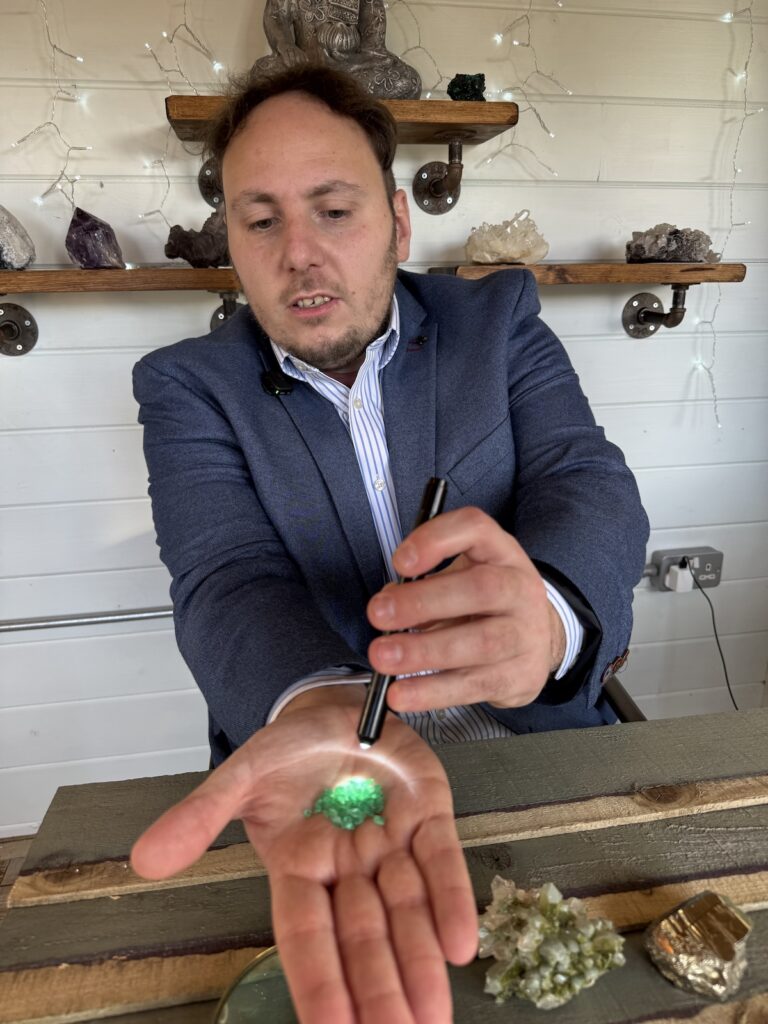
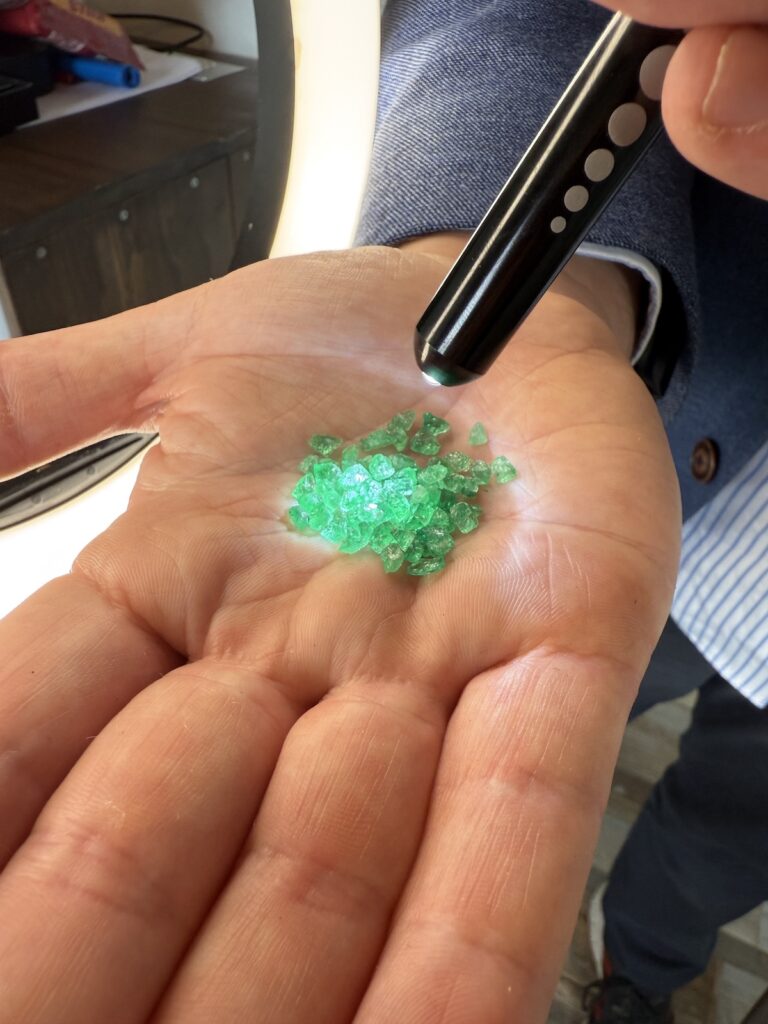
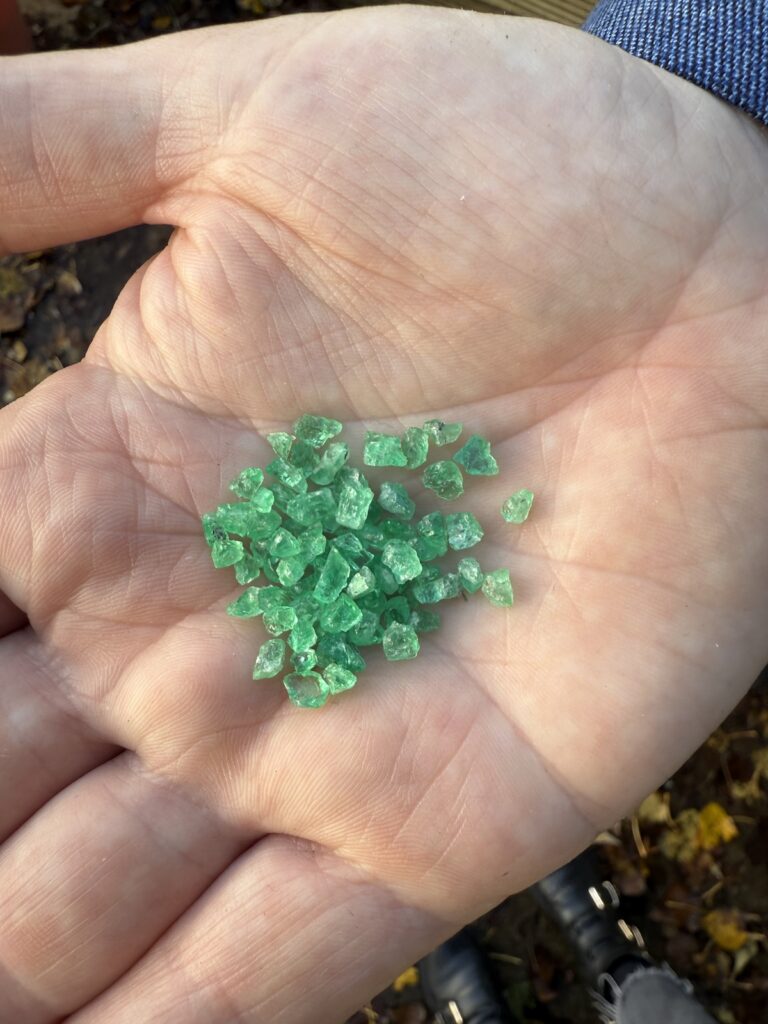
I’ve never seen another green quite like a Colombian emerald.
I’ve handled emeralds from Brazil, Zambia and several other parts of the world, but Colombian material still stands apart.
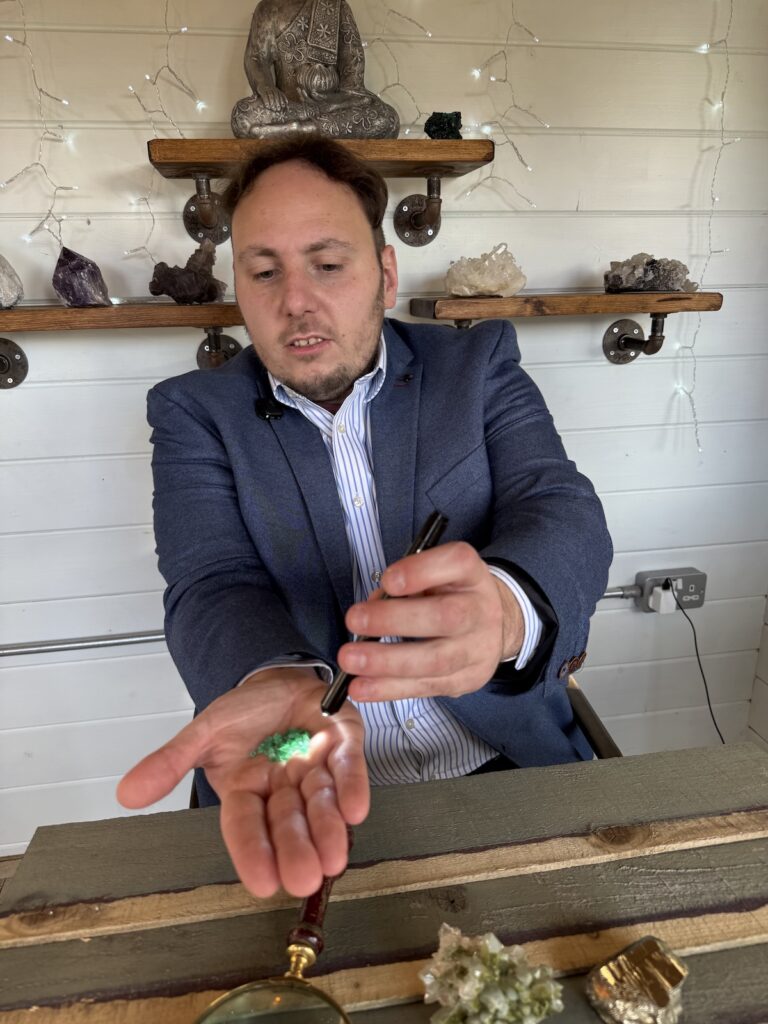
I still remember opening my first parcel of Colombian emeralds. It reminded me of being five years old and opening a present from Santa. I could not believe how beautiful the raw crystals were in person.
One thought came into my head almost immediately.
No wonder green has been associated with greed.
I had never felt particularly greedy about a colour before, but looking at those crystals, I understood how green became synonymous with greed.
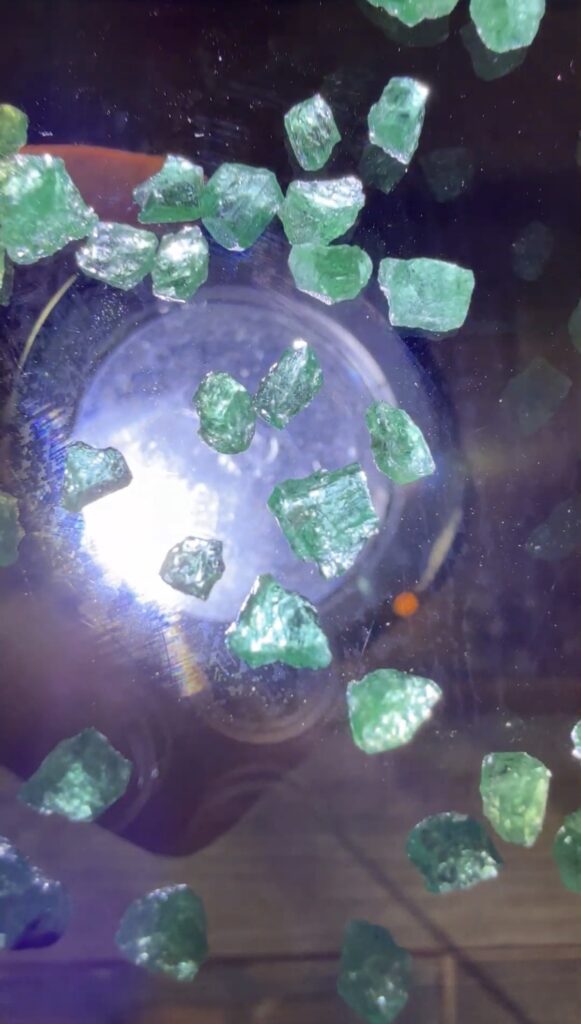
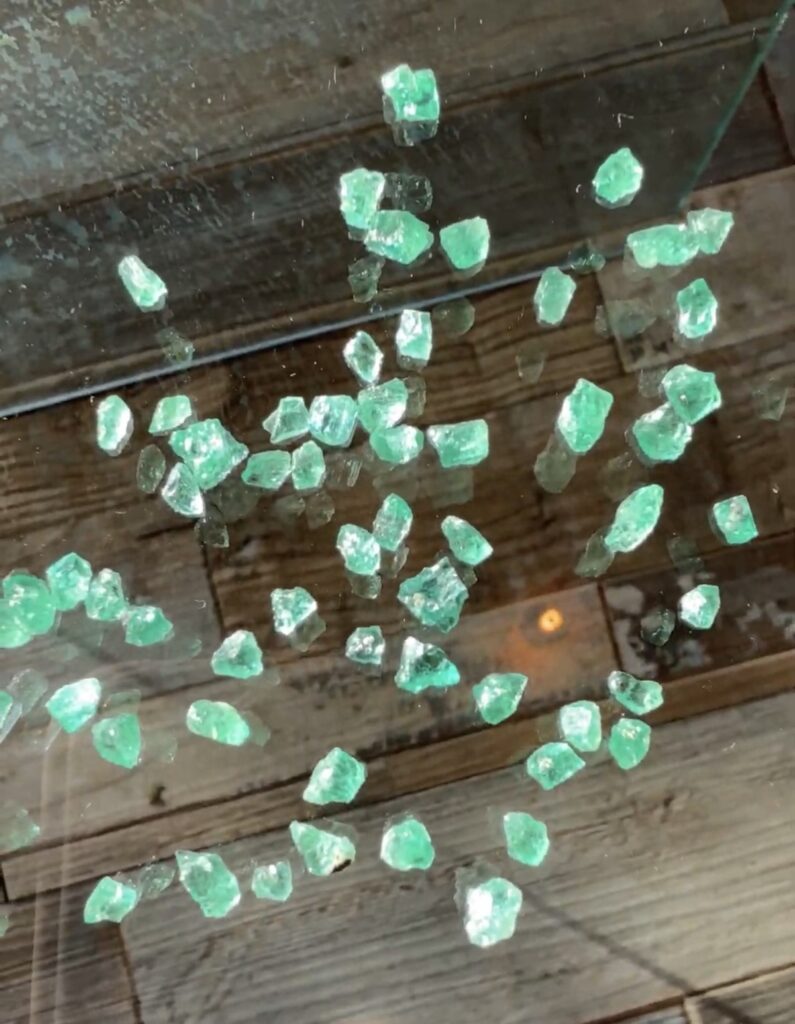
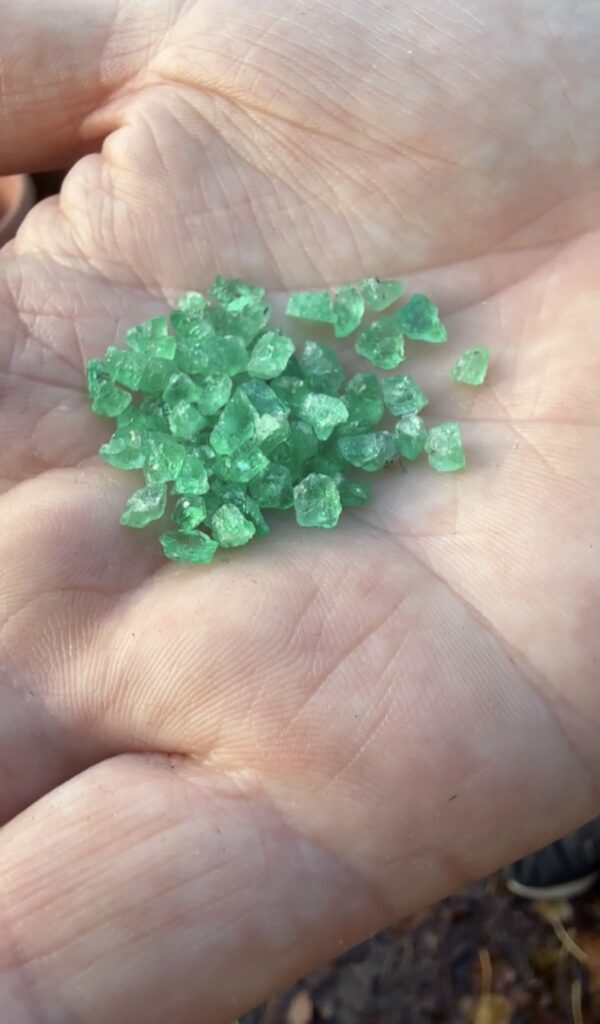
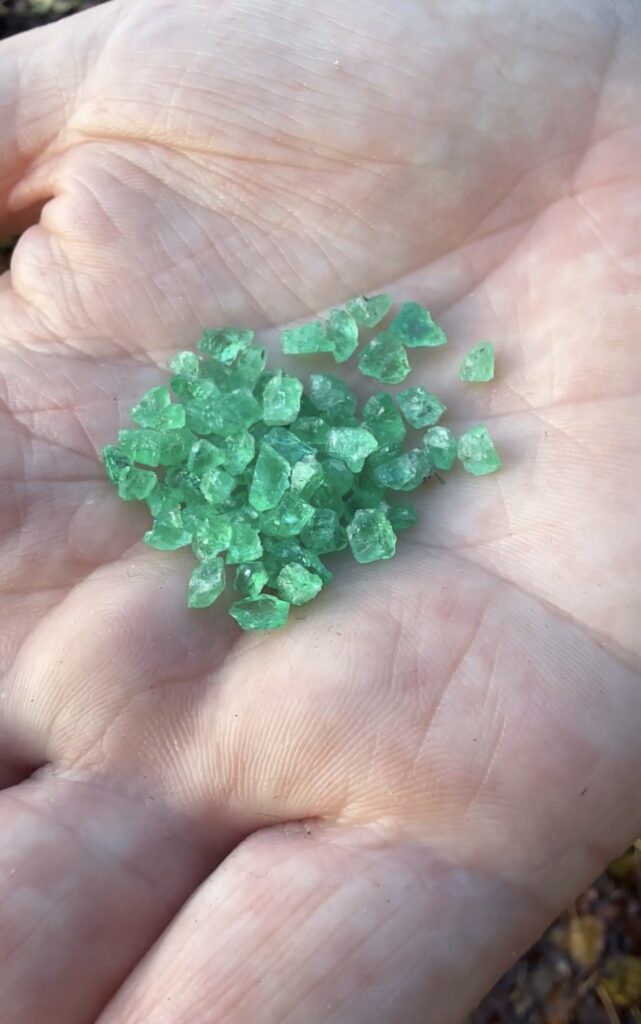
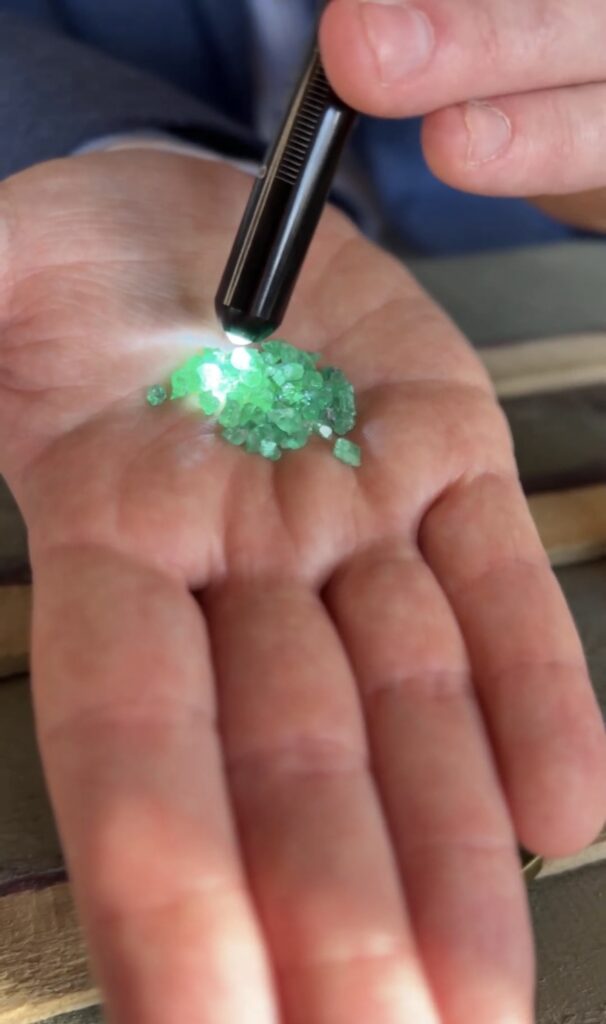
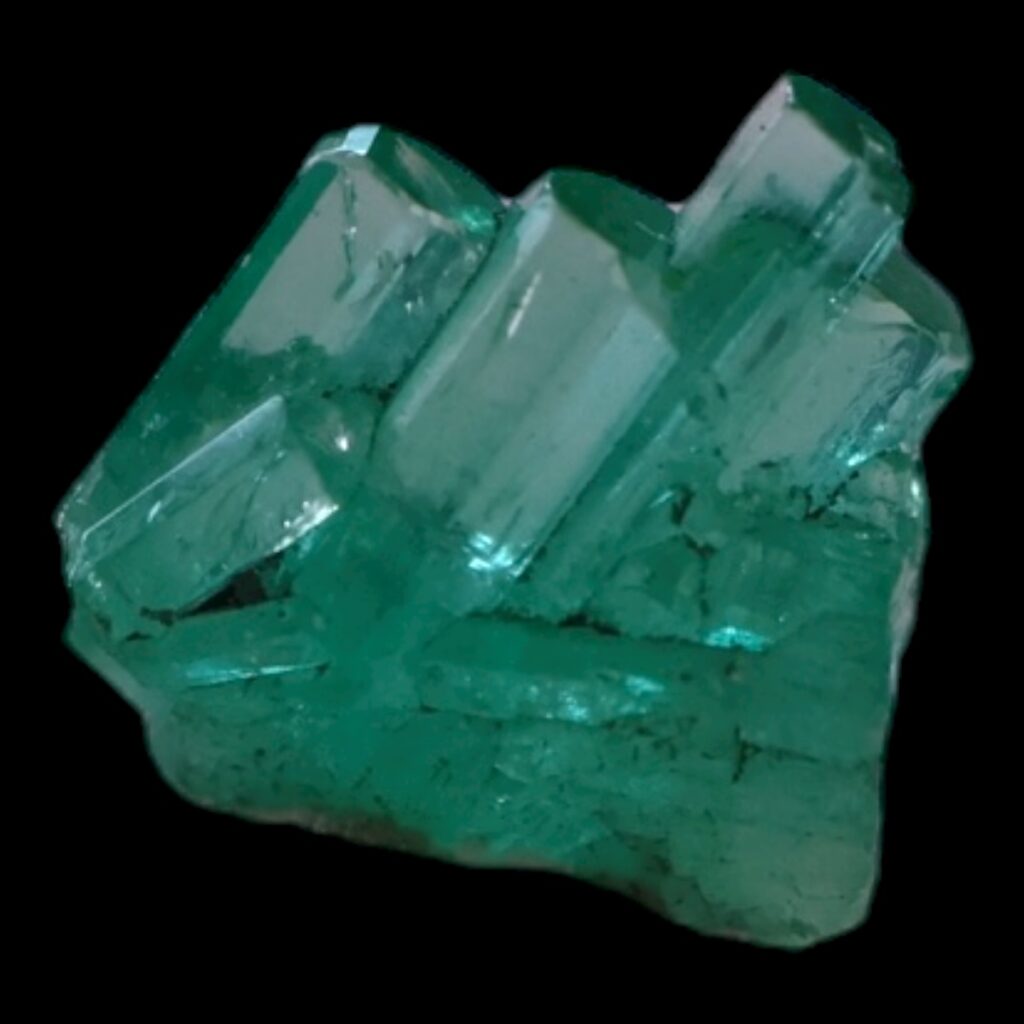
Photographs had not prepared me for the colour. I knew Colombian emerald had a reputation, but seeing the crystals in person was something else. It seemed deeper and more intense than I expected, particularly when light passed through the thinner edges of a crystal.
Like most people, I first encountered emerald as a polished gemstone rather than a natural crystal. Rings, pendants and other jewellery were where I expected to see it.
Then I started collecting raw crystals.
A natural Colombian emerald is far more interesting to me than a polished gemstone. The crystal still carries the evidence of how it grew. You can see the hexagonal shape, the growth lines, the fractures, the contact points and, in many specimens, the rock that surrounded it underground. White calcite, metallic pyrite and pieces of black shale often remain attached.
I would not want to remove the matrix. It is part of the story.
The best-known Colombian emerald deposits are found in the mountains of Boyacá, near places such as Muzo, Coscuez and Chivor.
Emerald only forms when an unusually specific set of conditions come together. In many deposits around the world, its formation is connected to geological activity involving magma.
The Colombian deposits formed differently.
Millions of years ago, extremely salty hydrothermal fluids moved through fractures in organic-rich black shale and limestone. As those fluids travelled through the rock, they brought together the beryllium, chromium and vanadium needed for emerald to crystallise.
The emeralds grew within veins alongside minerals such as calcite, dolomite and pyrite. That is why some of the most appealing Colombian specimens still have bright crystals sitting against white calcite, dark shale or tiny metallic pyrite crystals.
Some of the most intensely coloured crystals on Earth grew inside black rock.
Not every Colombian emerald is exceptional, and beautiful emeralds come from many countries. Zambia produces superb material. Brazil has yielded wonderful crystals for generations, while Afghanistan, Pakistan, Ethiopia and Madagascar have all produced outstanding specimens.
When Colombian emerald is good, I have not found another colour that quite compares.
Even the inclusions tell part of the story.
Some Colombian emeralds contain microscopic cavities that preserve remnants of the hot, salty fluids involved in their formation. Under magnification, these tiny pockets can contain liquid, a gas bubble and sometimes even a minute salt crystal sealed inside the emerald.
In a cut gemstone, inclusions are often discussed as imperfections.
In a natural crystal, they are part of the evidence.
In some cases, part of the environment that formed the emerald is still trapped inside it millions of years later.
Long before anyone understood hydrothermal fluids, trace elements or fluid inclusions, the Muisca civilisation already recognised that these crystals were important.
The Muisca civilisation lived across the highlands of what is now central Colombia, including parts of modern Boyacá and Cundinamarca. Its people mined emeralds before the arrival of the Spanish and traded them across the region alongside salt, cotton cloth and other valuable materials.
Emeralds were also used as offerings.
Lakes, caves, hills and unusual rock formations could hold ceremonial importance. Valuable objects were placed in vessels, buried in the ground or thrown into lakes. These included gold objects, small votive figures known as tunjos, beads, shells and emeralds. The value of the object was part of the offering.
Lake Guatavita became the most famous of these places. Spanish chroniclers described a ceremony in which a new ruler was covered in gold dust, taken onto the lake on a raft and surrounded by offerings of gold and emeralds.
That story helped create the legend of El Dorado. It originally referred to a person, the gilded man, rather than a lost city of gold. As the story spread through Europe, it became increasingly elaborate and inspired repeated attempts to recover treasure from the lake.
Archaeology supports Guatavita as a genuine ritual landscape, but the grand ceremony described by Spanish writers is harder to prove in full. The difficult part is separating real Muisca practices from the stories that grew after conquest.
What we can say with confidence is that the Muisca civilisation mined, traded and offered emeralds at sacred places long before they entered European jewellery or royal collections.
When the Spanish arrived, Colombian emeralds began a completely different journey.
Control of the deposits connected the crystals to much wider trade routes. Emeralds crossed the Atlantic into Europe and continued onwards to Asia, where they became favourites of Mughal emperors and other wealthy rulers.
They found their way into royal collections, religious objects, ceremonial jewellery and some of the most remarkable treasuries ever assembled.
By then, emerald had already gathered centuries of mythology.
People believed it could sharpen eyesight, protect against misfortune and encourage wisdom. One legend claimed that placing an emerald beneath the tongue could reveal the future. Another suggested it could expose whether a lover’s oath was true or false.
Those stories belong to the wider history of emerald rather than specifically to Colombian emeralds. We do not know whether suspicious rulers genuinely used Colombian crystals to test their partners, and there is no scientific basis for any of it.
That distinction is important. The Muisca ceremonies are supported by archaeology. The stories about foresight and lovers belong to emerald folklore.
Holding one in your hand, it becomes much easier to understand why people started telling those stories in the first place.
I have handled emeralds from Brazil, Zambia and other parts of the world, and many of them are beautiful. Colombian emerald is still different to me.
Even as a rough crystal, fractured and included, the green can be almost unnaturally intense. Standing there holding one, I completely understood why people carried these crystals across continents, placed them in royal collections and invented stories about what they could do.
When I look at a good Colombian crystal, I still understand the obsession. Explore our collection of emerald specimens to see individual pieces, photographs and availability.