A beautiful crystal should not need an ugly story
Every crystal has two stories. One begins underground, with chemistry, pressure and time. The other begins when somebody decides to remove it from the Earth.
By the time a specimen reaches a collector, that second story is often much harder to see. The mud has been washed away, loose rock has been removed and the crystal has been photographed beneath good lighting. It arrives with a neat label showing the mineral, locality and country of origin, but almost everything connected to the people who found it has disappeared from view.
That has always bothered me.
Before I started Rare Minerals Earth, I worked in the trade union movement. Much of that work was built around a simple idea: the person doing the job should never become less important than the money being made from it. Working conditions affect almost every part of someone’s life, from their physical safety and financial security to the amount of time they have left for their family. It does not take much for those things to be overlooked when profit becomes the only measure that matters.
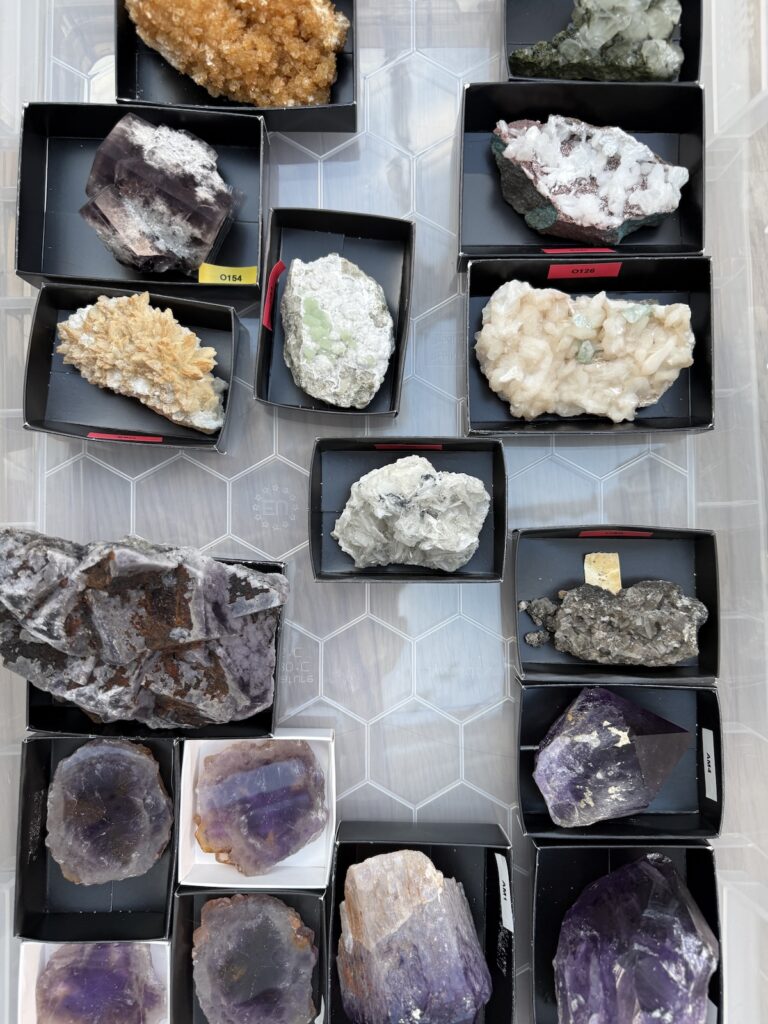
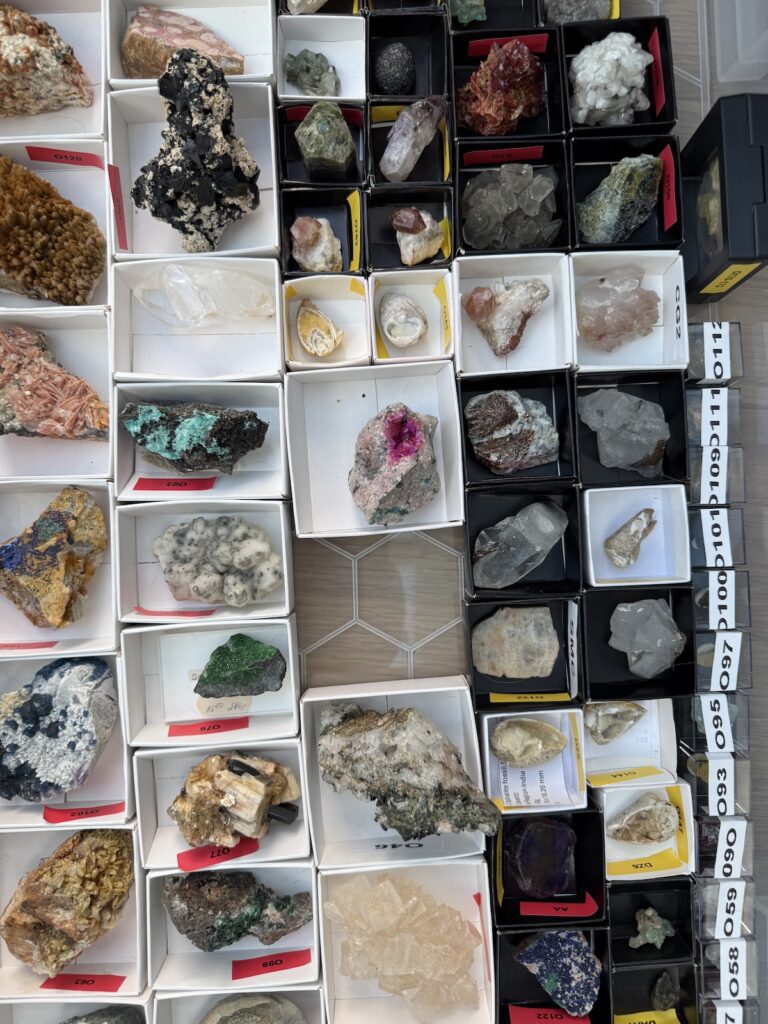
That experience stayed with me when I began buying minerals. I could not suddenly stop caring about working conditions simply because the finished product happened to be beautiful.
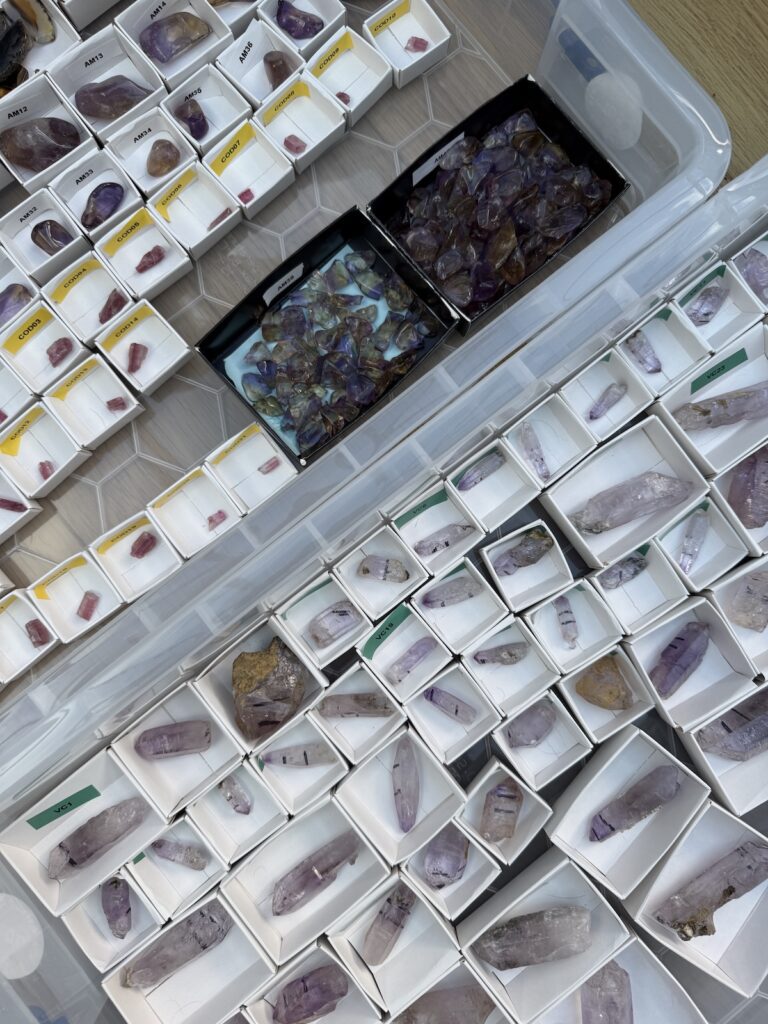
When I assess a crystal, I naturally look at its colour, condition, form, rarity and provenance. Those things matter. Increasingly, though, I find myself wondering about the part that rarely appears on the label: the people behind it.
A locality label tells us where a crystal formed millions of years ago. It does not necessarily tell us who found it, how they worked or what conditions they faced. Even the name of a famous mine leaves much of the human story untold.
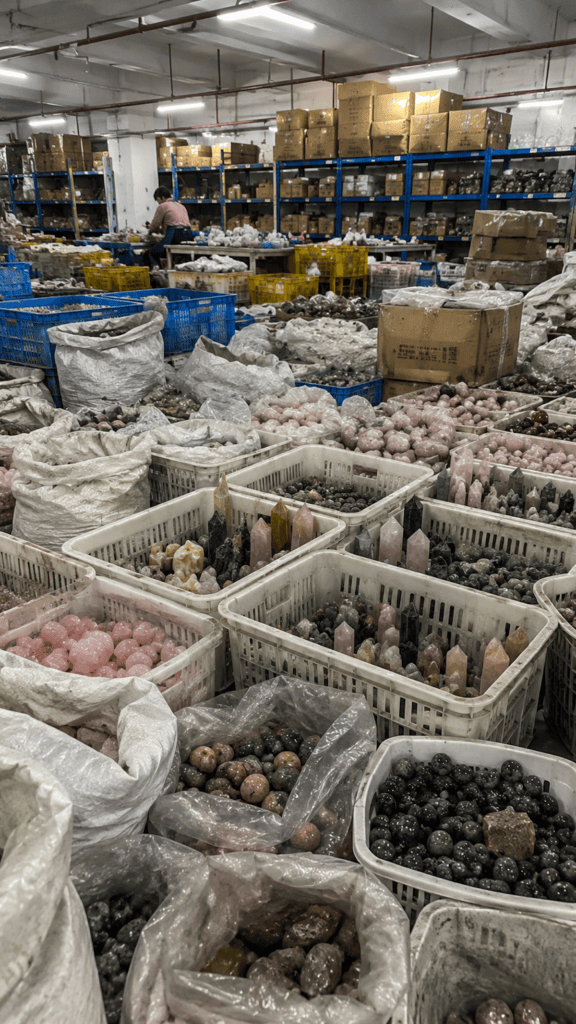
This is where mineral sourcing becomes complicated. Crystals rarely travel directly from a miner to the person who eventually owns them. They may pass through a local buyer, an exporter, a dealer and a wholesaler before reaching a collector. At every stage, information can be shortened, simplified or lost altogether.
I cannot honestly claim to know everything about every specimen I buy. I do not think any responsible seller should pretend otherwise.
You cannot always know everything about a crystal’s journey. That is not an excuse to ask nothing.
I try to get as close to the source as I reasonably can. Sometimes that means buying directly from a miner. Sometimes it means working with a family business or a trusted supplier who knows the workings and the people involved. I ask questions, request photographs and build relationships over time. Trust is rarely established through one conversation. It develops slowly, through honesty, consistency and a willingness to answer difficult questions.
The answers do not usually arrive in polished reports. Many of the people I work with operate small-scale mines in remote parts of the world. What matters to me is not whether they use the language of corporate sustainability, but whether they are open about what they do. Can they explain the locality? Can they tell me how a specimen was recovered? Are they proud of their work? Do their answers remain consistent over time?
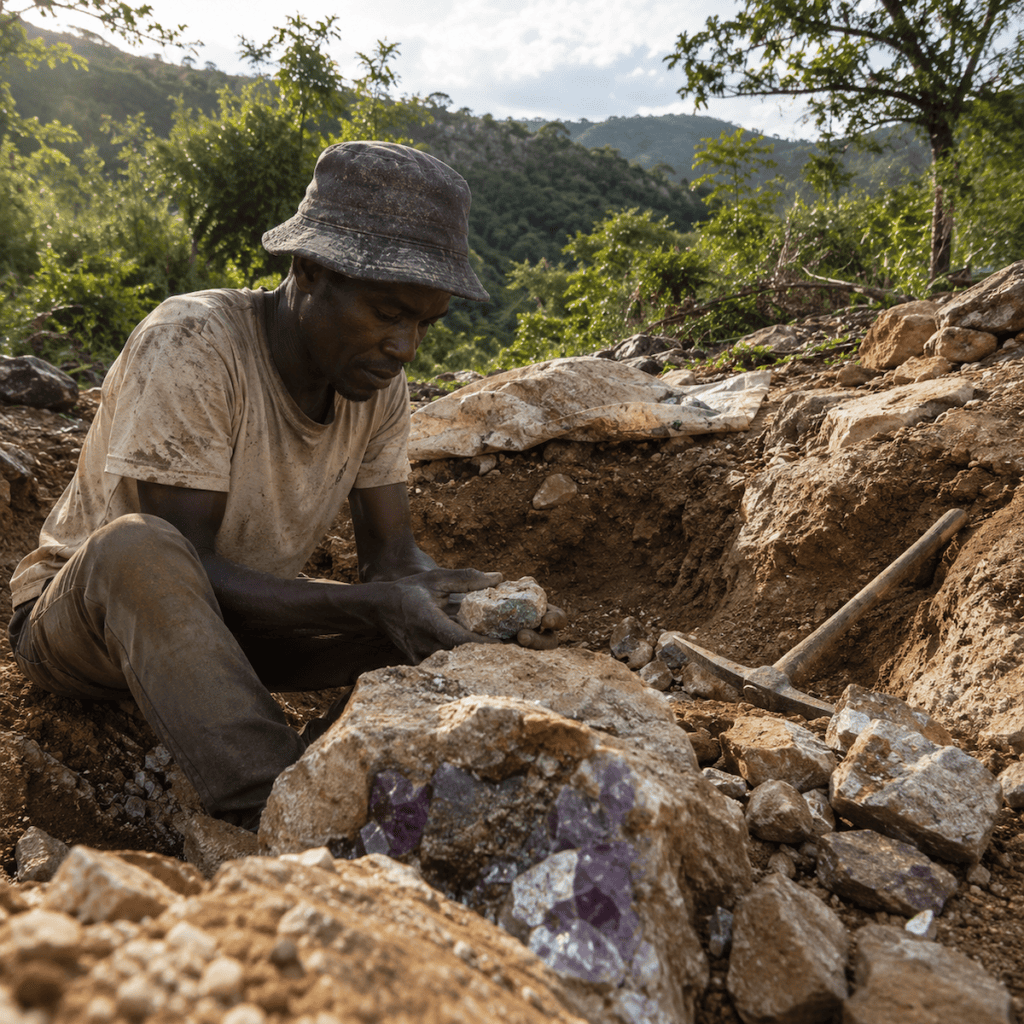
You learn a great deal from those conversations. Some miners know every part of the deposit they work. They can explain where a vein changes direction, which pockets have produced the best crystals and why one specimen survived intact while another broke during extraction. That knowledge is every bit as valuable as the crystal itself.
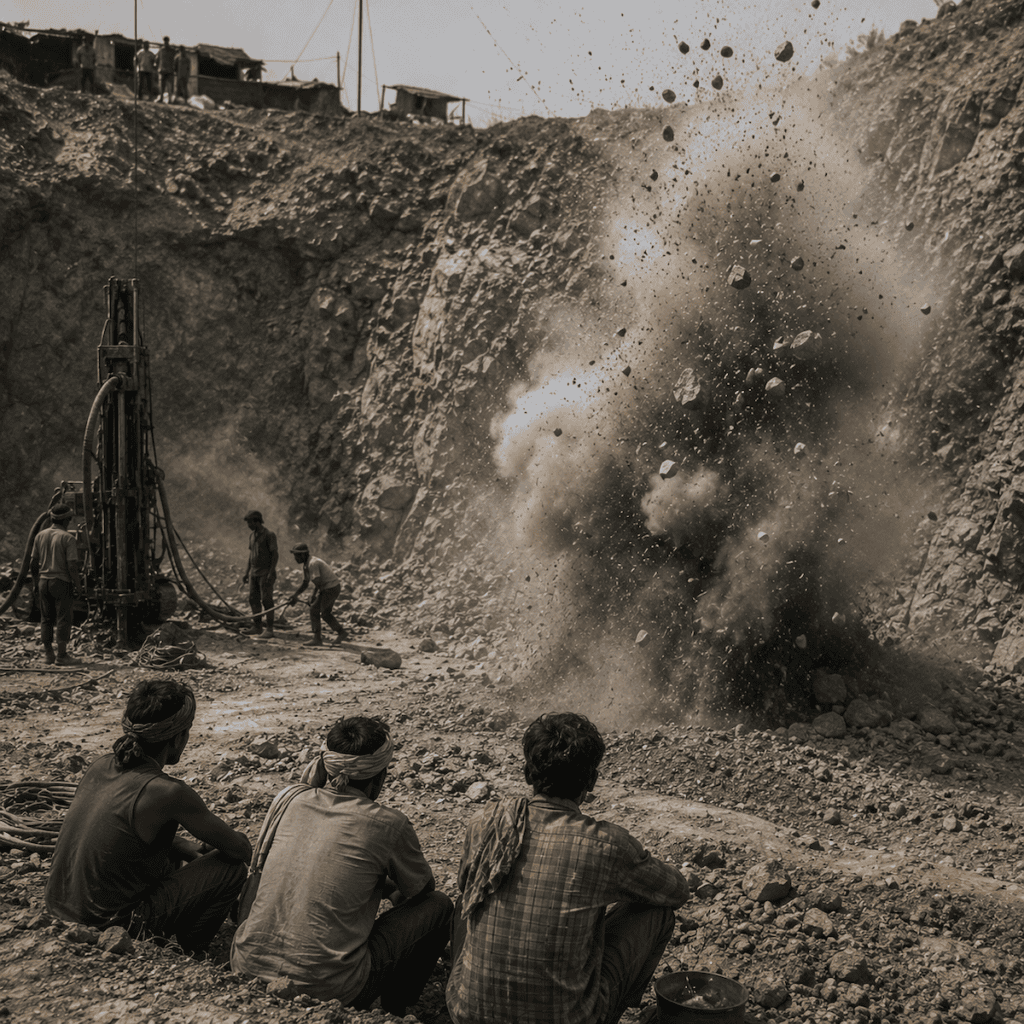
Small-scale miners are sometimes described as though they are passive figures at the bottom of the trade, waiting for somebody else to make decisions on their behalf. I think that can be patronising. Many are highly skilled workers supporting families and communities with an understanding of their local geology that would be difficult for an outsider to match. Responsible sourcing should begin by recognising that expertise, respecting their work and caring about their safety.
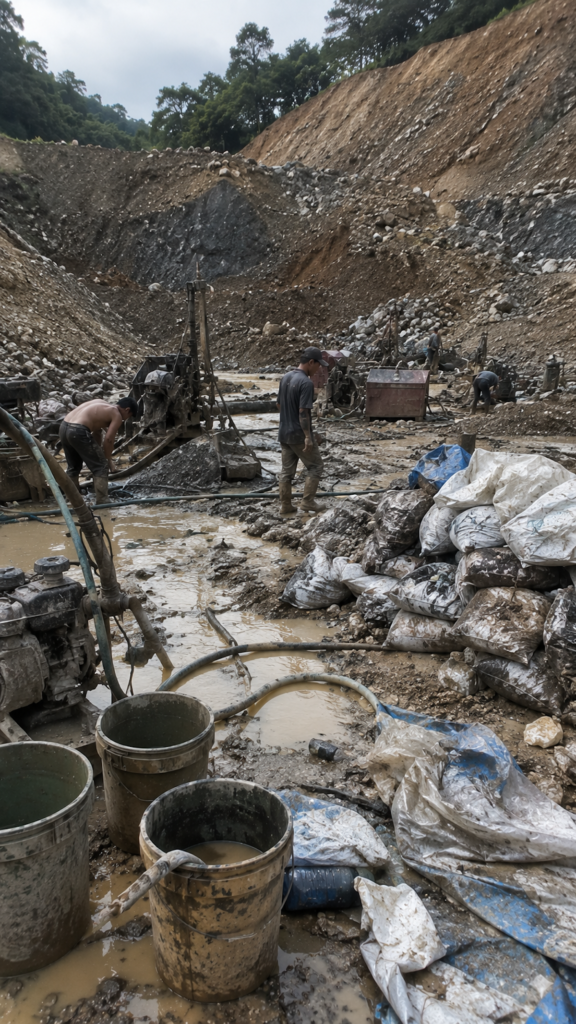
The environmental side deserves the same honesty. Mining removes material from the Earth. Rock is broken, ground is disturbed and waste is created. There is no truthful way to describe mineral extraction as completely harmless.
Mining will always leave a mark, but it does not have to scar.
There is a world of difference between carefully following a mineralised vein and tearing through a landscape with no thought for what remains. There is also a difference between a working that is stabilised and allowed to recover, and one that is abandoned with unsafe pits, polluted water or piles of waste left behind. The earth gives, but it also needs time to recover. That balance matters to me as much as the crystal itself.
I do not want to romanticise small mines or suggest that every family operation automatically behaves responsibly. Small-scale does not always mean ethical, just as larger operations are not automatically irresponsible. Every situation deserves to be judged on its own merits.
There are limits to what I can verify from Cheshire. I cannot personally inspect every working or follow every specimen from the moment it leaves the ground. Rare Minerals Earth is a small business, not an international auditing organisation. I have to rely on relationships, evidence, repeated conversations and my own judgement. What I can control is who I choose to work with.
There have been occasions when I have admired the material but not the answers. Sometimes the provenance was too vague. Sometimes a seller avoided straightforward questions about how the crystals had been obtained. When that happens, I walk away.
That is not always the easiest decision. Some of those specimens were genuinely beautiful. Some would almost certainly have sold quickly. But my values cannot only apply when they are convenient. They matter most when compromising them would make me money.
I am not suggesting that every other mineral seller approaches these questions differently. Many care deeply about provenance and work hard to build responsible relationships with the people they buy from. Mineral supply chains are complicated, and honest gaps in knowledge are not the same as deliberate exploitation.
The difference I want Rare Minerals Earth to make is quieter than that. I want the person who mined the crystal to remain part of its story instead of disappearing as soon as the specimen has been cleaned, labelled and photographed.
That has changed the way I look at many of the minerals in my collection. A Supat Gali peridot is no longer simply a green crystal from Pakistan. It reminds me of miners working in steep Himalayan terrain during a season that may last only a few months before snow closes the mountain again. A Colombian emerald is not just an extraordinary shade of green. It reminds me that somebody recognised it inside a narrow vein of black shale and removed it carefully enough for its natural form to survive.
The crystal may fit in the palm of your hand. The work behind it can be enormous.
Wonder means more to me when it is built on respect.
People often talk about crystals carrying energy. I cannot prove that a specimen absorbs the story of everyone who has handled it, and I would never present that as fact. What I do know is that learning part of its journey changes how I feel about owning it.
The Earth has already done something extraordinary. It has brought together chemistry, heat, pressure, space and time to create a crystal where there was once only rock. That process may have taken thousands or millions of years.
I do not think the human part of its journey should be treated as an afterthought.
A beautiful crystal should not need an ugly story.