The fluorite mine you have probably never heard of
Okorusu produced some of the most extraordinary colours in the mineral world.
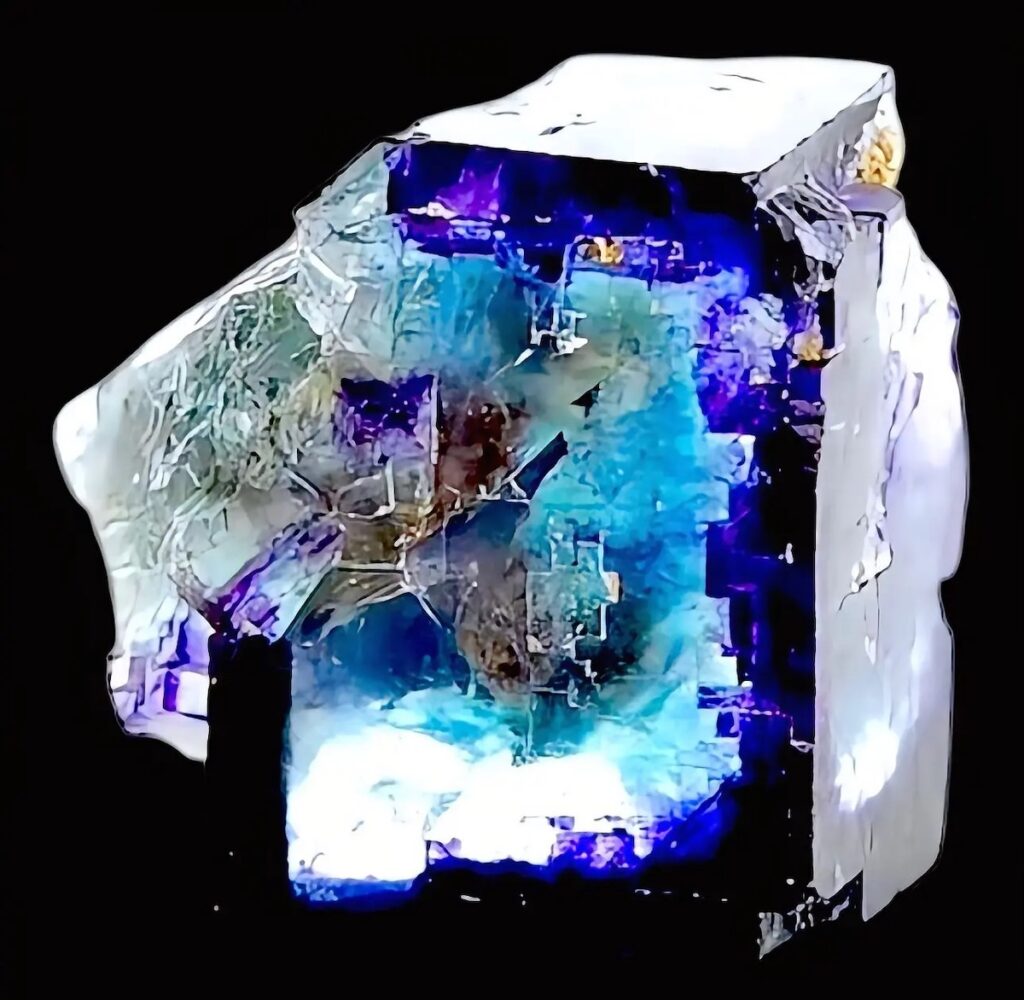
The first thing you notice is the colour.
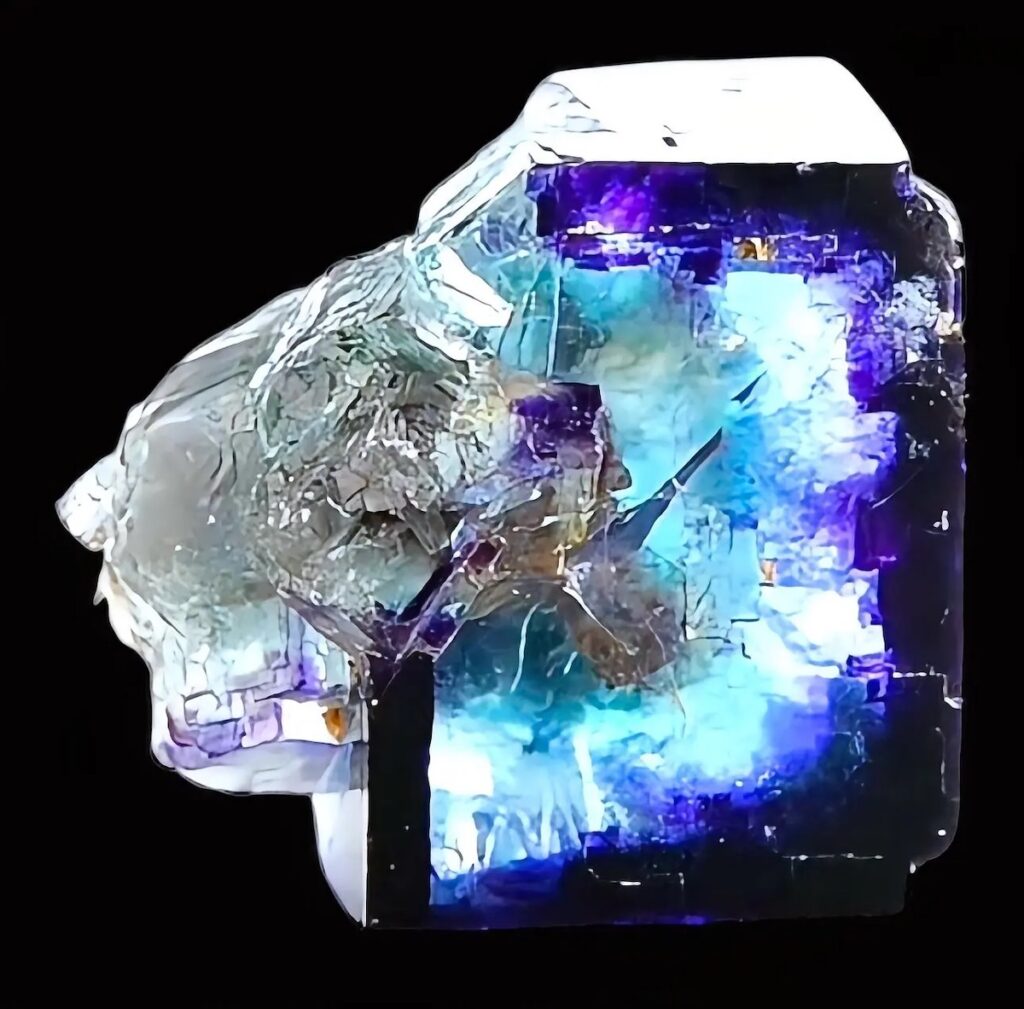
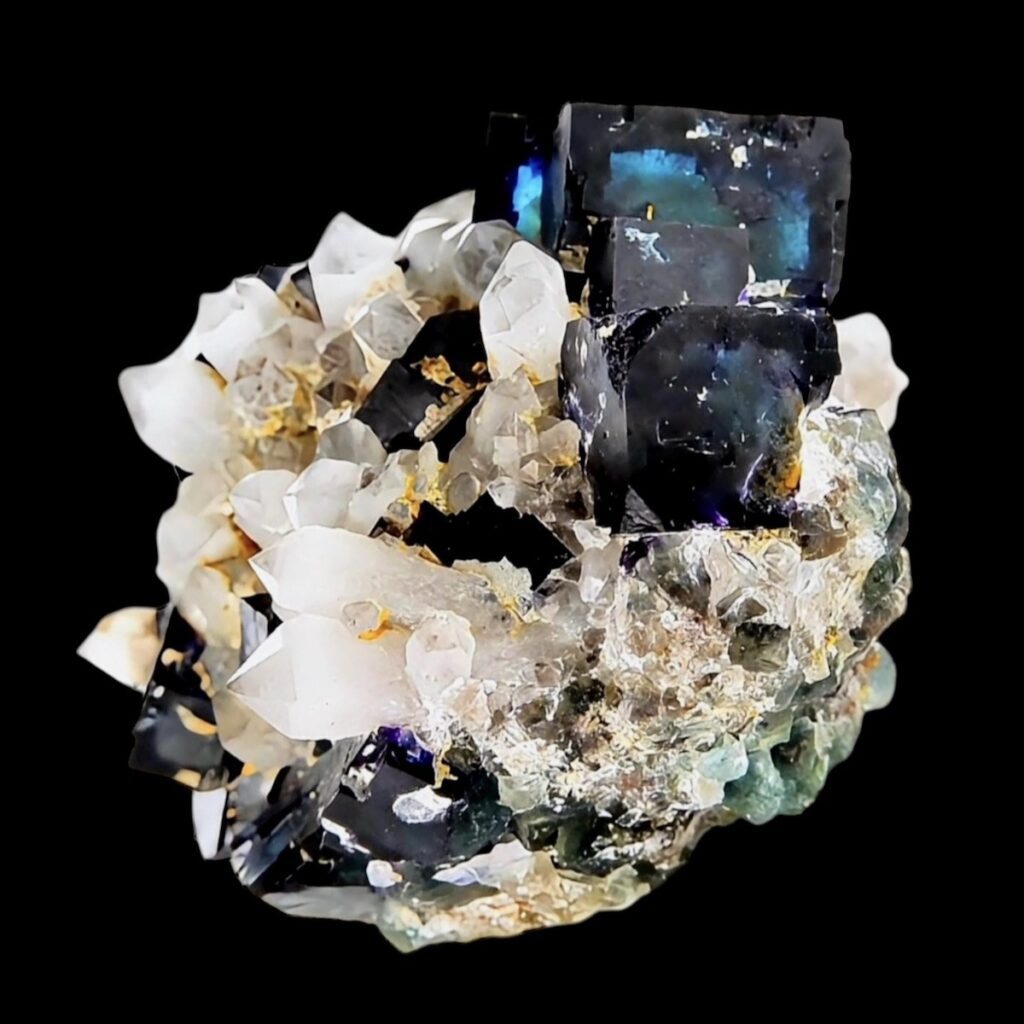
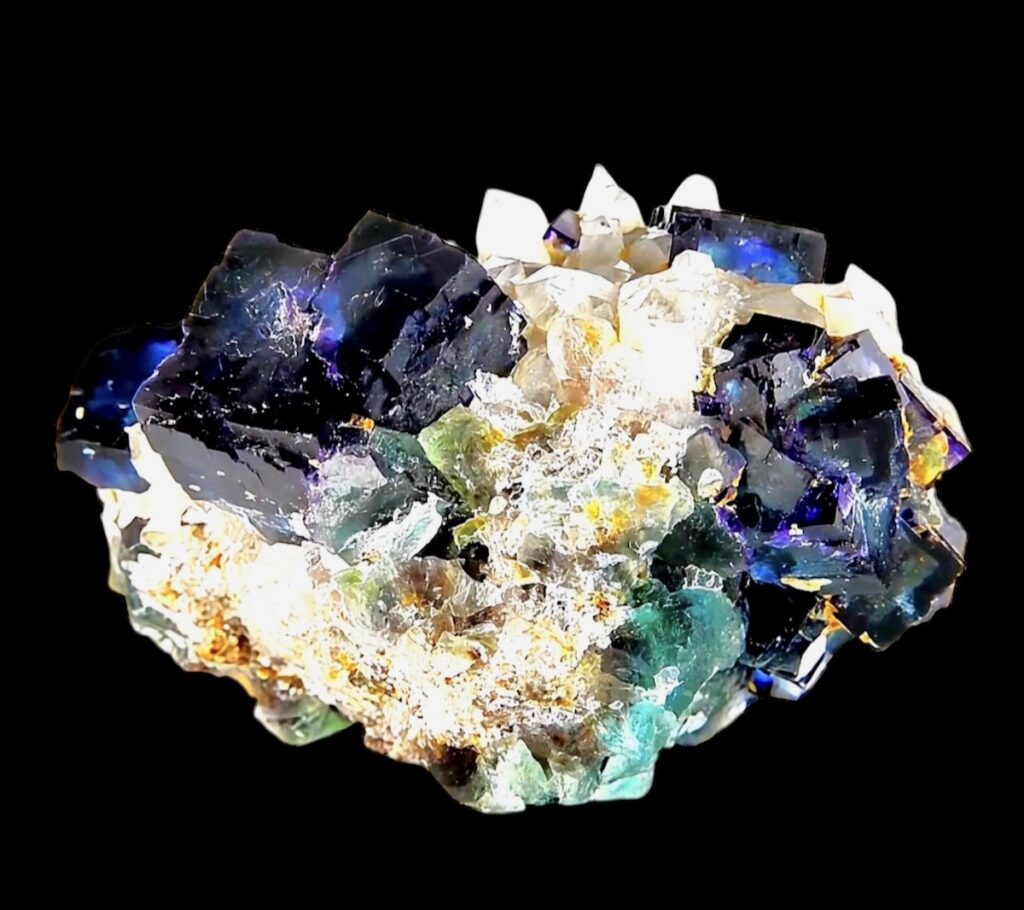
Green running through the centre of a cube. Purple following the edges. Darker bands appearing deeper inside when the light catches them. Sometimes blue, yellow or almost colourless fluorite appears alongside them.
Then you realise that some of those coloured shapes are not sitting on the surface.
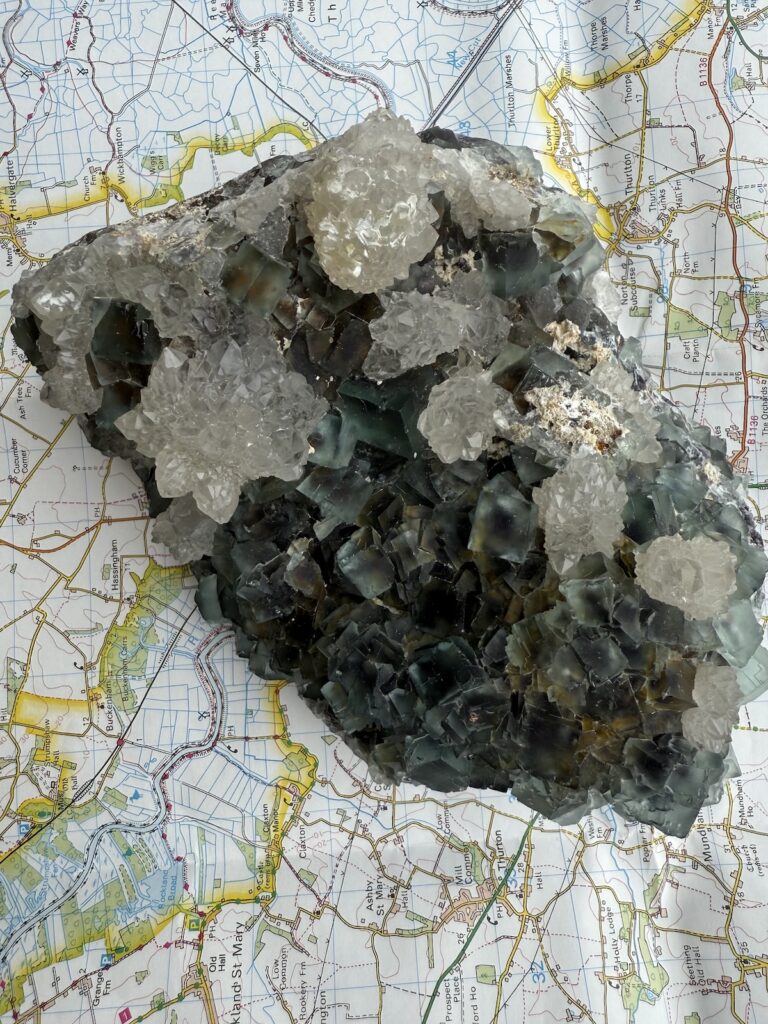
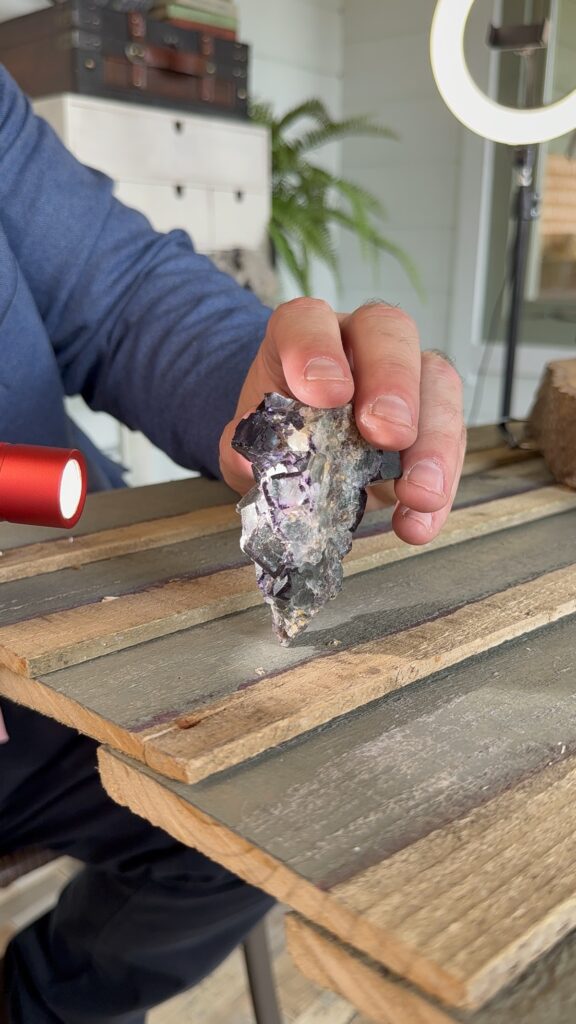
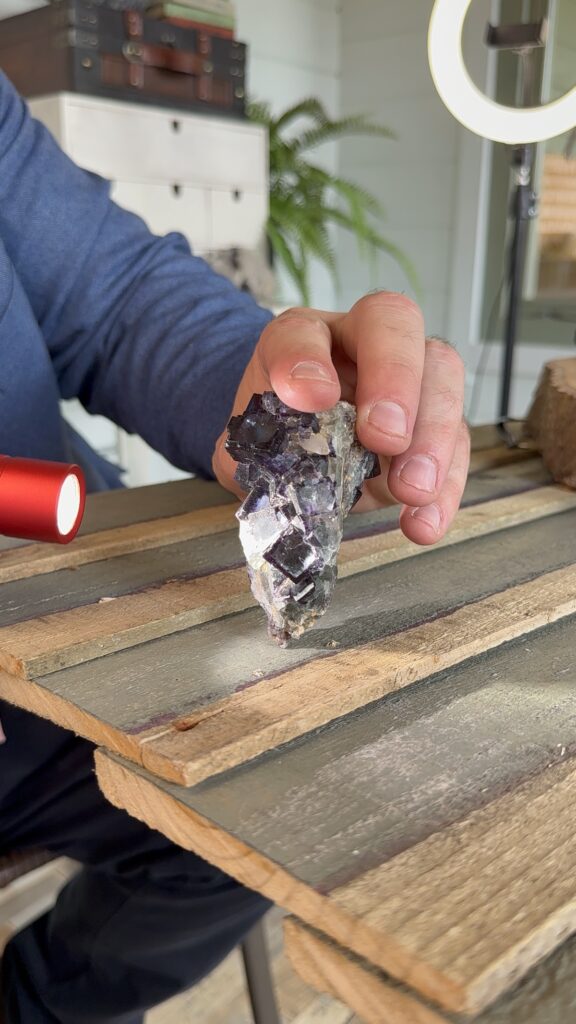
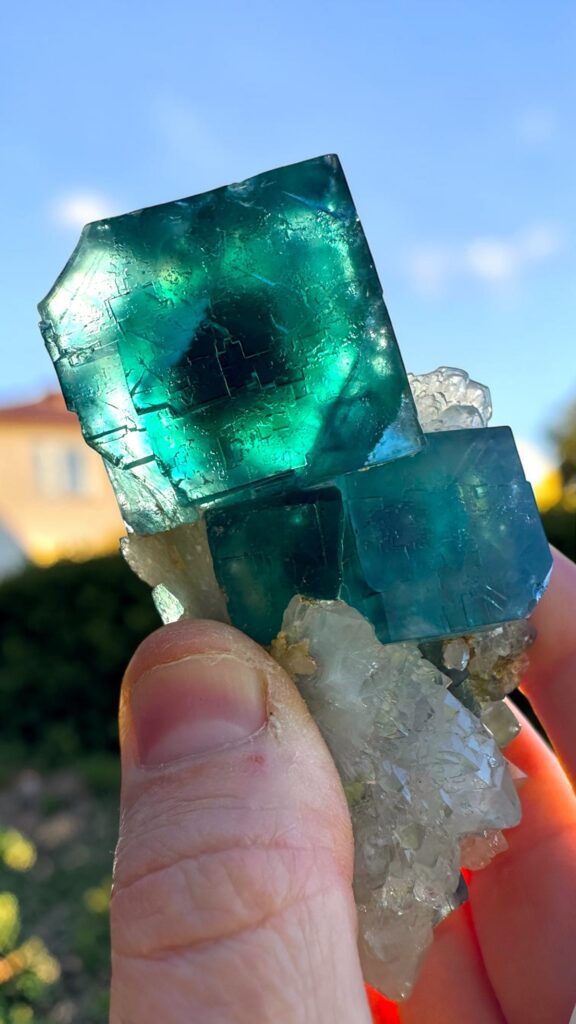
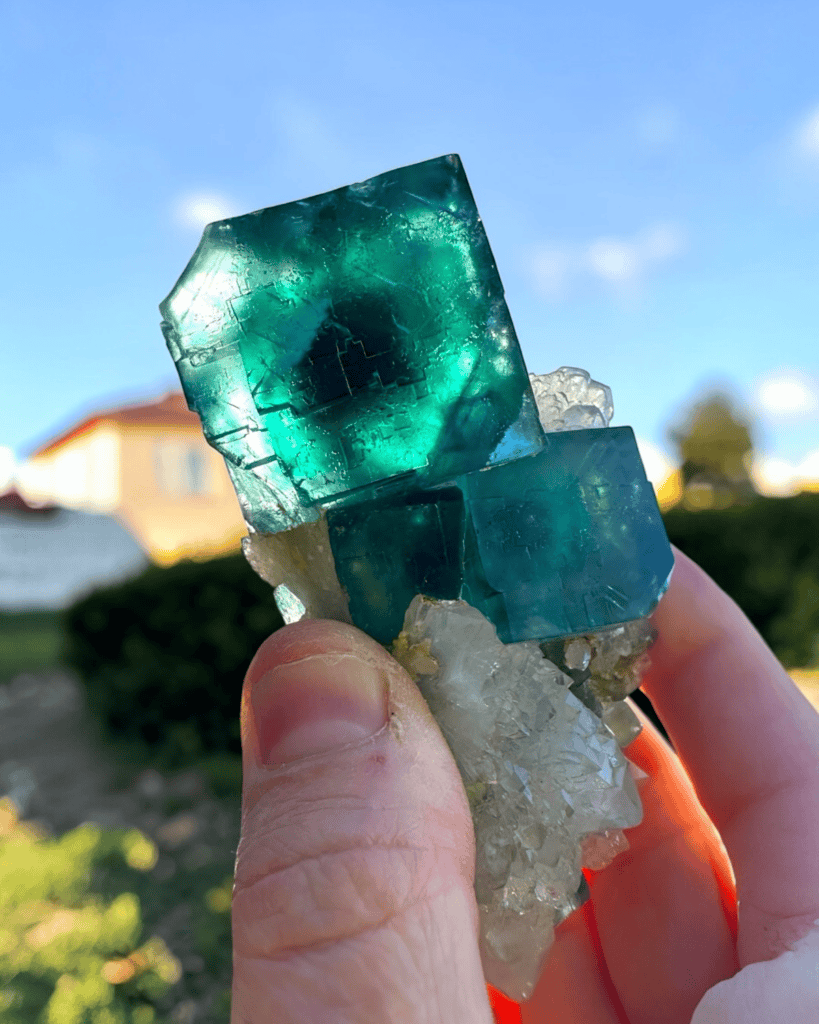
They are inside the crystal.
A smaller cube remains visible beneath a larger one, followed by another band of colour around that. The specimen seems to contain several earlier versions of itself, each one marking a point when the conditions around it changed and the next layer grew differently.
It looks like coloured glass that somebody has assembled by hand.
Except it came out of the ground.
These crystals were produced by the Okorusu Mine in Namibia, a name that means a great deal to fluorite collectors and almost nothing to most other people.
I think more people should know it.
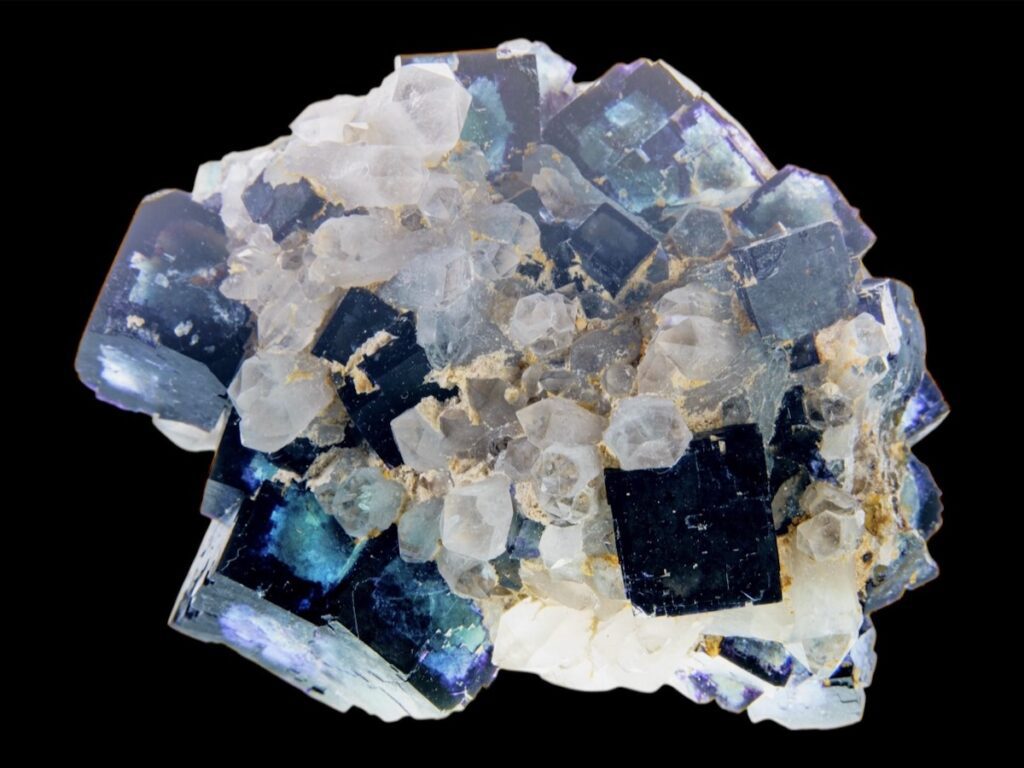
Fluorite occurs in a huge range of colours and from localities all over the world, but Okorusu developed a particularly recognisable look. The mine became known for sharp, lustrous cubes ranging from deep sea green into purple, often with strong internal zoning and contrasting layers that follow the geometry of the crystal. Some specimens also fluoresce brilliant blue under ultraviolet light.
It is not just that several colours appear in one piece.
It is the way they appear.
The colours can sit in straight bands around the edges, form darker outlines inside a transparent cube or reveal smaller cubes buried beneath later growth. On particularly good specimens, you can turn the crystal in your hand and watch the internal structure appear and disappear as the light moves through it.
From one angle, it looks green.
Turn it slightly and a purple cube appears inside.
Move it again and a darker line follows an edge you had not noticed before.
I have handled a lot of fluorite, but Okorusu material can still make me stop and look properly.
The mine is around 62 kilometres north of Otjiwarongo in Namibia. It was worked as an open-pit fluorspar mine and forms part of an unusual geological complex containing carbonatite, a rare type of igneous rock. Mining in the area began around 1920, and its main modern period of production ran from 1988 until 2014.
It was not principally worked because somebody wanted beautiful crystals for a cabinet.
Most of the fluorite was fluorspar ore, mined and processed for industrial use. Okorusu became a major producer of acid-grade fluorspar for the chemical industry, reaching annual production of around 132,000 tonnes at its peak.
Then, among all that industrial material, the mine occasionally opened pockets containing cubes with extraordinary colour, transparency and zoning.
The same mineral could have two completely different futures.
Most of it was crushed and processed.
A small amount survived intact because somebody recognised that the shape and colour were too good to destroy.
I like that contrast.
A mine can move enormous quantities of rock in search of an industrial raw material, then uncover a crystal so precise and colourful that decades later a collector will place it under a light and examine every edge.
The better Okorusu specimens show why locality matters so much in mineral collecting.
Fluorite is calcium fluoride wherever it forms. The basic chemistry does not change because a crystal comes from Namibia rather than China, Mexico, England or Morocco.
But the conditions underground do change.
The host rock changes. The fluids change. Temperature changes. Trace chemistry changes. The amount of space available for crystals to grow changes.
Those differences leave a recognisable result.
An experienced collector can sometimes look at a specimen and suspect Okorusu before seeing the label. The sea-green colour, purple zoning, cubic form and internal phantoms can create a combination that is difficult to mistake for anything else.
The colours themselves need a little care when explaining them.
Pure calcium fluoride is colourless. Colour in natural fluorite can result from tiny changes or defects in its internal structure, sometimes influenced by natural radiation or small amounts of other elements. The exact cause is complicated and may differ between deposits, colours and individual stages of growth.
So it would be too simple to say that one element made all the fluorite green and another made it purple.
What we can say with more confidence is that some Okorusu fluorite formed in separate stages.
Researchers studied tiny pockets of fluid trapped inside the fluorite and found that much of the main purple and green material crystallised at temperatures of roughly 166°C to 144°C. Later yellow fluorite was deposited at lower temperatures, around 132°C to 128°C.
That changes the way I look at the colours.
They are not simply decoration added to a finished crystal.
They can mark different periods in its growth.
Fluorite develops as material is added to its outer surfaces. Growth may slow, stop or begin again. If the conditions around the crystal are different when it resumes, the new fluorite may have a different colour or appearance.
The earlier surface becomes sealed inside.
Collectors often call that a phantom.
The name sounds slightly supernatural, but what you are looking at is physical evidence of an earlier crystal face. The cube continued growing, yet the boundary of its previous shape remained visible beneath the new material.
On some Okorusu specimens, this happened several times.
One cube inside another, then another.
The crystal kept growing without completely hiding what it had been before.
I find that extraordinary.
We normally have to destroy something to see its history. Cut through a tree to count its rings. Dig into the ground to study its layers. Break open a rock to expose what is inside.
A transparent fluorite crystal can show several stages of its own growth without us cutting into it at all.
You can simply hold it up to the light.
The geology behind it is no less unusual.
The Okorusu deposit is connected to carbonatite, an unusual type of igneous rock containing far more carbonate than ordinary magma. Hot, fluorine-rich fluids moved through the rocks and reacted with calcium in the carbonatite and surrounding marble. That reaction produced the enormous bodies of fluorite later worked by the mine.
That is a very different picture from the calm little cave people often imagine when thinking about crystals.
This involved unusual magma, hot fluids moving through rock, chemical replacement and conditions changing over time.
From that came a cube with green in the centre and purple around its edges.
When I select Okorusu fluorite, I am not simply counting how many colours appear.
Some pieces carry several colours but still look cloudy or confused. The specimens I find most impressive allow you to see the structure clearly. Light can enter the crystal. The zoning follows the cube. Earlier growth remains visible inside the later material.
The edges matter too.
Fluorite has a hardness of only four on the Mohs scale and perfect cleavage, which means it can chip or split more easily than its solid appearance suggests. A sharply formed specimen has already survived extraction, handling and transport without losing the corners and surfaces that make its geometry so satisfying.
Then there is the arrangement.
One cube can be beautiful. A group of cubes growing together can become far more complicated, especially when every crystal carries its own internal bands. Green centres overlap. Purple edges meet. Light passes through several layers at once.
Photographs do not always explain them properly.
Front lighting can make the colours look flat. Too much light can wash them out. Sometimes I have to move a specimen around for several minutes before the internal phantom suddenly becomes obvious.
It was there the entire time.
I just had not found the right angle.
Fluorite also has a strong following among people interested in crystals spiritually. It is commonly associated with clarity, concentration and setting intentions.
I am open-mindedly sceptical about crystal healing. I would never present supposed healing properties as scientific fact, and I am not trying to convince anybody that fluorite can cure or change anything.
I do, however, like to meditate with fluorite.
I sometimes hold a piece while focusing my mind on a particular intention. The act of sitting quietly with it helps me slow down and concentrate on what I am trying to achieve.
That could be a placebo effect. It could simply be the benefit of stopping for a few minutes, holding one object and directing my attention towards one thought.
I am comfortable not knowing.
It is still something I find useful.
Okorusu eventually became one of the great names in fluorite collecting, but outside the mineral world, most people will never hear about it.
They may know fluorite as a polished tower, a purple tumble stone or a small green cube.
They may not know that one mine in Namibia produced crystals containing green, purple, blue and yellow zones, with older cubes still visible beneath the final surface.
That is why provenance matters.
A locality label is not just a place name attached to a specimen. Sometimes it explains the entire appearance of the mineral. It connects the colours and crystal form to a particular deposit, a particular geological system and a sequence of events that happened underground.
Okorusu did not produce every beautiful fluorite ever found.
It did produce some of the most recognisable.
Green through the centre. Purple around the edges. Darker shapes held inside transparent cubes. Earlier stages of growth still visible beneath everything that came later.
An industrial mine went looking for fluorspar.
It found cubes that had been rebuilding themselves in colour underground. Explore our collection of Okorusu fluorite specimens to see individual pieces, photographs and availability.