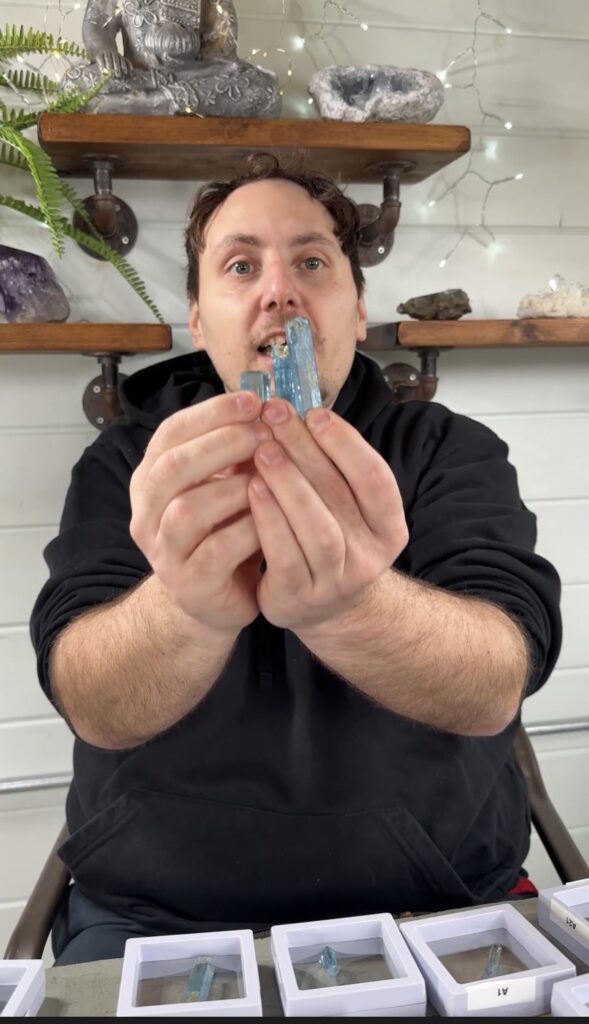
I started collecting crystals for their energy. I stayed for their rarity.
My interest in crystals began during a residential meditation retreat at Purley Chase in Warwickshire. I was there for the Monroe Institute’s Gateway Voyage, a programme using specially designed audio exercises to explore expanded states of consciousness. Over several days, we worked through different “Focus” levels, entering deeply relaxed states while remaining mentally awake and exploring what might exist beyond our usual waking awareness.
At the same time, Brian Dailey and Allyn Evans had flown over to teach a separate Energy Medicine retreat. I was not part of their programme, but everybody came together over long lunches and again in the evenings, so we ended up talking a great deal.
Brian was first and foremost a medical doctor. Later in his career, he had quietly begun incorporating Reiki and crystal healing alongside his conventional medical practice, based on the results he believed he was seeing with some patients. That distinction mattered to me. He did not come across as a spiritual healer trying to sell me an idea. He spoke as a doctor sharing something unusual he had encountered through his own work, and that made me take him seriously.
Sadly, Brian has since passed away, but those conversations stayed with me and became the catalyst for everything that followed.
Shortly after I returned home, I bought Philip Permutt’s The Crystal Healer and began collecting polished crystals based on their spiritual properties. At that stage, I was not thinking about provenance, crystal form or whether a mineral came from one very specific part of the world. I was reading about what different crystals were associated with and then wanting to own one. Rose quartz, amethyst, labradorite, black tourmaline and whatever else had caught my attention that week.
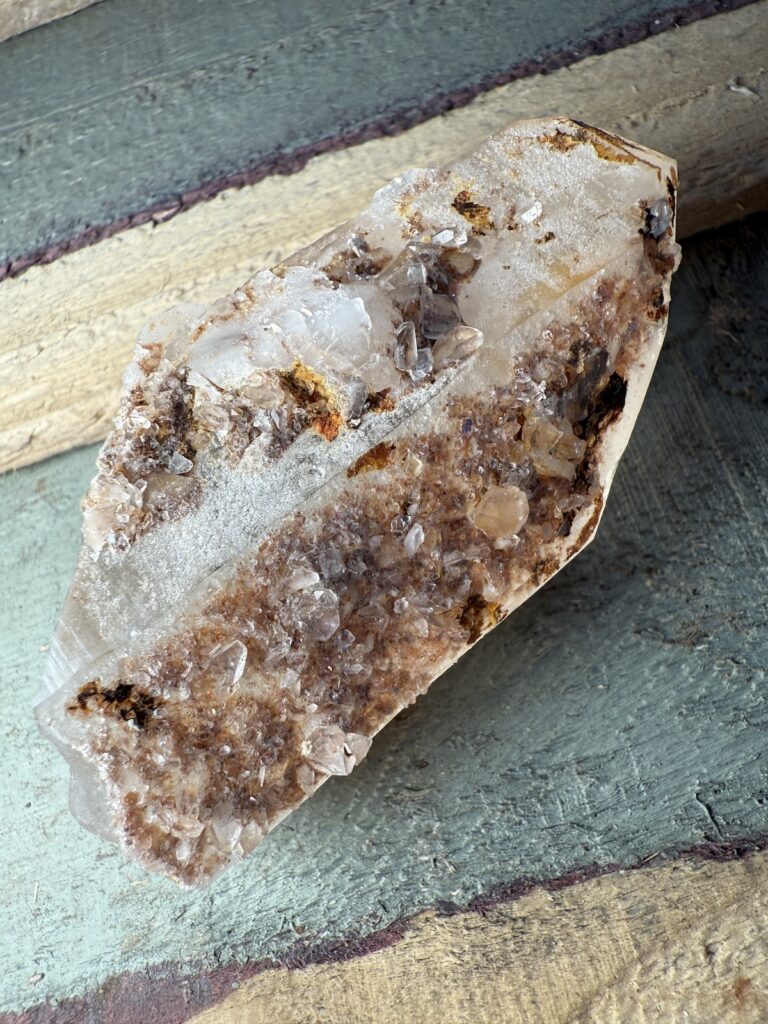
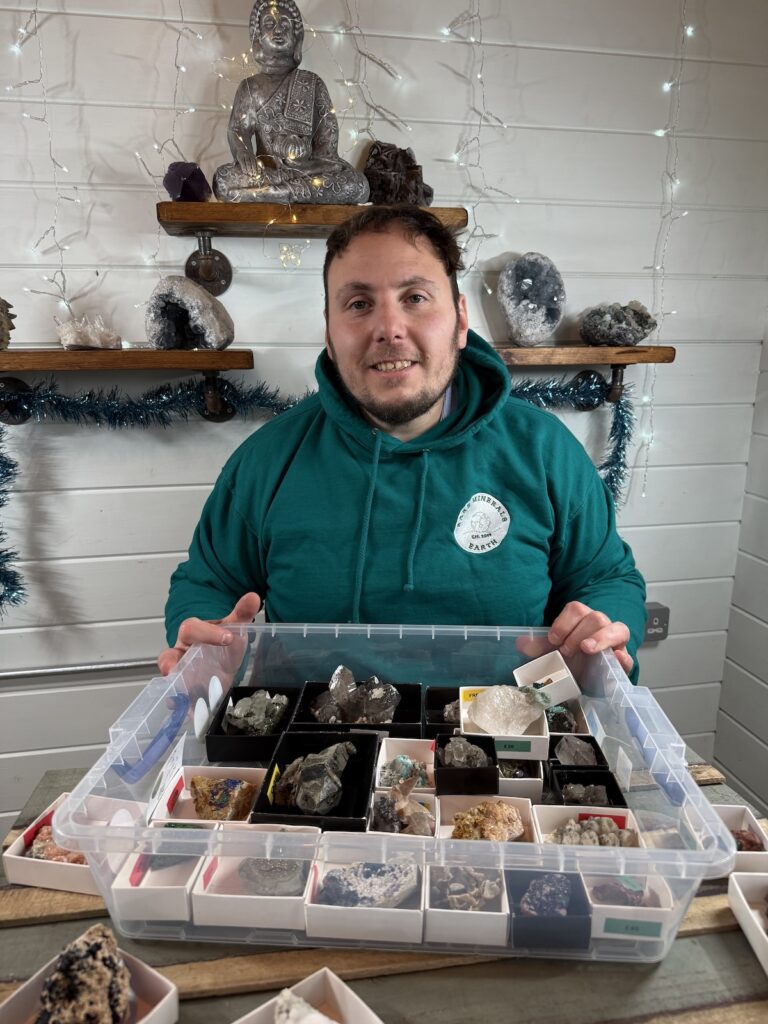
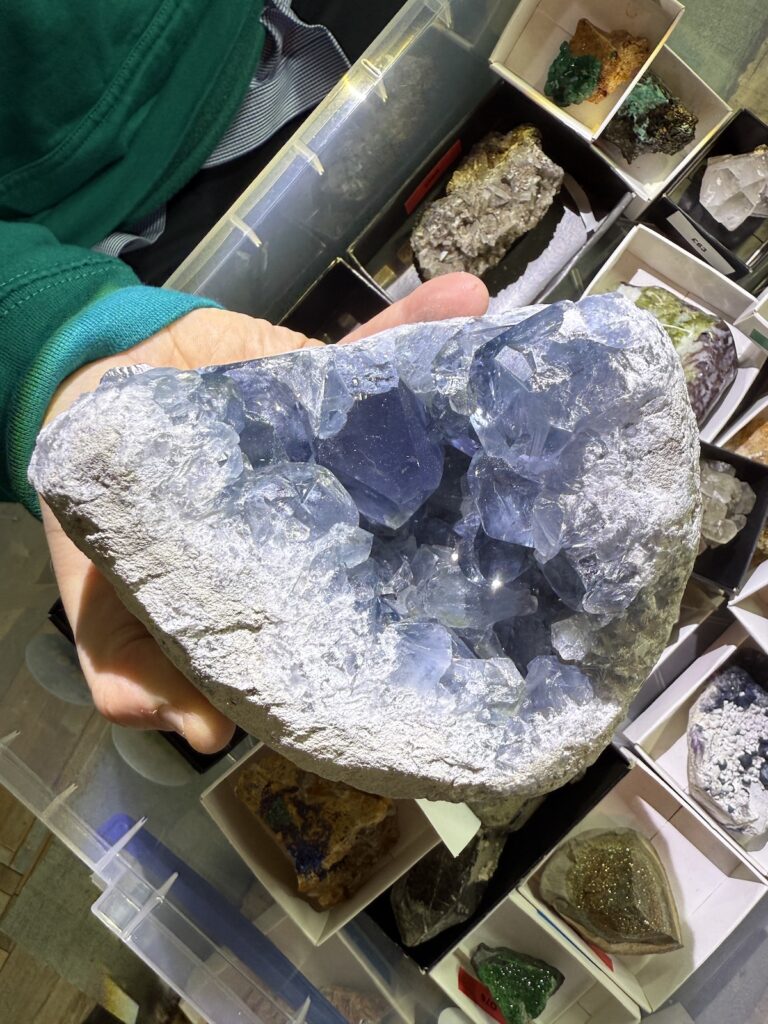
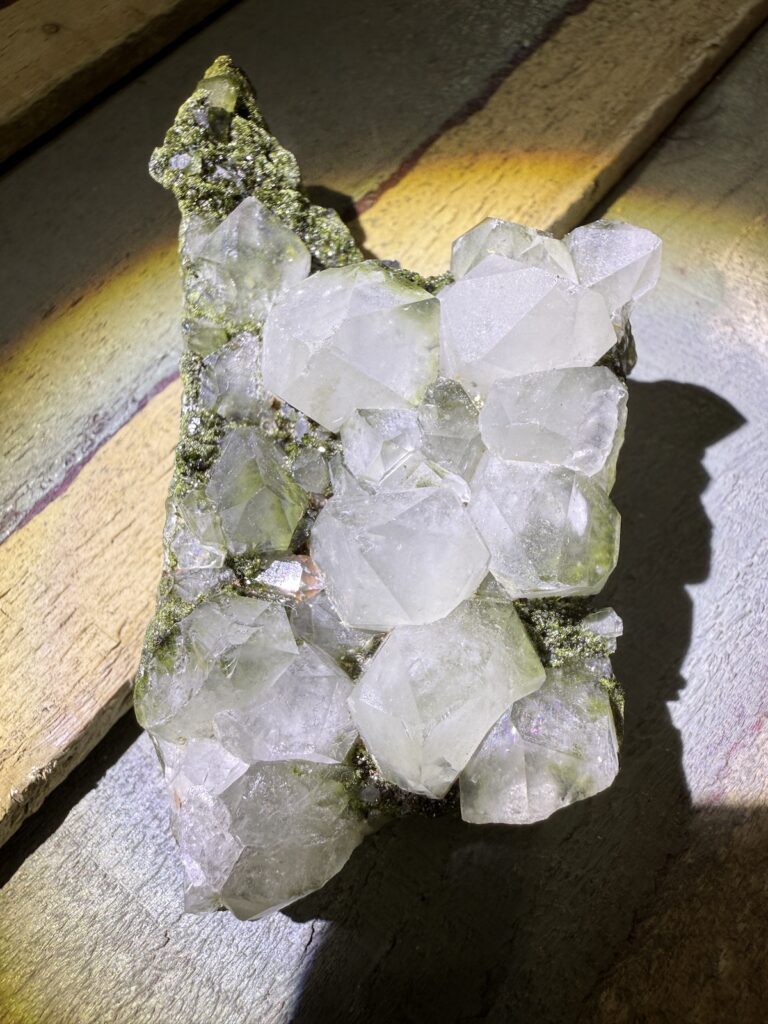
Most of them were inexpensive, which was probably dangerous in its own way. I have ADHD, and what begins as a new interest can become an obsession before I have noticed the transition. One or two crystals soon became shelves full of them, with parcels arriving often enough that Sarah, my wife, had a much clearer idea of what was happening than I did.
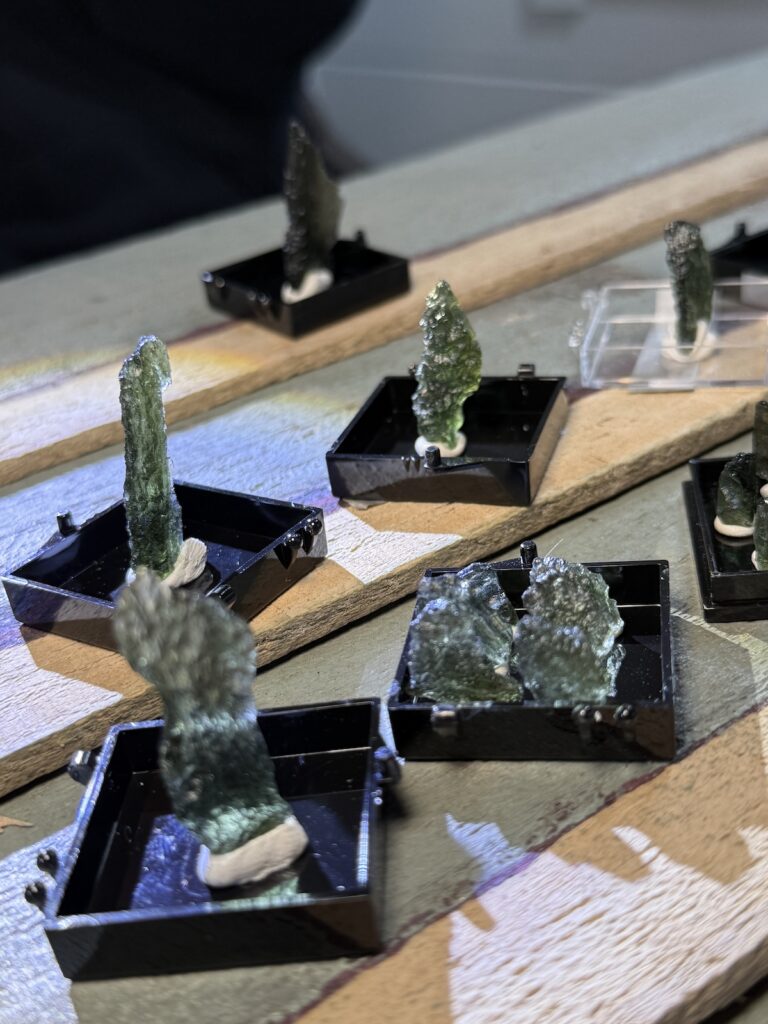
My reasons for collecting began to change quite quickly. I gradually became less interested in polished crystals and more drawn to natural specimens. I wanted to see the shapes they had actually grown into underground, with the original crystal faces, points, textures and imperfections still there.
Polished crystals can be beautiful, but somebody has decided what shape they should be. With a natural specimen, the Earth has already done that part. Once I started noticing the difference, it became difficult to go back.
Locality became important soon afterwards. At first, places such as Namibia, Brazil, Pakistan, Colombia, Vietnam and Myanmar were just names on labels. Then I began to understand that the same mineral could look completely different depending on where it had formed.
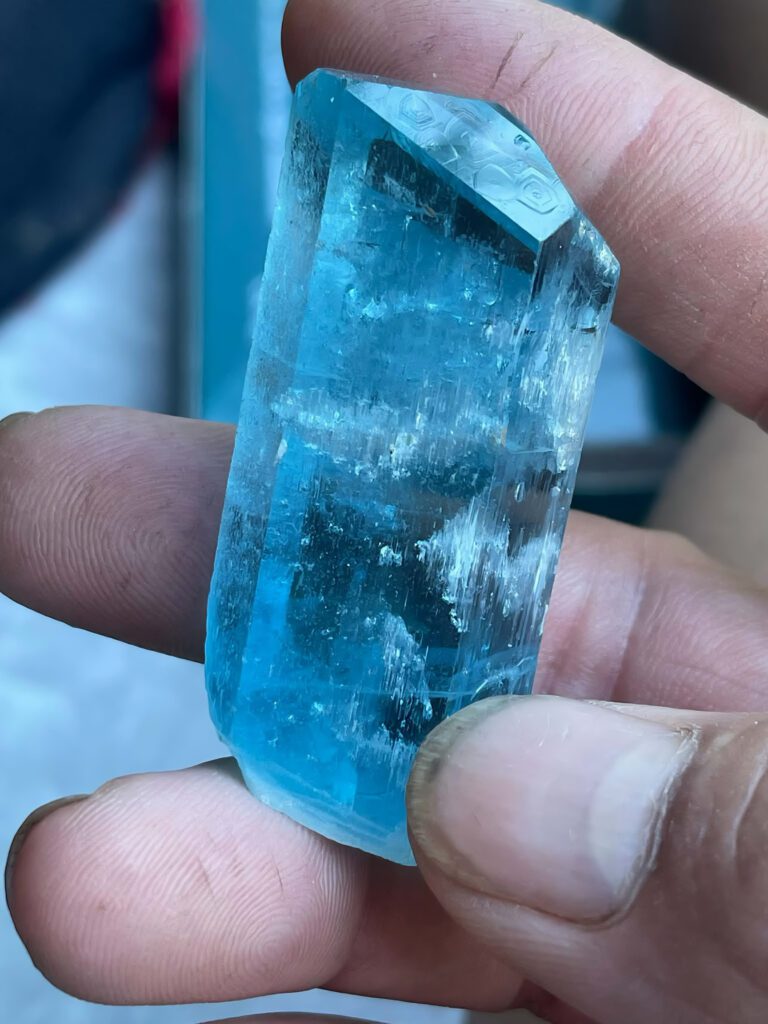
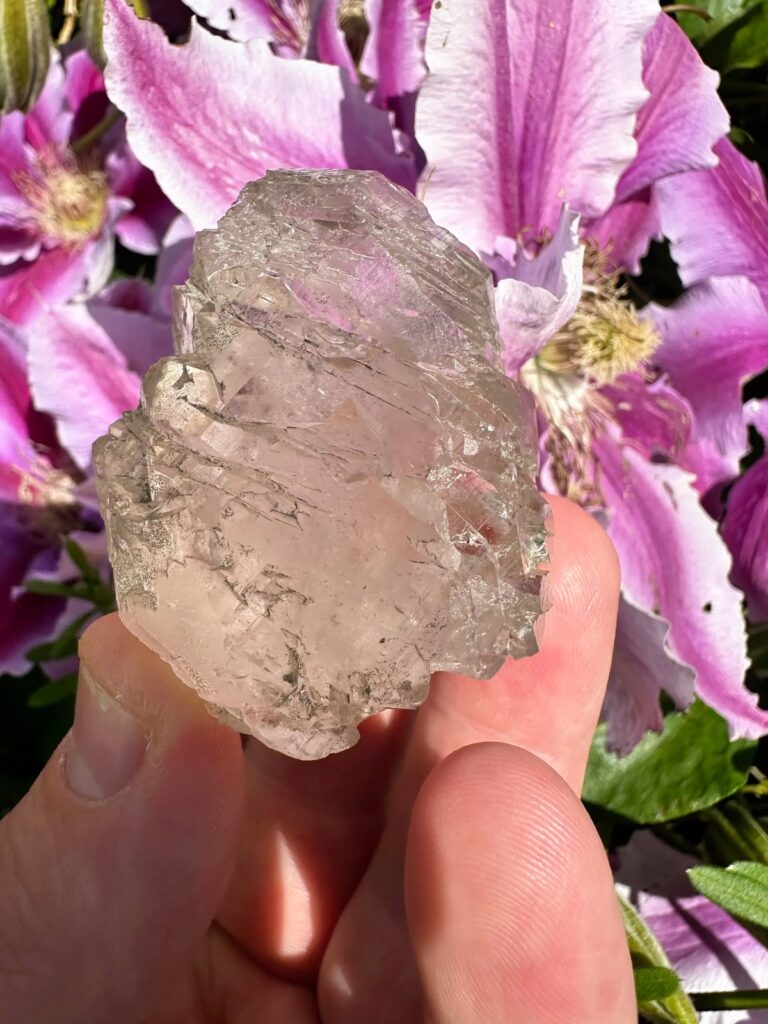
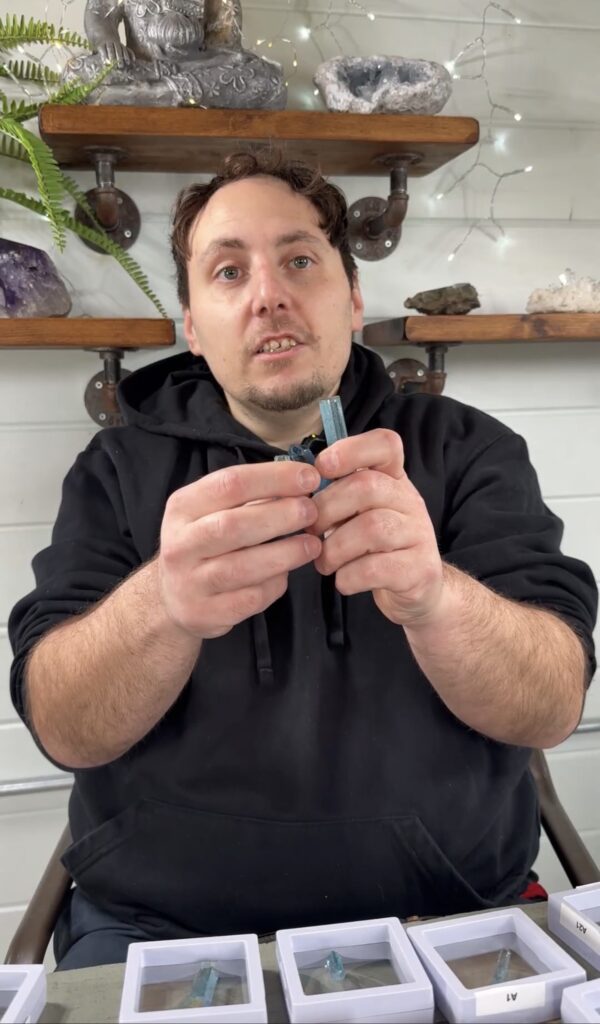
An aquamarine from one locality might be pale and glassy, while another could be an unusually deep blue with a completely different crystal habit. Fluorite could be purple, green, blue, yellow or almost colourless, with the character of the specimen changing from one mine to the next. Even quartz, one of the most abundant minerals on Earth, could develop forms and surface features associated with very particular geological environments.
The mineral name only told me what it was. Provenance began to explain why that particular specimen looked the way it did.
That was when the collecting became more serious and, if I am being completely honest, a little more egotistical. I liked owning things that most people did not. I do not think that is unique to mineral collectors. Some people collect rare watches, others chase limited-edition trainers, vintage wine or classic Ferraris. I became the person spending far too much money on crystals most people had never heard of.
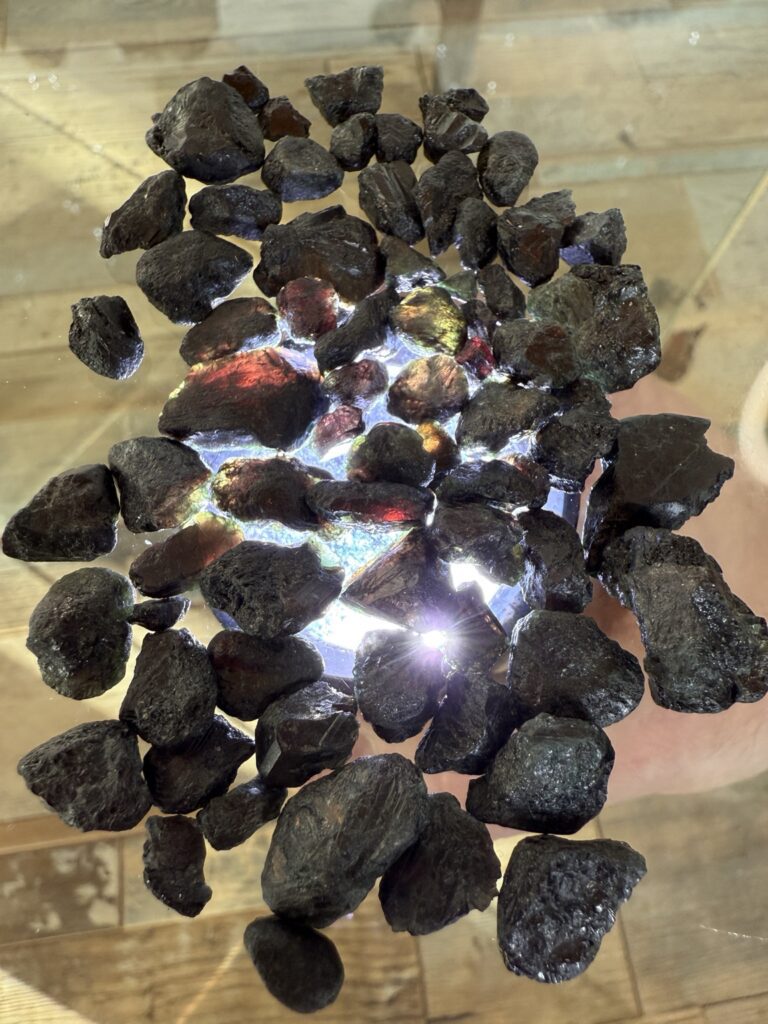
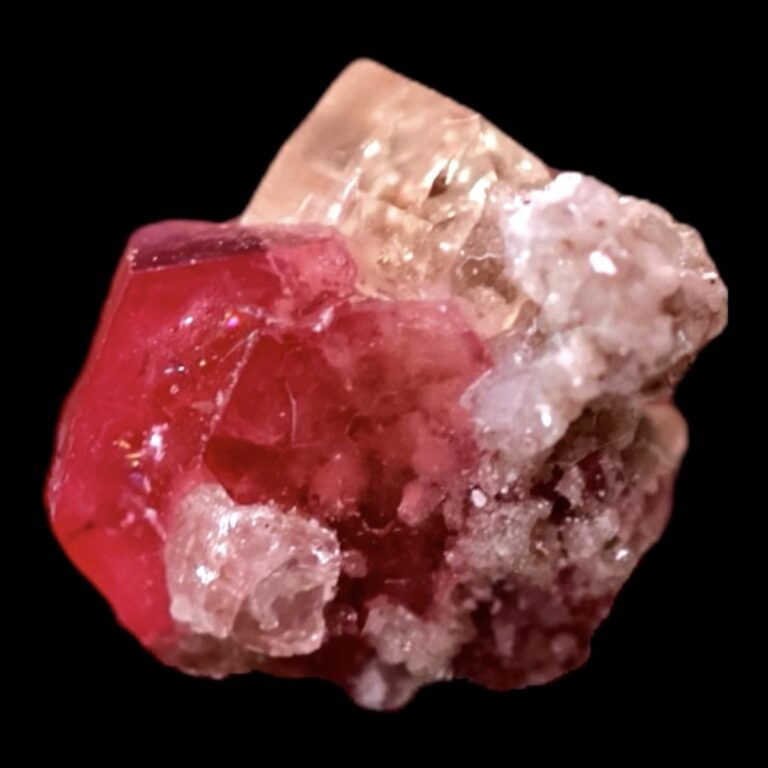
Before long, I was looking for deep blue aquamarine from Vietnam, painite from Myanmar, red beryl from Utah and black opal from Lightning Ridge in Australia. These were not crystals I expected to see lined up in an ordinary shop. Some came from extremely restricted geological areas. Some existed in tiny quantities. Some had become famous precisely because there was so little of them.
The appeal was not simply that they were rare. It was knowing that the conditions needed to create them had come together in one particular place, sometimes nowhere else on Earth. Owning one felt different because it was not just an example of a mineral. It was part of one very specific geological story.
Unfortunately, this realisation was terrible for my bank account. I spent far more than I should have, and Sarah was furious with me. She eventually made the entirely reasonable point that if I was going to keep buying rare minerals, I might have to start selling some of them as well.
That was how Rare Minerals Earth began. There was no carefully written business plan or grand idea about becoming a mineral dealer. I had bought too many crystals, my wife wanted some of the money back, and selling a few seemed preferable to admitting that the whole thing had got completely out of hand.
Selling them changed the way I understood rarity. As a newer collector, I had assumed a mineral was either common or rare, and that the rare one simply cost more. In reality, the mineral species is often only the beginning.
A rare mineral can still produce poor specimens. The colour may be weak, the crystal may be broken, the form indistinct or the surface damaged during extraction. Even when a locality produces desirable material, only a small proportion may have the colour, clarity, shape and condition collectors are actually looking for.
That is one reason prices can look so strange from the outside. Someone used to buying polished crystals for £20 or £30 may see a natural specimen costing several hundred pounds and assume the seller has simply chosen an outrageous number. I understand that reaction because there was a time when I would not have understood the difference either.
Larimar is a good example. Commercial-quality material comes from a very small area of the Dominican Republic, with no known comparable commercial source elsewhere waiting to replace it. If production falls, the supply cannot simply be replaced by opening another mine in another country.
Even within that restricted material, there is an enormous difference in quality. Much of it is pale, fractured or lacks the strong blue colour and patterning people want. The finest examples represent a much smaller proportion of something that was already limited in the first place. Both pieces may still be called Larimar, but they are not remotely the same thing.
The same applies throughout the mineral world. Quartz may be common, but an exceptional quartz specimen can still be genuinely difficult to replace. Aquamarine is not among the rarest mineral species, but a deep blue natural crystal from a desirable locality, with strong form and minimal damage, is another matter entirely. Even with something as scarce as painite or red beryl, there is a huge difference between simply owning the mineral and finding a specimen that is genuinely beautiful.
That was the next stage of the obsession. Rarity alone stopped being enough. I wanted the most beautiful example I could find within that rarity: the deep colour, sharp crystal form, reliable provenance and the sort of natural balance that makes you look at a specimen for longer than you intended.
When I sort through a parcel now, there may be dozens of pieces from the same locality. Most will be interesting, a few will be good, and occasionally one will make me stop. That is usually the specimen experienced collectors notice as well.
People who understand rare minerals tend to ask where a specimen came from, whether the locality is still producing and how often comparable pieces appear. They are not just deciding whether they like it. They are trying to work out whether they are likely to see another one.
That is the part of rarity I never understood when I bought my first polished crystals. From the outside, a crystal can look expensive simply because it is small, attractive and sitting beside a large number on a label. Once you begin to understand provenance, limited production and the tiny proportion of material that becomes a truly desirable specimen, the price starts to make more sense.
I began collecting because I was interested in what crystals might do. Over time, I became much more interested in what they were, where they came from and why some examples were so difficult to find.
It is strange to think that the whole thing can be traced back to a residential meditation retreat at Purley Chase and a few long conversations with Brian. Not long afterwards, I was buying polished crystals from a book. A few years later, I was spending far too much money on painite, red beryl, Lightning Ridge black opal and deep blue aquamarine from Vietnam.
Sarah eventually made me sell some of them, and that became Rare Minerals Earth.
I still have an interest in the spiritual side of crystals. I have not rejected the reason I started collecting. My attention just moved elsewhere as I learned more. First it was the properties, then the natural forms, then the localities, then rarity, and eventually the search for the best specimen I could find within that rarity.
That is also why the prices make more sense to me now than they once would have done. You are not simply paying for a crystal. You are paying for the small chance that a particular mineral formed in a particular place, survived being recovered and reached the market with the colour, shape and condition that made somebody want to keep it.
I did not understand any of that when I bought my first polished crystal. I just knew I wanted another one.