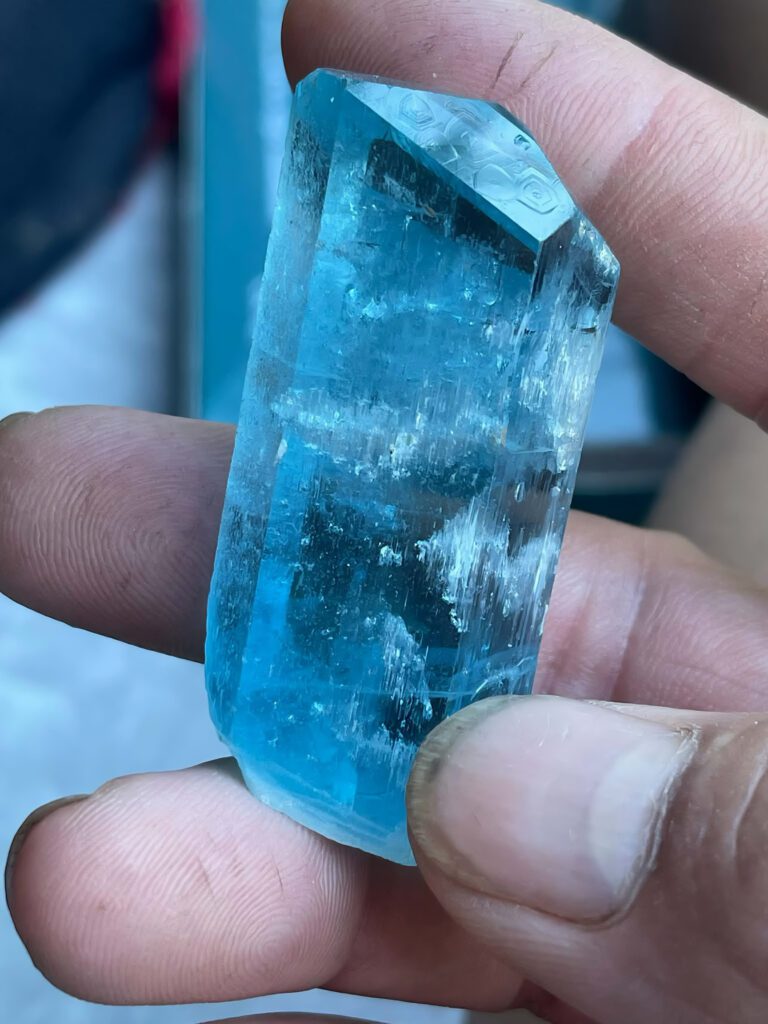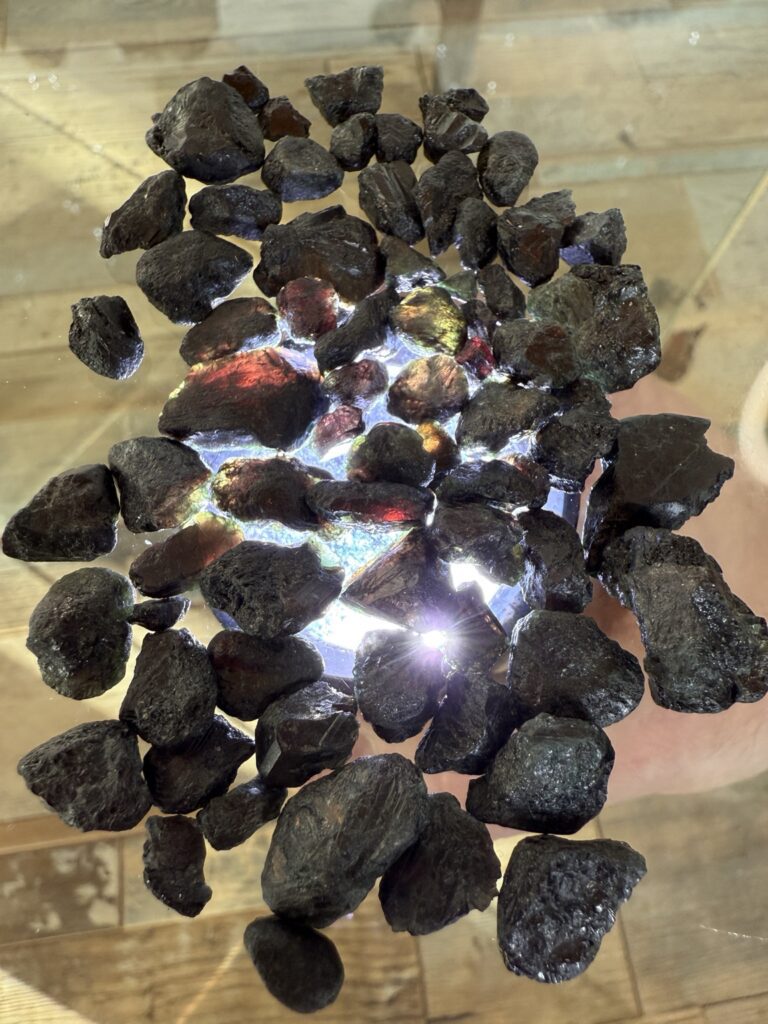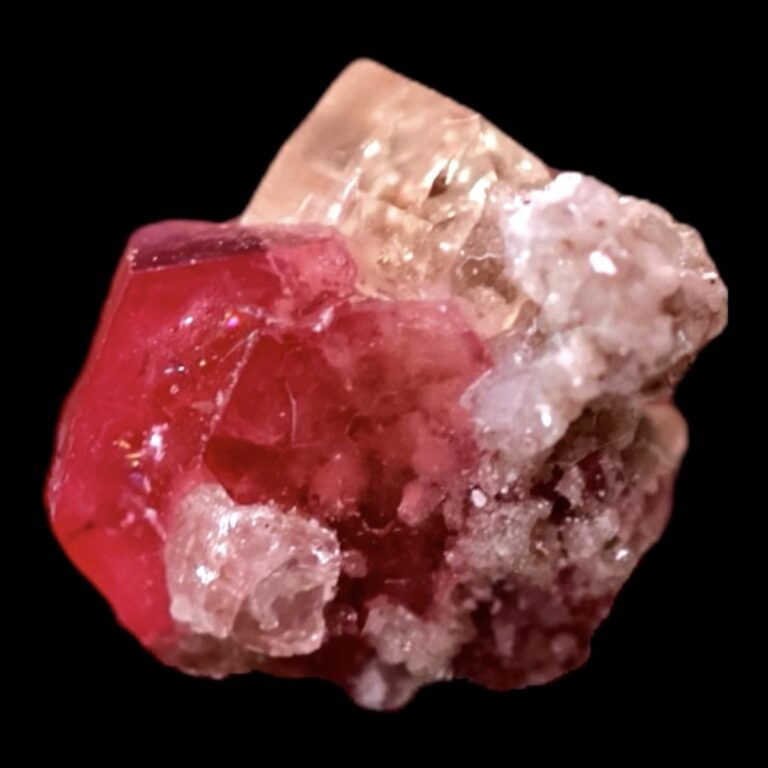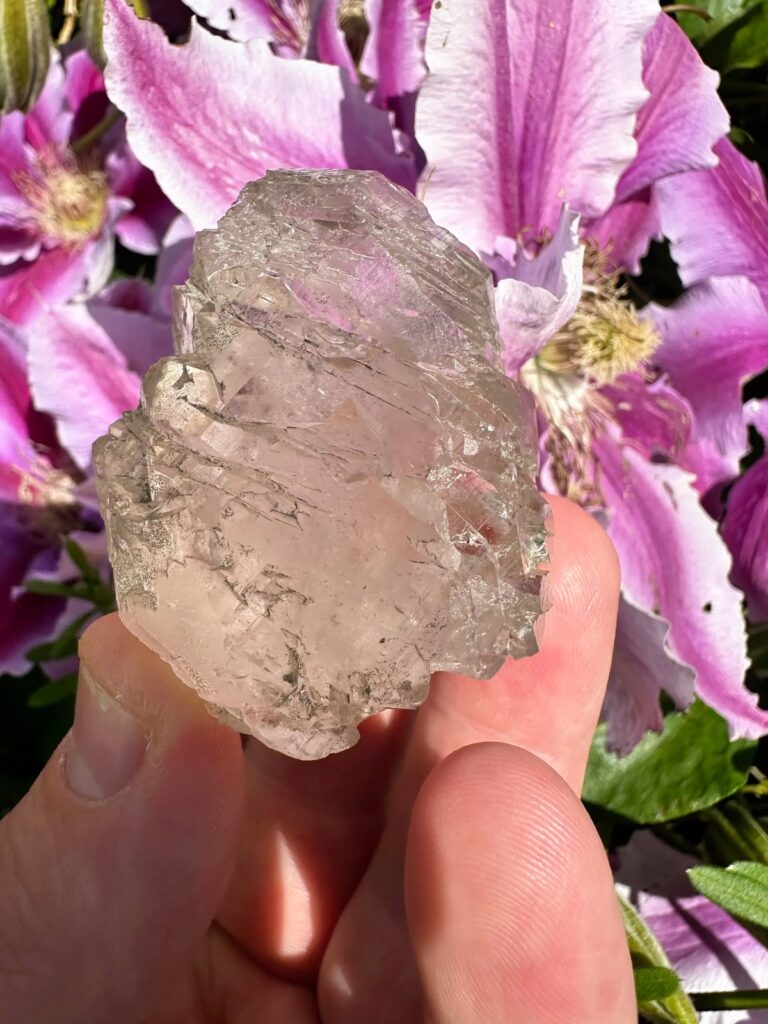
Peridot has spent long enough in emerald’s shadow. It has been confused with emerald for centuries.
There is even a belief that some of Cleopatra’s famous “emeralds” may actually have been peridot. We will probably never know for certain, but ancient traders had no modern gem testing and often judged green stones by appearance alone.
Thousands of years later, peridot is still being judged against emerald. I think that is a shame.
Most people encounter peridot as a small cut stone in a ring or pendant. That was my impression of it for a long time too. I knew the name and the colour, but it was never a mineral I felt particularly excited about.
Then I started buying natural crystals from Supat Gali in northern Pakistan. They changed my mind almost immediately.
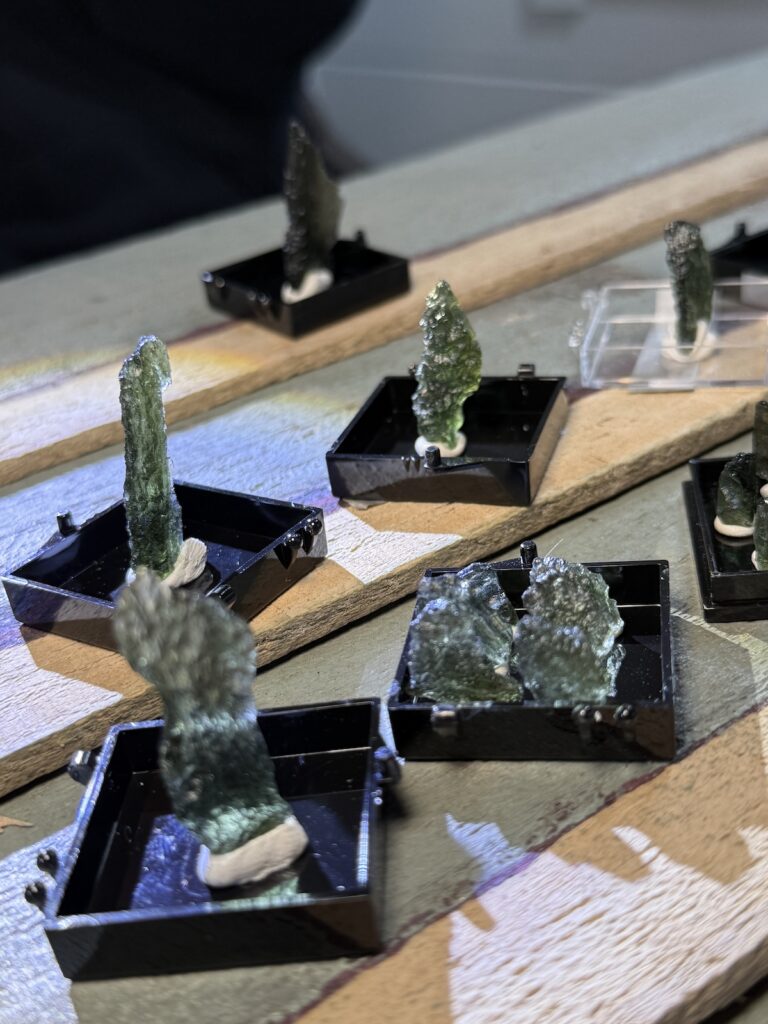
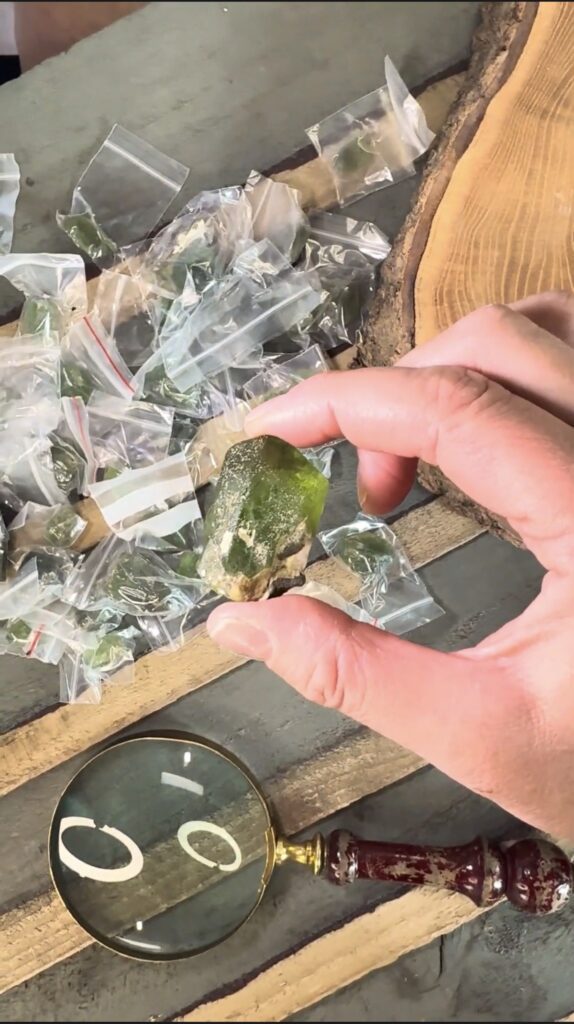
A complete crystal specimen is very different from a faceted stone. You can still see the faces it grew with, the termination, the contact points and, in some cases, the original matrix. It has not been reshaped into what somebody thought it should look like. You are looking at what came out of the ground.
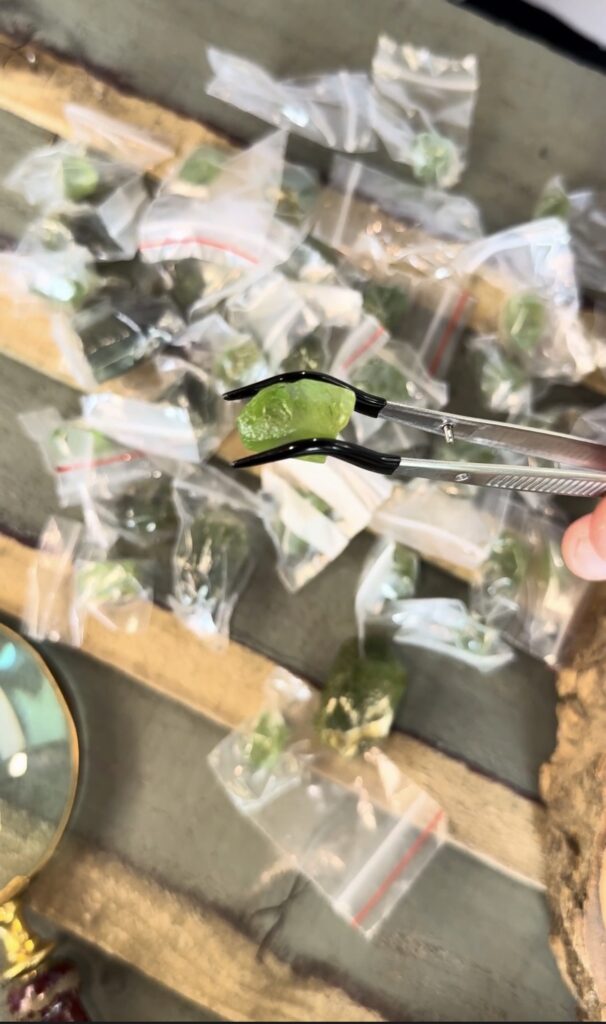
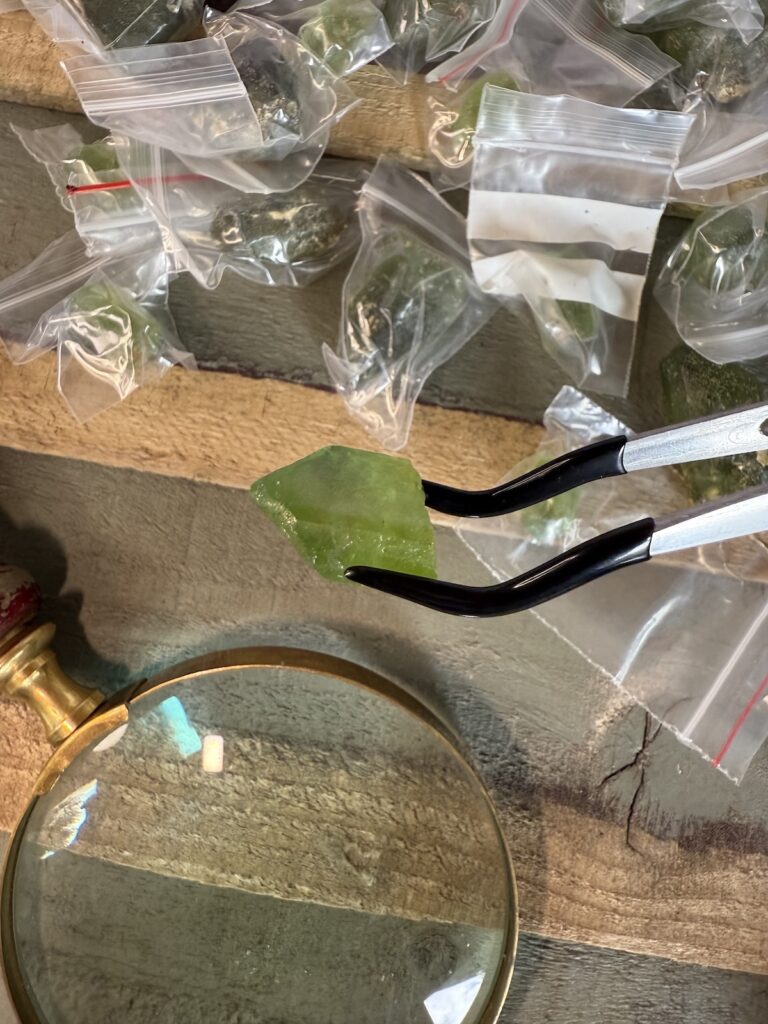
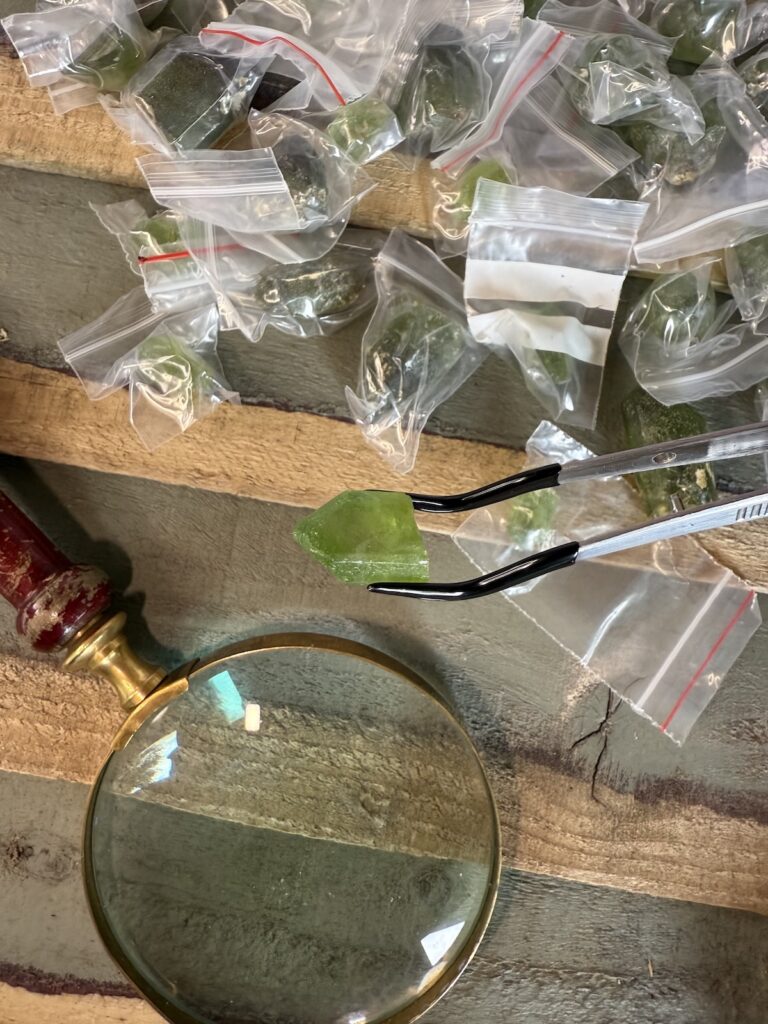
The colour is brighter than many people expect. Good Supat Gali peridot can move between lime, olive and yellowish green. Clean crystals seem to brighten from inside when you turn them.
Then you start looking at the shape.
Flat faces. Defined edges. A recognisable crystal form that developed naturally inside rock. Nobody measured those angles or polished those surfaces. The shape reflects the internal arrangement of the mineral itself, repeated on a scale large enough for us to see and hold.
I understand the science behind crystal growth, but it still looks impossible.
We are used to geometry being planned. Someone draws it, measures it, cuts the material and checks the result. A crystal does none of that. Given the right chemistry, space and conditions, order simply appears.
How does the Earth do that?
The peridot I have been working with comes from Supat Gali, also written as Sapat Gali, in the mountains of northern Pakistan. Among collectors it is one of the classic names for peridot, known for vivid green forsterite crystals and occasional associations with magnetite or fine black ludwigite inclusions.
Getting to the workings is another matter. The miners I buy from describe high Himalayan terrain, difficult routes and a working season that can be limited to roughly two or three months. The exact window depends on the snow and the condition of the mountain. For the rest of the year, access is either impossible or not worth the risk.
The miners wait until the route becomes passable, make the trip, establish camp and work while conditions allow it. When the weather changes, they leave. Supat Gali does not keep producing whenever the market wants more. A winter cannot be negotiated with.
The geology is even stranger.
Peridot is the transparent green form of olivine. At Supat Gali, gem-quality crystals occur in a mafic-ultramafic complex, particularly along joints and fractures in sheared dunite, a rock made largely of olivine. Research on the deposit links the host rocks to mantle-derived material caught up in the tectonic history of this part of the Himalaya.
So these crystals did not simply “grow in a mountain”. Their host rocks came from a part of the Earth we can never visit, were moved and altered by geological forces, and were eventually raised into some of the highest terrain on the planet. Gem-quality peridot then formed along fractures where the conditions happened to be right.
Try to picture that.
Rock from the Earth’s interior. Continents moving. An ocean closing. Mountains rising. Then a green crystal develops inside a narrow fracture and waits until a miner can reach it during a short summer season.
Now it is on my desk in Cheshire.
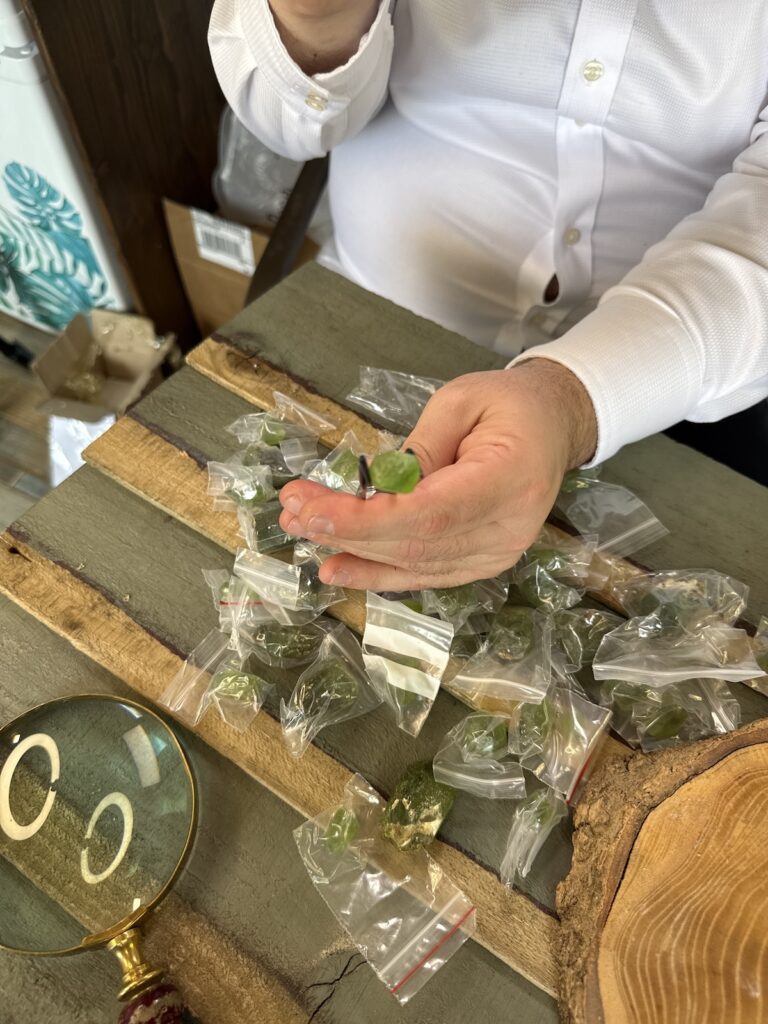
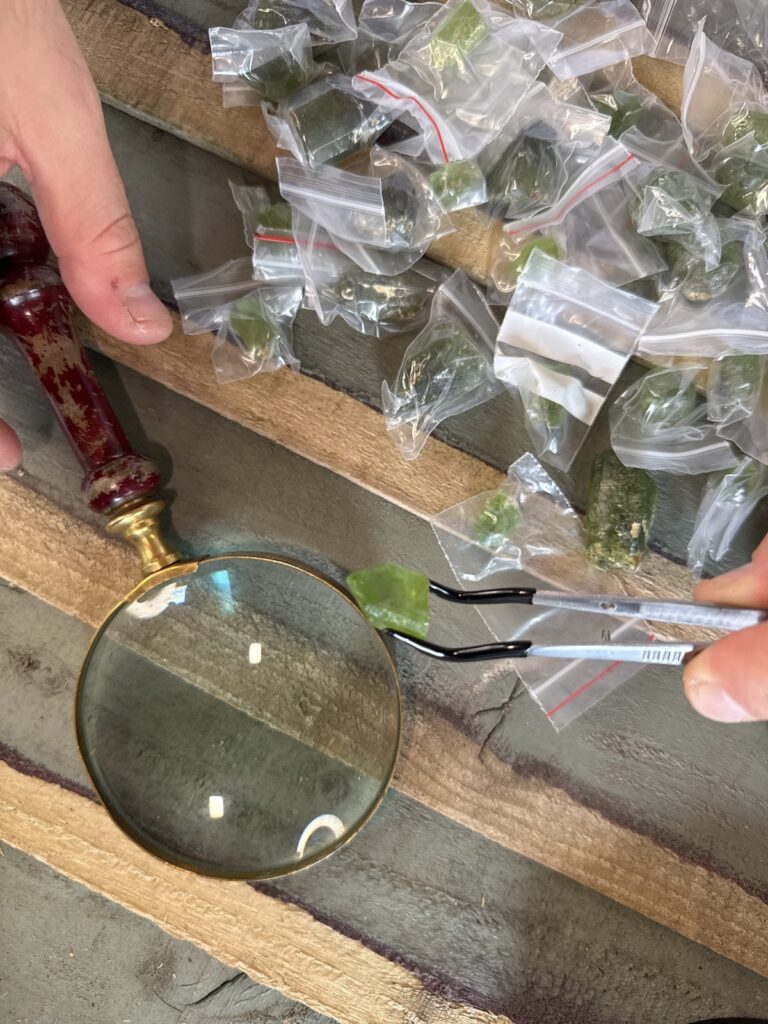
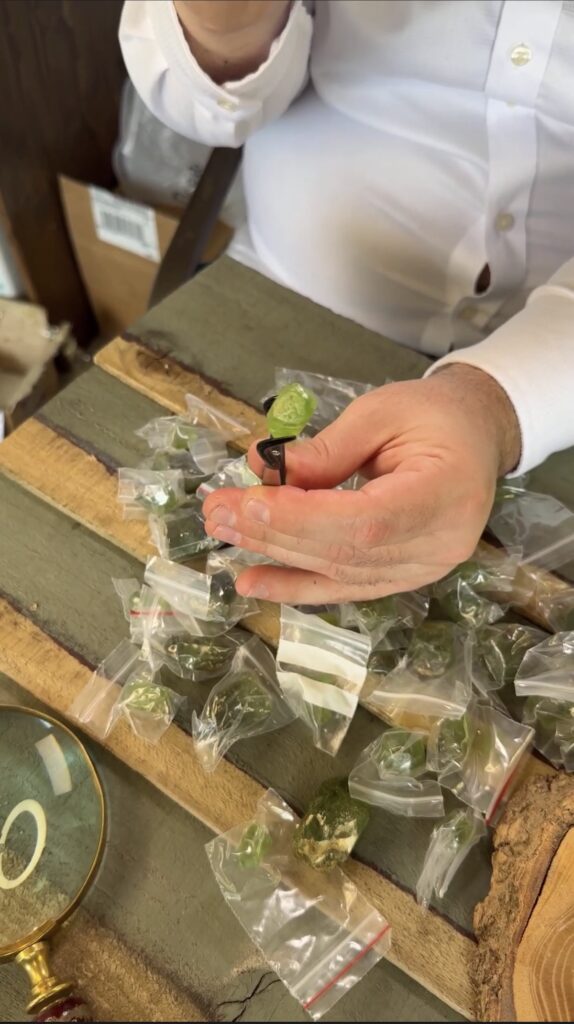
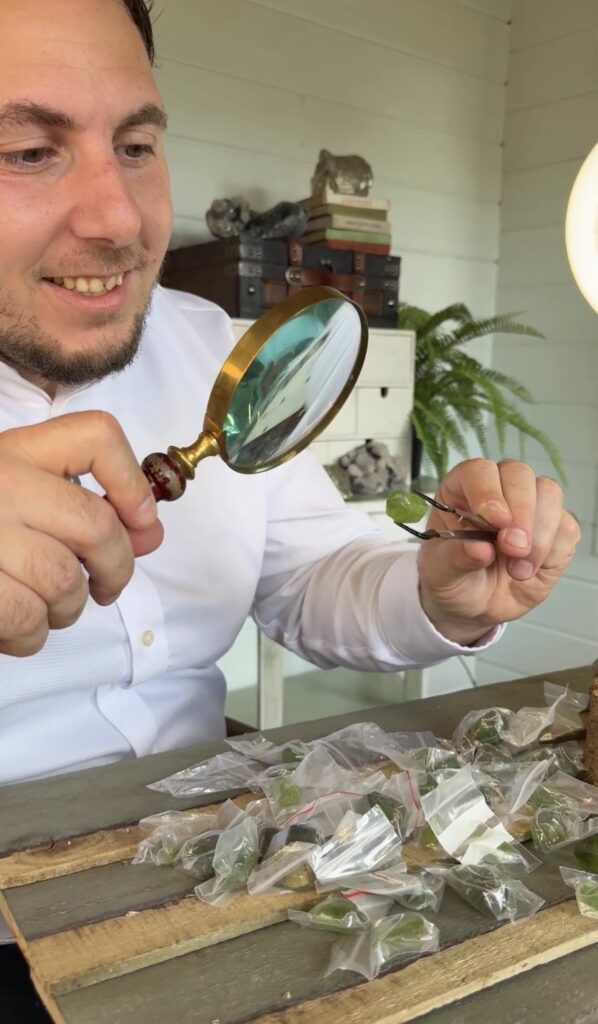
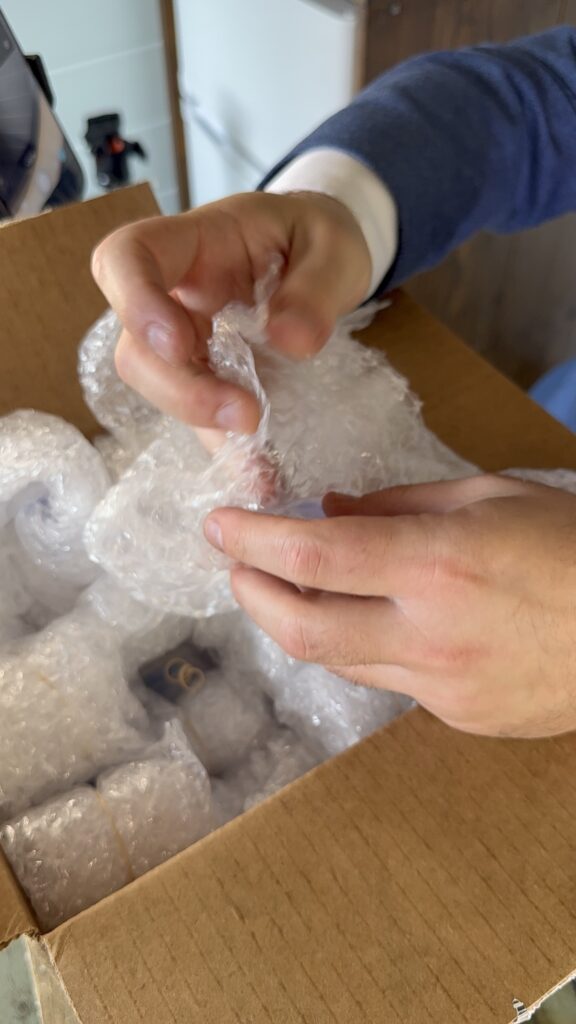
I recently sorted a parcel of around forty Supat Gali specimens, weighing roughly 425 grams altogether. From a distance, it looked like a box filled with green crystals. Up close, there was far more variation than you might expect.
Some were brighter. Some were clearer. A few had stronger terminations or more satisfying proportions. The matrix pieces showed more of the original setting, with peridot rising directly from the host rock rather than appearing as a loose crystal.
That happens often when I am selecting minerals. You can compare condition, colour, crystal form and provenance, but those things do not always explain why one specimen looks better than another. Sometimes the proportions work. Sometimes the crystal sits on the matrix in exactly the right way. Sometimes it just has presence.
Some people would describe that pull in spiritual terms. Others would put it down to colour, symmetry, instinct or memory. I do not think we need to settle the argument. Human beings have carried, worn and treasured green stones for thousands of years, and whatever language we use, there is clearly something about them that makes us feel closer to the natural world.
That judgement is part knowledge and part experience. It is also why I prefer natural specimens. A cut stone can be beautiful, but cutting replaces the mineral’s original shape with a human decision. With a crystal specimen, much more of the evidence remains. You can look at the surfaces, the matrix and the points of contact and begin to work out how it occupied the space around it while it grew.
Peridot no longer feels like emerald’s less famous relative to me.
Its colour is different. Its natural form can be far more impressive than the small faceted stones most people know. The best specimens come from a place that is difficult to reach and only workable for a small part of the year.
And the geometry still gets me.
A green crystal formed inside rock shaped by events on a continental scale, then emerged with flat faces and ordered angles that look planned.
Nobody planned it. The Earth just did it 😮 Explore our collection of peridot specimens to see individual pieces, photographs and availability.