I can usually predict what’s inside a crystal shop before I walk in.
I have walked into enough crystal shops now to know when I am about to see the same thing again.
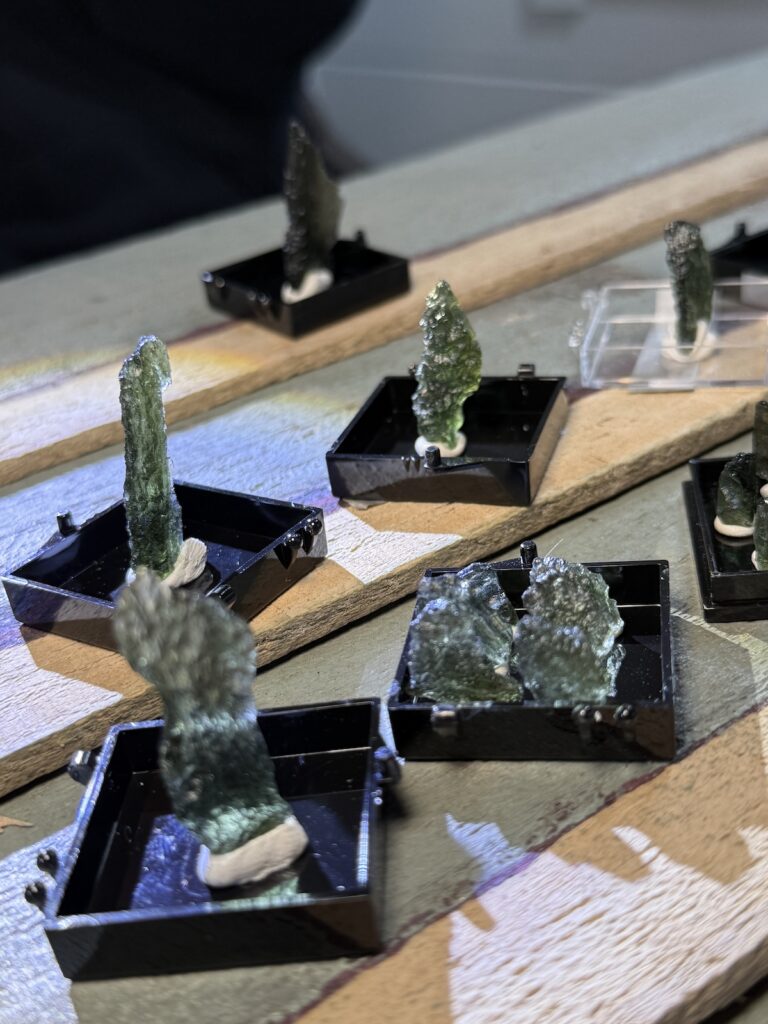
Amethyst, rose quartz and clear quartz will usually be somewhere in the room. There may be bowls of tumble stones, polished hearts, rows of towers and perhaps some labradorite, fluorite, malachite or Moldavite behind the counter. There is absolutely nothing wrong with any of those things. They sell because people like them, and I own plenty of them myself.
What surprises me is how often I can walk into completely unrelated shops and feel as though I have already seen the stock. I started noticing this more after Rare Minerals Earth began because I was constantly looking at minerals, visiting shops on holiday, going to shows and paying much more attention to what people were actually selling. The displays changed and the owners changed, but quite often the crystals did not.
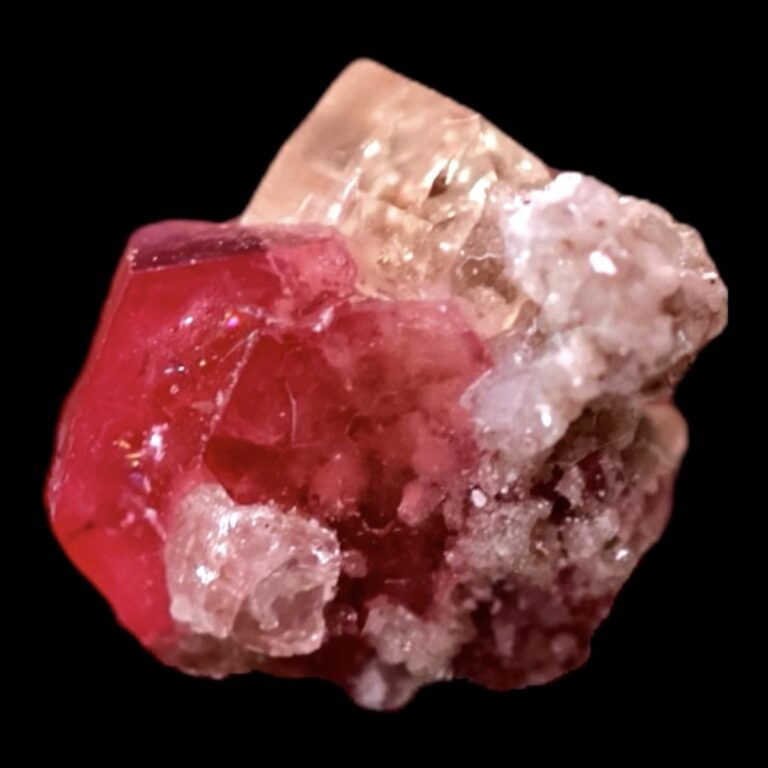
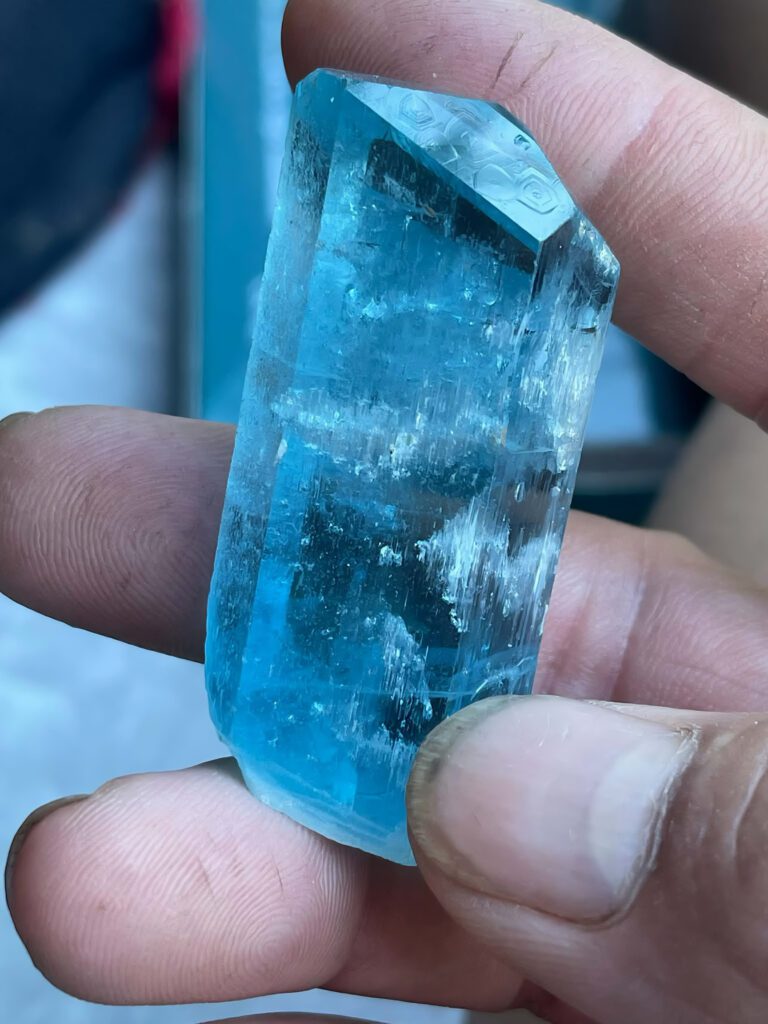
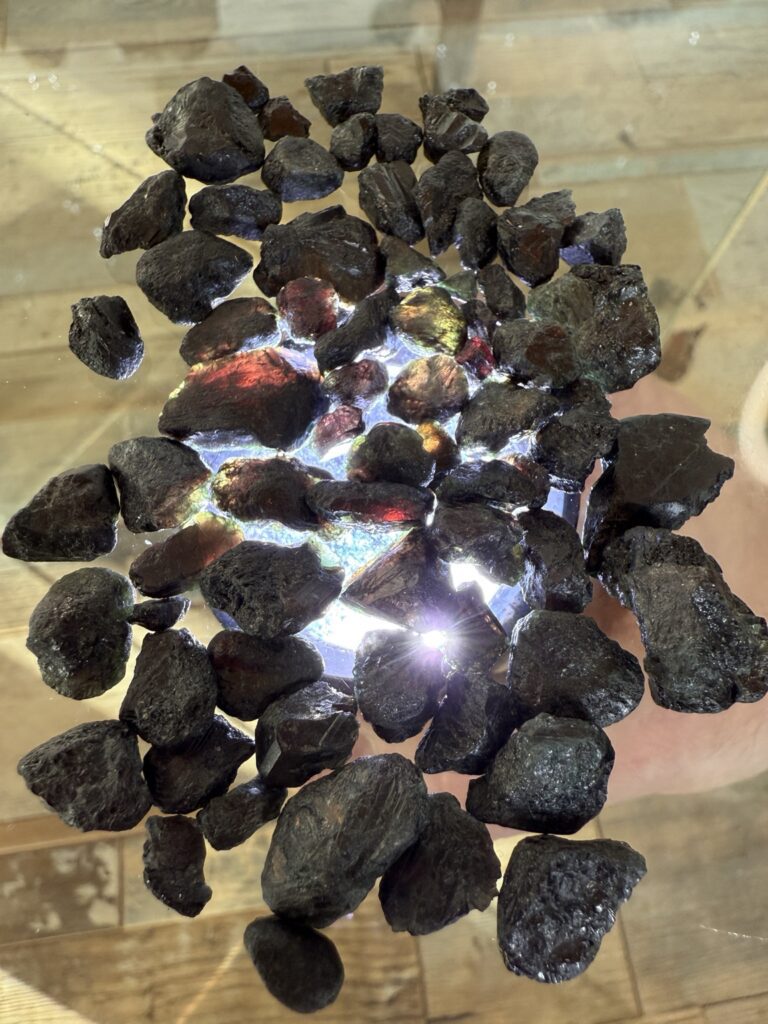
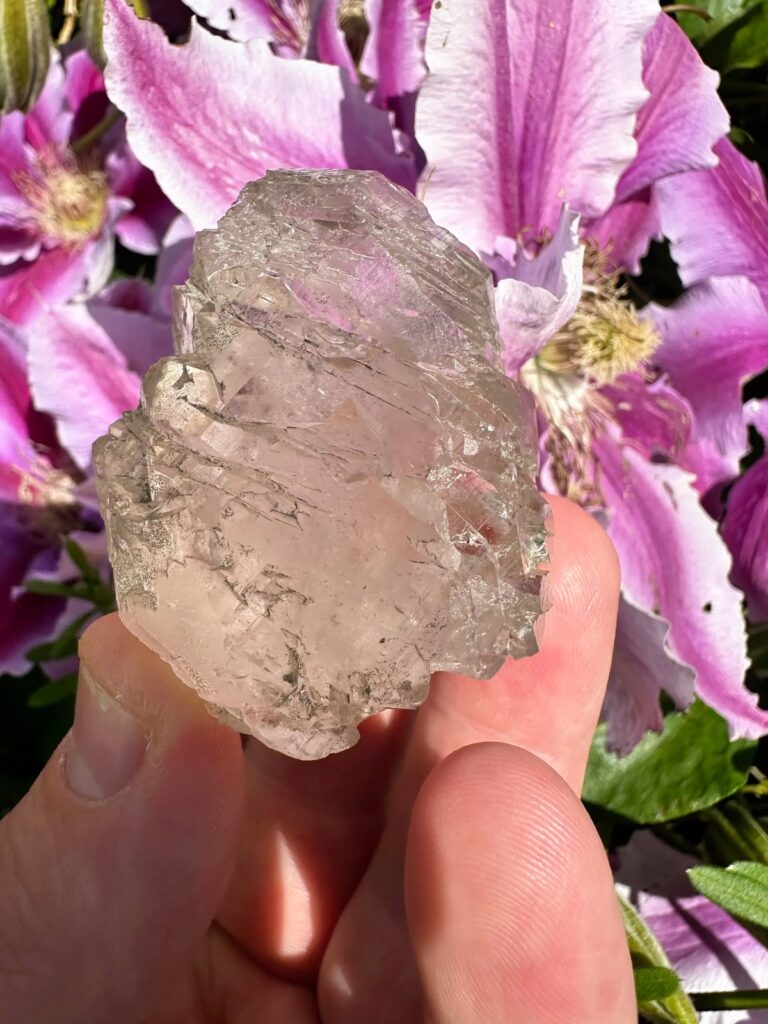
That seems particularly strange when you consider what is actually available. I have parcels arriving from Pakistan, Brazil, Namibia, Tanzania, Colombia, Switzerland and other parts of the world, and opening them has taught me that the mineral world is almost absurdly varied. Even after several years of doing this, somebody will send me a photograph of something and I will realise I have never seen it before.
Sometimes it is a mineral I know from a locality I do not. Sometimes it is familiar material with a completely different crystal habit, colour or association. Occasionally I have to ask the person selling it what on Earth I am looking at, and those are usually the parcels I enjoy most.
I might have twenty specimens spread across my desk and spend far too long comparing them. One has better colour, another has a more complete termination, while something slightly less perfect keeps ending up back in my hand because there is something about the way it has formed that makes it more interesting. I am not thinking that I need twelve green crystals, six pieces under £30 and something large to fill a shelf. I am looking at individual specimens and asking whether I would stop if I saw them somewhere else.
That has become increasingly important to me because I do a limited amount of wholesale for specialist shops. I am not particularly interested in supplying hundreds of identical pieces to hundreds of businesses, and there are already wholesalers set up to do that extremely efficiently. Rare Minerals Earth has developed around individual specimens, unusual localities and strong provenance, so the shops I enjoy working with tend to care about the same things.
The conversations are usually much more specific than somebody simply asking for a wholesale price list. A shop owner might tell me that their customers love unusual fluorite, that they want a few genuinely interesting specimens within a certain budget, or that they need one exceptional piece for the window. Sometimes they want five pieces, sometimes ten or twenty, and I can then go through what I have, speak to the people I source from or keep an eye out for material that fits.
I do not want the result to look like somebody has ordered a generic “crystal shop starter pack”. The whole point is to find pieces that suit that particular shop and give its regular customers something they have not already seen repeatedly somewhere else.
Provenance matters enormously here because unusual should not simply mean unfamiliar. There is an endless amount of material online with dramatic names, questionable locality information and descriptions that become less convincing the longer you investigate them. I would rather supply something comparatively understated with a reliable story than something spectacular that nobody can properly identify.
Knowing where a specimen came from can completely change what you are looking at. A piece of quartz becomes much more interesting when you know it came from a particular Alpine fissure in Switzerland. Fluorite from the closed Okorusu Mine in Namibia carries a different story from fluorite produced somewhere else, even though the mineral species is identical. Peridot from Supat Gali connects a bright green crystal with a specific deposit and the miners working seasonally in difficult Himalayan terrain.
That information also gives a shop owner something worth telling the customer. Instead of simply saying, “This is fluorite,” they can explain why this particular fluorite looks the way it does and what makes the locality interesting. For a customer who wants to know more, the specimen becomes the beginning of a conversation rather than the end of one.
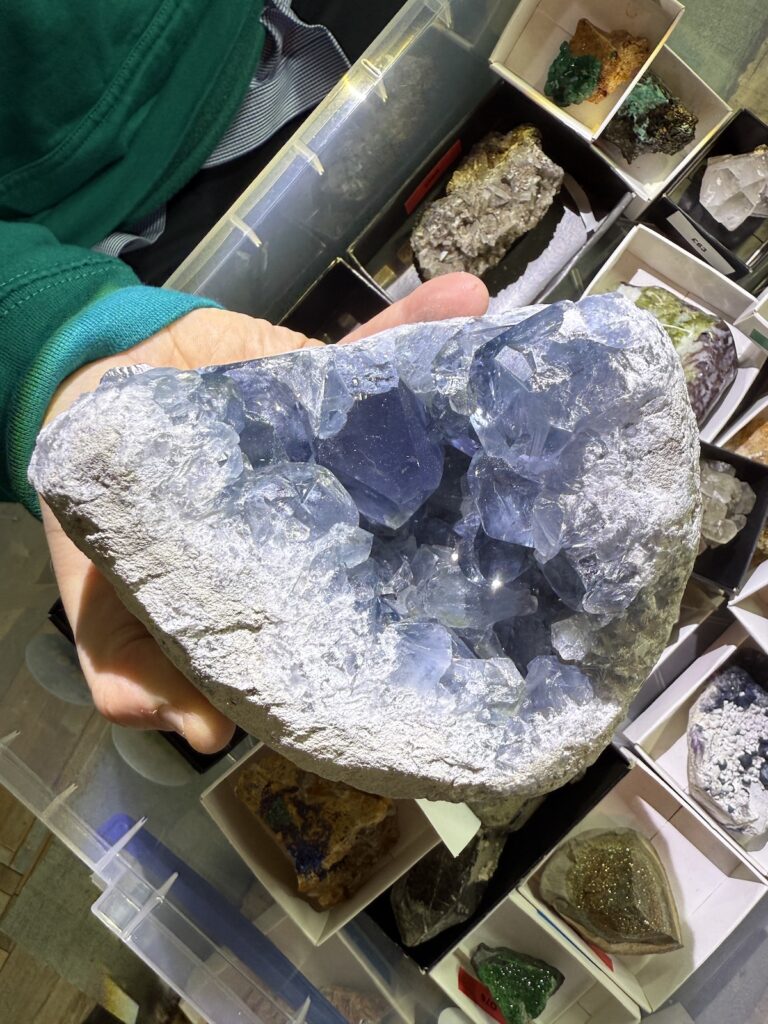
That is one of the things I like most about visiting mineral and crystal shops in person. You can pick up a specimen, turn it beneath the light, look through it from different angles and notice details that a photograph might have completely missed.
I see this at mineral shows all the time. People can walk past dozens of specimens before one makes them stop, and then they will pick it up, put it down, wander around for another ten minutes and come back to it. That behaviour fascinates me because it is rarely just about size. Some enormous specimens attract attention from across a room, of course, but I have also watched somebody become completely absorbed by a crystal small enough to disappear inside their hand.
Perhaps it contains an unusual inclusion, perhaps the colour changes when they turn it, or maybe they have simply never encountered that mineral before. At some point, curiosity takes over, and once that happens the person no longer needs to know the name first.
If somebody visits the same shop every few weeks, I want there to be something that makes them ask, “What is that?” It does not have to cost hundreds of pounds either. One of the things I have learned through buying minerals is that rarity, price and visual impact do not line up nearly as neatly as people assume. There are obscure minerals available relatively inexpensively, while exceptional examples of comparatively common minerals can cost a fortune.
Nor does unusual stock need to become a competition in obscurity. I have no interest in putting something on a shelf purely because its name is impossible to pronounce and six people on Earth have heard of it. The specimen still has to be good.
When I choose material, I am balancing colour, crystal form, condition, locality, rarity, price and whether the specimen actually makes me want to keep looking at it. That last part is subjective, but I have learned not to ignore it. People do not experience minerals as a spreadsheet of specifications.
They see something from across the room, walk towards it and pick it up. The geology and provenance can deepen their interest afterwards, but something had to make them reach for it in the first place.
I think this is also where the spiritual side of crystal shops and the collector side of the mineral world overlap more than either group sometimes realises. Somebody may pick up a specimen because they believe they feel something from it. Another person may be fascinated by its crystal habit or locality, while somebody else simply loves the colour. They can all end up holding the same crystal for completely different reasons.
I am open-mindedly sceptical about the metaphysical claims made about minerals, but I am very interested in the attachment people develop to individual specimens. Whatever explanation somebody gives for it, there is a difference between seeing a shelf full of products and encountering one object you genuinely do not want to put back.
Rare Minerals Earth was never really built around having the largest possible amount of stock. I would rather spend the money on fewer specimens that I am excited to own, photograph and talk about, and the limited wholesale side of the business follows exactly the same principle.
The specialist shops I like supplying do not need every crystal on Earth, and they certainly do not need to abandon the familiar minerals their customers already love. What makes them interesting to me is the balance. They know what sells, but they also leave enough room for somebody to discover something unexpected.
That is probably the difference I notice most now when I walk into a crystal shop. The memorable ones are not necessarily the biggest, the most expensive or the fullest. They are the ones where somebody has made choices.
I want to walk into a crystal shop and have my prediction fail. I want to recognise most of what is there, then notice something in the corner that makes me change direction and ask the owner where on Earth they found it.
Because when I think about the mineral shops I actually remember, I rarely remember how full the shelves were.
I remember the specimen I nearly walked away with.